

Single pair Ethernet
The potential of the two-core variant
With Single Pair Ethernet, the Internet protocol can penetrate new applications. In industry, this Ethernet variant even has the potential to close the gap between the control level and the sensor/actuator network.
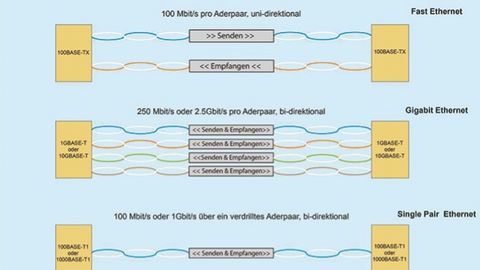
Figure 1: The Ethernet transmission methods Fast Ethernet, Gibabit Ethernet and Single Pair Ethernet.
© HartingGenerations of network technicians, planners, installers and users have learned that cabling with two wire pairs is required for Fast Ethernet (10/100 Mbit/s) and all four wire pairs for Gigabit Ethernet. With the new Single Pair Ethernet (SPE), a technology is now entering the market that can also transmit these TCP/IP-based data streams via just one wire pair.
How it all began
The starting point for the development of SPE is the BroadR-Reach standard, which was developed by the Broadcom Corporation. After the automotive industry identified this new TCP/IP-based transmission method in its search for a successor to the CAN bus, the first SPE standard was published by IEEE 802.3 as the 100BASE-T1 standard in IEEE 802.3bw-2015 Clause 96.
However, piloted or semi-autonomous driving requires even higher data rates and so the gigabit version followed quite quickly after the first SPE standard for 100 Mbit/s.
The Ethernet technology already available today in accordance with IEEE 802.3bp 1000BASE-T1 delivers 1 Gbit/s transmission speed over just one pair of copper wires. The IEEE is currently working on a further standard for even higher data rates of up to 10 Gbit/s (IEEE 802.3ch), which is required for high-resolution sensors and video transmissions. A standard for only 10 Mbit/s (IEEE 802.3cg) is also in the development phase. This standard is also particularly relevant for many areas of industry, as it allows transmission distances of up to 1000 m and can therefore replace almost all fieldbuses.
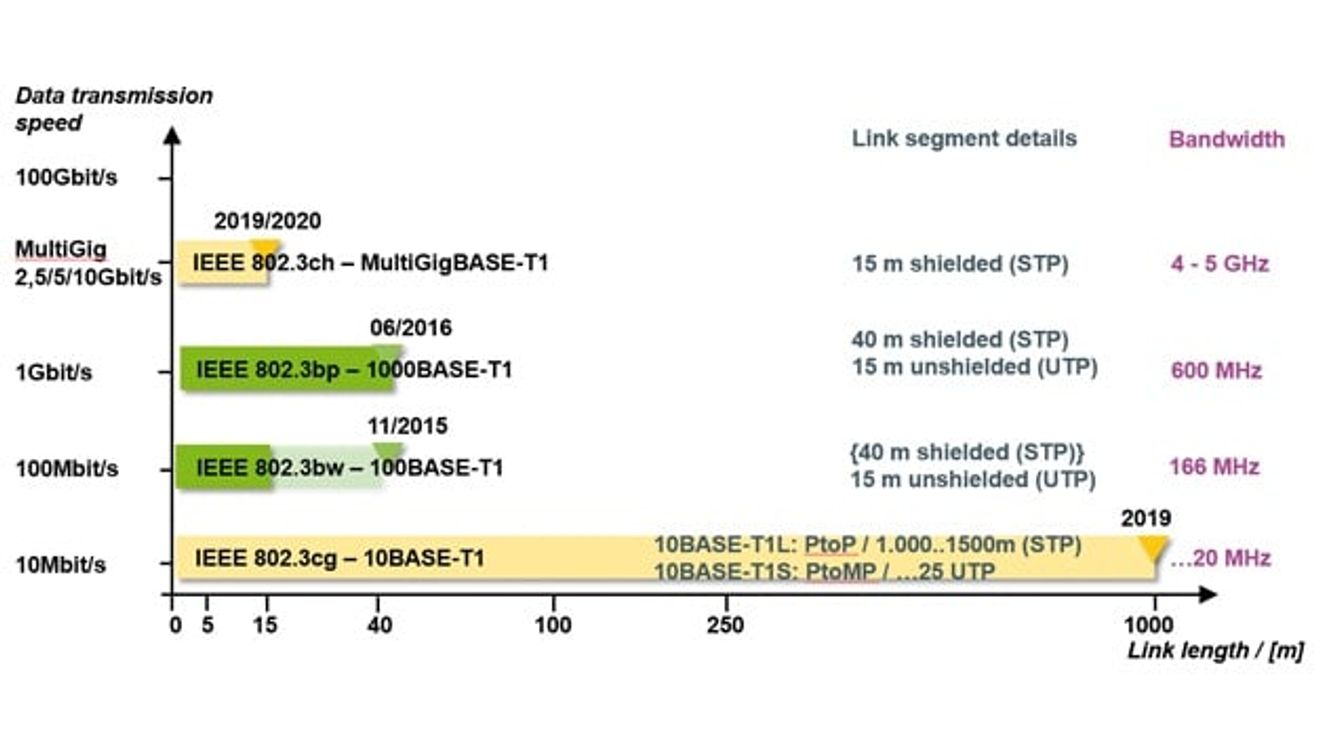

Figure 3: The range and transmission speed for the future possible IEEE 802.3 SPE standards - Extended Reach.
© HartingSince March 2019, there has also been another working group that deals with transmission rates above 10 Gbit/s. The target here is 25 Gbit/s and 50 Gbit/s. These high data rates are the basic technology for autonomous driving and new zonal computer architectures in vehicles. As with multi-pair cabling, there is also a new standard for remote power supply for SPE, similar to Power over Ethernet (PoE), called PoDL = Power over Data Line (IEEE 802.3bu). This means that SPE technology has already achieved the same performance as today's predominant 'multi-pair Ethernet' (MPE) within a very short period of time. The only limitation is the currently shorter range for 100 Mbit/s and Gigabit SPE (15 m and 40 m respectively), which results from the requirements of the main target group in the automotive industry.
However, the experts assume that longer transmission lengths can also be achieved here. Figure 3 shows which extended transmission lengths are technically possible. However, in order for these extensions to the SPE standards in IEEE 802.3 to be tackled and for the semiconductor industry in particular to invest in the development of these new chipsets, the new applications and market potential suitable for this need to be defined. This requires open cooperation between all interested parties for the extended SPE ranges. The first presentations at IEEE 802.3 have already been published and have been well received.
Overview of the standards committees
The central role in standardization is played by ISO/IEC JTC 1/SC 25/WG 3. This is where the cabling standards according to ISO/IEC 11801 are created and maintained based on the IEEE 802.3 standards.
To this end, there is a close exchange and intensive cooperation with IEEE 802.3 and the committees for cabling components. Four standards projects are in progress within the IEC SC46C working group for the standardization of data cables in bulk.
The standardization of SPE connection technology

Figure 4: Overview of the relevant standards committees around ISO/IEC JTC 1/SC 25/WG 3
© Prof. Dr. OehlerThe first SPE connector draft standard was submitted by Harting to SC48B back in 2016 and published as IEC 61076-3-125 up to the CD document. CommScope submitted another SPE connector face for standardization in 2017. As a result, the decision was made to create the IEC 63171 series of standards for all SPE connectors. Accordingly, the PT63171 project team was set up at SC48B and tasked with creating this new series of standards. The standards already in progress at this time will be completed as self-contained documents and later integrated into this new series of standards as part of revisions.
The following standards projects are currently in progress:
- IEC 63171 - basic standard with all necessary specifications and test sequences (CD available)
- IEC 63171-1 - SPE connectors from CommScope based on the LC latch for M1I1C1E1 applications (CDV approved, FDIS in preparation and final publication in 2020)
- IEC 63171-2 - SPE connectors from Reichle & De-Massari for M1I1C1E1 applications (CD available)
- IEC 63171-3 - SPE connectors from Siemon based on a pair of the well-known Tera connector for M1I1C1E1 applications (withdrawn)
- IEC 63171-4 - SPE connector from BKS for M1I1C1E1 applications (CD available)
- IEC 63171-5 - SPE connectors from Phoenix Contact based on the IEC 63171-2 mating face for M2I2C2E2 and M3I3C3E3 applications (CD available)
- IEC 63171-6 (previously IEC 61076-3-125) - SPE connectors from Harting and TE Connectivity for M2I2C2E2 and M3I3C3E3 applications (CDV approved, FDIS in preparation and final publication 2020)
Comparison of MPE and SPE

Even if twisted wire pairs are required for existing 4-pair data cabling as well as for SPE, the requirements for the cabling and connection technology are quite different, especially with regard to the transmission length with the currently available SPE transmission standards and the RF requirements, which is particularly evident in the required bandwidth(see table).
Migration of MPE from SPE
High data rates via one wire pair - so why not combine four SPE routes in an existing 8-wire infrastructure? This idea of using quasi 4-pair cabling for SPE by means of 'cable sharing' is almost a logical one. And indeed: in special cases, this is certainly possible, but technically and economically not really sensible. On the one hand, SPE cabling requires higher bandwidths compared to MPE, especially in terms of crosstalk, and compared to MPE with 100 m transmission lengths, SPE only has shorter transmission lengths of 40 m at 1000BASE-T1 for shielded cables. In this migration scenario, the user must therefore check the installed cabling section by section for SPE. The economic viability of such utilization concepts is therefore also questionable. For example, in order to qualify an installed Cat. 6A cabling for 1000BASE-T1, the transmission length must not exceed 40 m and the corresponding RF parameters must be qualified up to 600 MHz. Even if everything fits perfectly, only 4 x 1 Gbit/s can be transmitted with SPE, although these Cat. 6A cabling links can now be used with 10 Gbit/s MPE.
The connection technology for SPE
The design of the SPE connectors in accordance with IEC 63171-6 was based on the specifications of the relevant IEE 802.3 standards and other market requirements. The following electrical parameters are precisely defined: The rated voltage, the insulation voltage, the rated current and the RF transmission parameters.
The aim of the design for the SPE interface was to take into account the electrical parameters mentioned with sufficient reserve for future higher bandwidths and the requirements regarding remote power supply (PoDL) as well as the selection of housing designs already accepted and widely used on the market. Great importance was also attached to a balanced relationship between the market trend towards miniaturized interfaces and high robustness on the one hand and good manageability and optimum design of the connection area to suit the wire and cable diameters to be used on the other.
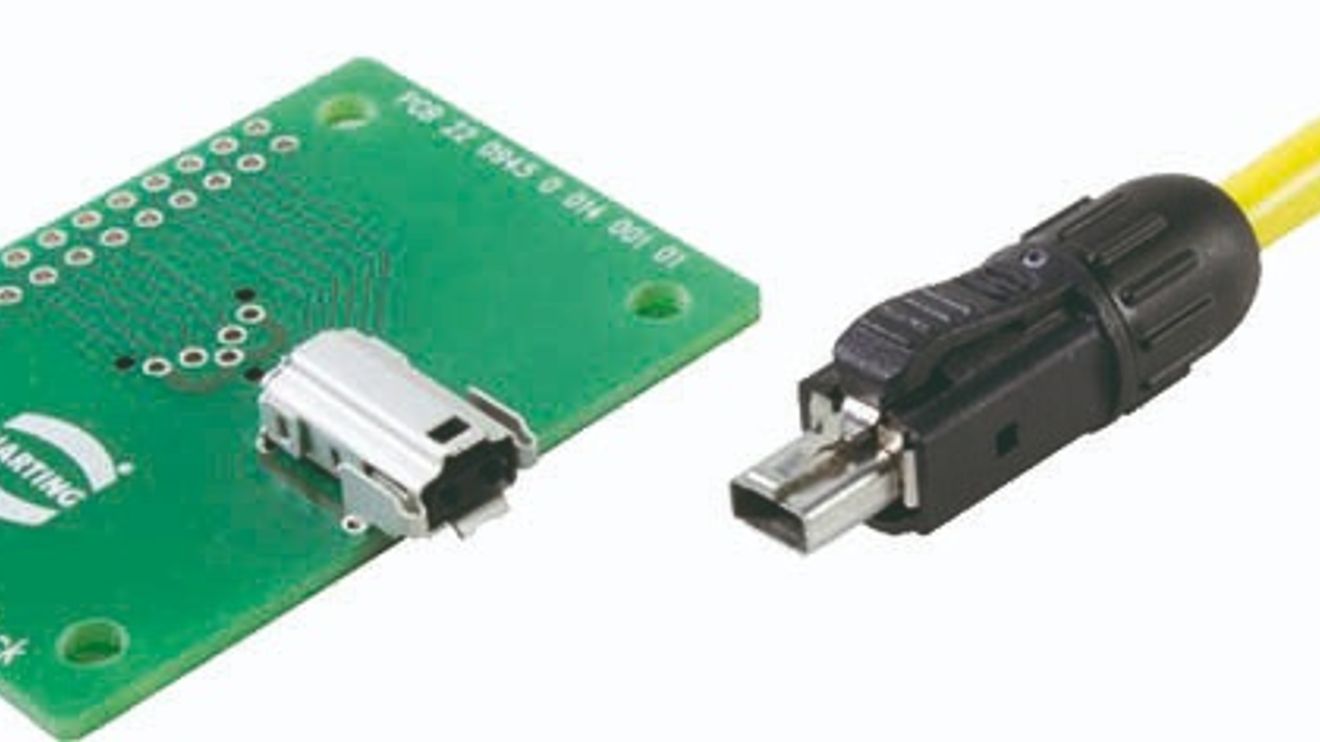

In line with these design objectives, 0.5 mm contacts with a contact spacing of 2.8 mm were selected as the contact system. The contact spacing is largely coordinated with the cable cross-sections to be connected. For the short transmission distances for 100BASE-T1 and 1000BASE-T1, AWG 28/26 and AWG 22 conductors with wire diameters of around 1 mm and 1.6 mm respectively are used. For the 10BASE-T1L with a range of 1,000 m, however, AWG 16/18 conductors with a conductor diameter of 2 mm are required and therefore a contact spacing of 2.8 mm is optimal. According to the IEEE802.3 standards, the longer ranges can only be achieved with shielded transmission lines. For this reason, and in order to ensure reliable transmission even in harsh industrial environments, a shielded design has been consistently implemented. The shielding plates also serve as a robust mechanical locking mechanism for the IP20 version. The metal locking lever used also eliminates the problem of defective locking that is often criticized with the RJ45. M8 and M12 circular connectors have established themselves in industrial applications. Accordingly, the new SPE mating face is integrated as a standardized 'data container' in the M8 designs with screw, snap-in and push-pull locking. Furthermore, M12 designs with screw and push-pull locking are also standardized in order to accommodate the large cable cross-sections for the 1,000 m 10BASE T1L channel in particular. The same mating face is used in all designs, which means that IP20 connectors can also be connected to the IP65/67 interfaces for parameterization or testing. The use of the widely used M8/M12 designs ensures good market acceptance and at the same time reduces the necessary investment costs, as the corresponding housing designs are available from many suppliers. The use of identical socket and connector inserts (data containers) in all designs guarantees uniform technical characteristics in all series and creates favorable conditions for cost-efficient production through economies of scale. The SPE interfaces in accordance with IEC 63171-6 thus provide an internationally standardized mating face that optimally supports the future use of SPE in industrial applications. By using this standardized SPE data container, it is also easy to integrate this IEC 63171 mating face into other designs, such as the connector system with internal M12 push-pull locking that is currently being developed as a new standards project.
Figure 6 shows a selection of the different designs in protection class IP65/67 and IP20. This product range can and will be further expanded in future on the basis of IEC 63171-6 and will in future include a complete range of solutions from PCB sockets and connectors to wall bushings and system cables. The associated field measurement technology is also being developed.
SPE versus wireless
New applications such as autonomous driving, IoT and IIoT require new and more powerful network technologies. SPE is one such technology. The ability to supply devices with both data and power at the same time via a single connection gives this technology a huge advantage over wireless solutions. Remote power supply via PoDL makes batteries and rechargeable batteries superfluous. Wired transmission methods have the further advantage that there are no regulatory restrictions regarding the frequency ranges that can be used and therefore no license costs are incurred for the provision of the necessary frequency bands. As frequency bands are not allocated uniformly internationally either, devices with radio interfaces must always be adapted to the different market requirements.
Together with the Time-Sensitive Networks standards (TSN standards) developed by IEEE 802.1, Ethernet technology is extended with all the necessary mechanisms to realize determinism in data communication - a prerequisite for all real-time applications. This qualifies SPE as the perfect infrastructure solution and enabler for IoT and IIoT, making it an important building block for integrated industry.
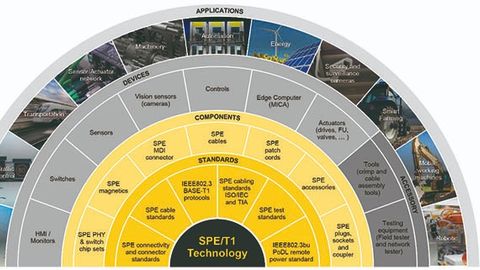
In order for SPE to fully develop this potential, it is necessary for partners from different branches of industry to work together intensively and make this vision possible in the sense of an ecosystem (see Figure 7). This begins with joint international standardization at IEEE 802, ISO/IEC and TIA and continues with the development and provision of the necessary components, starting with semiconductors, magnetic components, connectors and cabling components and measurement technology. Only when the standards and components are available, at least in initial sample quantities, will users be able to equip the multitude of possible devices with SPE transmission technology and open up a wide range of new applications.
Author:
Matthias Fritsche is Prodct Manager Ethernet Connectors & Expert for Ethernet Technologies at the Harting Technology Group in Espelkamp.


You might also be interested in
The lubricant problem in food production
Lubricants for components used in food production machinery must be safe for human consumption. However, as these are very expensive, alternatives are in demand - for example in drive chains.
 read more...
IO-Link for the vacuum
To make electric vacuum generators, grippers or compact ejectors visible for the smart factory, they must supply digital energy and process data in real time. This works using interfaces such as IO-Link, Ethernet or NFC in the vacuum components.
read more...Integrated microchips
Whether medical devices, product tracking, vehicle systems or 5G communication - the demands on safety, performance, documentation and user-friendliness are increasing. What is the significance of microchips integrated into connectors or cable...
read more...RJ45 - fit for the IIoT
Industrial-grade RJ45 connectors are a good solution for applications without increased protection against dust, dirt or splash water. What must the data interface look like so that the 'dinosaur of data transmission' can serve industrial...
read more...Engineering with a digital twin
There is simply not enough time for time-consuming activities such as drawing up parts lists based on circuit diagrams in control cabinet construction. How can the process - from planning to installation to operation - be optimized?
read more...The effects of the F-Gas Regulation
Can refrigeration units and chillers still be used when the F-Gas Regulation on climate protection comes into force on January 1, 2020? What do the bans on the use of refrigeration and air conditioning systems and new regulations for their...
read more...Choosing the right heat sink
In order to equip a data center with high-speed modules for optical interfaces, AFCI was looking for a suitable solution for cooling the high-performance servers. Pin heat sinks were the solution.
read more...(Ethernet) cables put to the test
The dynamic requirements for cables and the associated energy chains are high. How must (Ethernet) cables be designed so that they can be safely routed in energy chains even under the highest bending stress?
read more...Predictive maintenance of cables subject to wear
A sophisticated concept is needed to be able to maintain cables subject to wear and tear in a predictive manner. Lapp is currently developing one for Ethernet cables that uses machine learning approaches, among other things.
read more...