
Industry 4.0 platform and IIC
The approach
Not competition but cooperation - the initiatives 'Plattform Industrie 4.0' and the 'Industrial Internet Consortium' have now taken up the cause of bringing this claim to life.
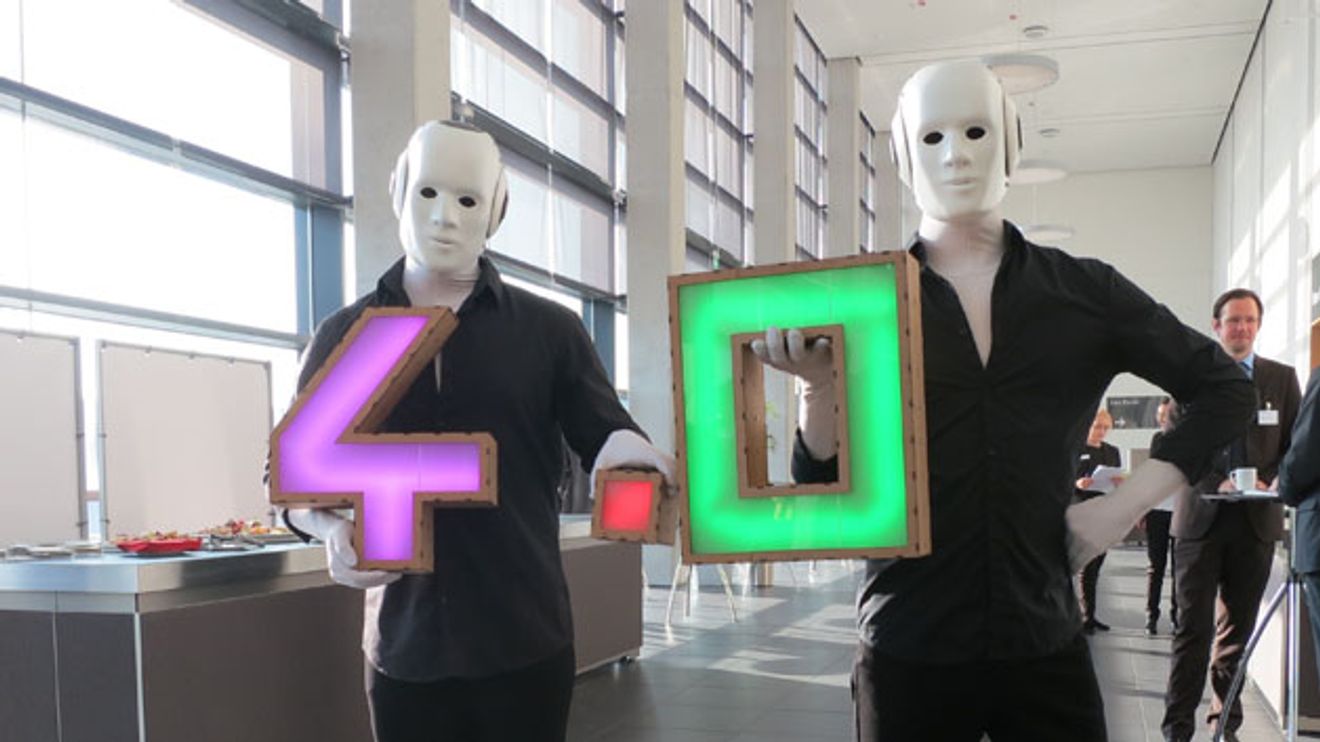
On 2 March 2016, the German 'Plattform Industrie 4.0' and the 'Industrial Internet Consortium' held a press conference to announce closer cooperation between the two organizations.
The announcement was preceded by a meeting of representatives from both initiatives in Zurich in November last year. Representatives from Bosch, Cisco, IIC, Pepperl+Fuchs, SAP, Siemens, ThingsWise and the Steinbeis Institute met on "neutral" Swiss soil to explore whether there could be a basis for closer cooperation between the platform and the IIC.
Over the past 18 months, there have been repeated discussions about a competitive relationship between the two initiatives. Discussions that were less technically sound and more emotional. On the other hand, there are also more and more companies that are active in both initiatives. "Reducing the market discussion and understanding the technical content of the other organization became more and more important," says the summary of this conversation.
Comparison of the reference architectures
The Zurich discussion also focused on the reference architectures of the two initiatives - RAMI 4.0 and IIRA. The experts compared which components of the architectures are merely referred to using different vocabulary, which components are actually the same and which are significantly different. The experts determined that a merger of the two architectures would be both impractical and undesirable, as the architectures have different objectives: Industry 4.0 with RAMI focuses on the factory environment; the IIC with IIRA, on the other hand, encompasses the overall topic of the Internet of Things across individual application areas.
As the two approaches do not compete directly with each other, but rather complement each other, the experts want to intensify cooperation between the initiatives. In other words, they want to work together on the necessary standardization and also use joint test environments. - A joint roadmap should already exist for these tasks.


You might also be interested in
Together towards IIoT
The Industrial Internet Consortium (IIC) and the OpenFog Consortium (OpenFog) are joining forces: Under the umbrella of the IIC, the combined membership is intended to accelerate the introduction of IIoT, fog and edge computing.
 read more...
Industrial Internet Consortium
RTI Managing Director becomes Deputy Chairman
Dr. Stan Schneider, Managing Director of Real-Time Innovations (RTI), has been elected Vice Chairman of the Steering Committee of the Industrial Internet Consortium (IIC).
read more...Follow-up with Ulrich Wallenhorst
Sensors to the cloud
Under the title 'Smart Manufacturing Connectivity for Brownfield Sensors', the Industrial Internet Consortium (IIC) has confirmed a new testbed under the leadership of TE Connectivity. CTO Ulrich Wallenhorst explains the goal behind it.
read more...The tussle over communication standards
The Industry 4.0 platform and the Industrial Internet Consortium now want to pull together. However, the platform favors OPC UA, while the IIC stands for DDS. Thomas Burke and Dr. Stan Schneider, representatives of the two standards, describe the...
read more...Data security solutions no longer sufficient
According to a recent study, a majority of companies believe that their current data security solutions will not be sufficient for the future. Action is needed now, as data loss costs companies almost 900,000 euros per year.
read more...International Federation of Robotics
The three top trends in industrial robotics
According to the IFR, two million new robots will be installed in production facilities worldwide by 2022. Three trends stand out in particular.
read more...Grid operators under pressure to act
The high investment costs for the expansion of the 5G network are causing problems for network operators. The technology consultancy BearingPoint assumes that network operators therefore need to reposition themselves - now!
read more...New series: Three questions for ...
What will 2020 bring?
Under the title "Three questions for ...", computer-automation.de is publishing short interviews with the leading figures in the automation industry on a monthly basis this year.
read more...