
AI against Loss of Knowledge
Fraunhofer develops Chatbot for Expertise
The 'STARK' research project has been launched at the Produktionstechnisches Zentrum Berlin. The aim is to develop an AI-supported system that secures and makes experience-based knowledge in companies accessible - especially against the backdrop of demographic change.
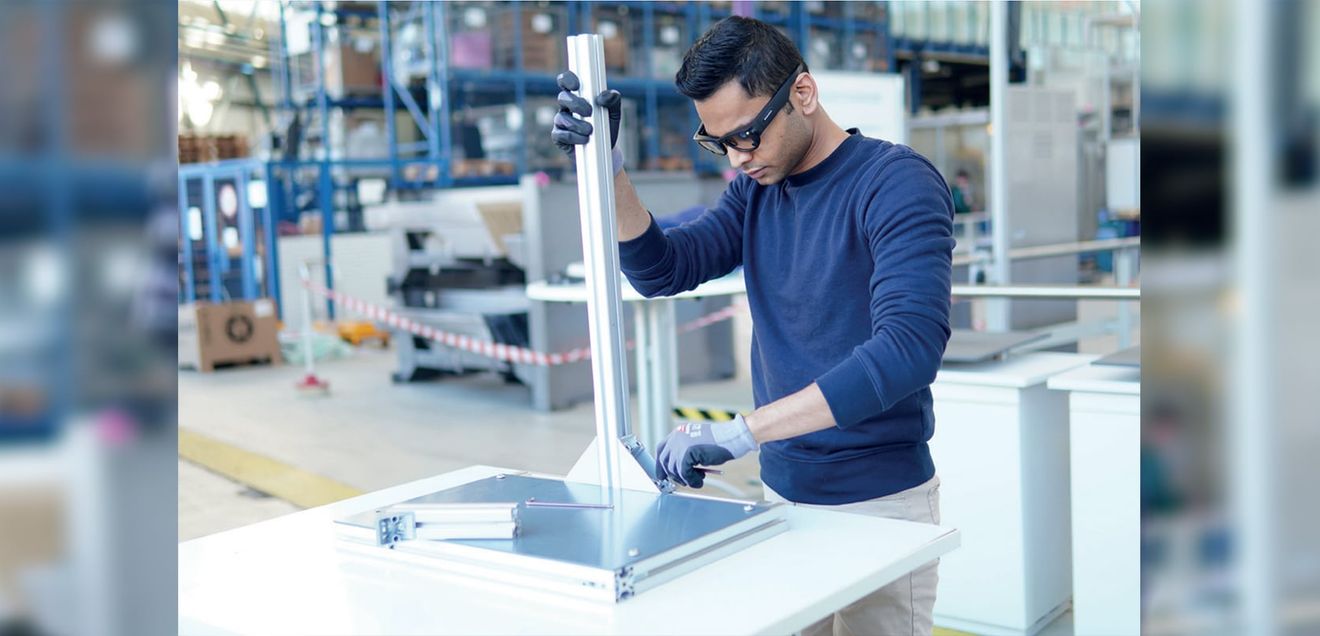
The Fraunhofer Institute for Production Systems and Design Technology IPK has launched the STARK project together with partners from science and industry. The kick-off took place on March 18, 2026 in Berlin. The focus is on the development of an AI-supported system for securing and passing on knowledge gained from experience in companies.
The background to this is a foreseeable shortage of skilled workers: according to a study by the German Economic Institute, around 20 million employees from the baby boomer generation will retire by 2036, while only around 12.5 million younger workers will follow. Companies are therefore faced with the task of systematically safeguarding the experience and knowledge they have built up over the years.
In addition to the Fraunhofer IPK, the Technical University of Berlin, the BSP Business and Law School and industrial partners such as Harms & Wende GmbH & Co. KG and FBT Feinblechtechnik GmbH are also involved in the project. The focus is particularly on small and medium-sized companies in the manufacturing industry.
The core of the project is a chatbot prototype that supports knowledge transfer as an assistance system. The so-called "STARK-Buddy" is intended to provide context-related information and support employees in knowledge-critical situations. There are also plans to integrate it into wearables such as smart glasses to enable situation-dependent interaction.
The approach is supplemented by a practical guide with templates, checklists and examples for the use of AI in knowledge management. The project also takes ethical, legal and social aspects into account in order to ensure transparency and traceability when using the systems.
The project is scheduled to run until the end of 2028 and is being funded with around two million euros. Funding is being provided by the Federal Ministry of Research, Technology and Space and the European Union via the European Social Fund Plus as part of the "Future of Work" program.


You might also be interested in
"AKIMI" Research Project develops AI for Flexible Robotics
The AKIMI research project is launching at the WZL at RWTH Aachen University. The goal is to develop agent-based AI that simplifies the programming and reconfiguration of robotic systems for small and medium-sized enterprises.
 read more...
Trumpf collaborates with the IPAI AI Network
Trumpf is a new partner of the IPAI AI network in Heilbronn. Together, the two parties plan to develop and test artificial intelligence applications for industry.
read more...Siemens makes 'Sinumerik One' AI-capable
Siemens has unveiled a new generation of hardware for Sinumerik One. The CNC controller offers greater computing power, a 64-bit architecture, AI support, and meets the requirements of the EU Cyber Resilience Act.
read more...Valtech Identifies Shortcomings in Agentic AI
The Valtech study “The Agentic Age” shows that skilled workers are open to agentic AI, while many companies have not yet established integrated AI-supported work processes.
read more...Federation Architecture | Part 3
Toward an Industrial-Grade AI for OT
Operational Technology (OT) controls physical processes and therefore operates under preventive and deterministic constraints. Modern AI, by contrast, is probabilistic and improves through iterative learning. Reconciling these paradigms remains a...
read more...Federation Architecture | Part 2
No Architecture Is Perfect
Having introduced the principles of Federation Architecture in Part 1, this article examines their practical implications. It describes operational effects, limitations and areas of application, and situates FA within existing industrial...
read more...Extended three-member Management Board for Deutsche Messe
Deutsche Messe AG is reorganizing its personnel and consistently focusing its Management Board on the further development of the company and the exhibition grounds in particular. With an expanded three-member Management Board, the company is...
read more...Federation Architecture | Part 1
Rethink IT-OT Convergence in an AI-Driven World
AI is shifting threat models for industrial infrastructures. Federation Architecture proposes a disciplined middle ground between isolation and full integration - with edge autonomy, one-way data flow, and human approval.
read more...AI-enabled rugged mobile workstation
With 'Z14I-HG' Durabook presents an AI-ready Fully Rugged Mobile Workstation with Nvidia RTX 5000/3500 Ada graphics.
read more...