
Hannover Messe 2017 / Industry 4.0
"The time for field trials is over"
The really exciting topic at this year's Hannover Messe is not so much new technologies, says Eric Schaeffer, industry expert at Accenture. In this interview, he explains what he will be paying particular attention to in Hanover.
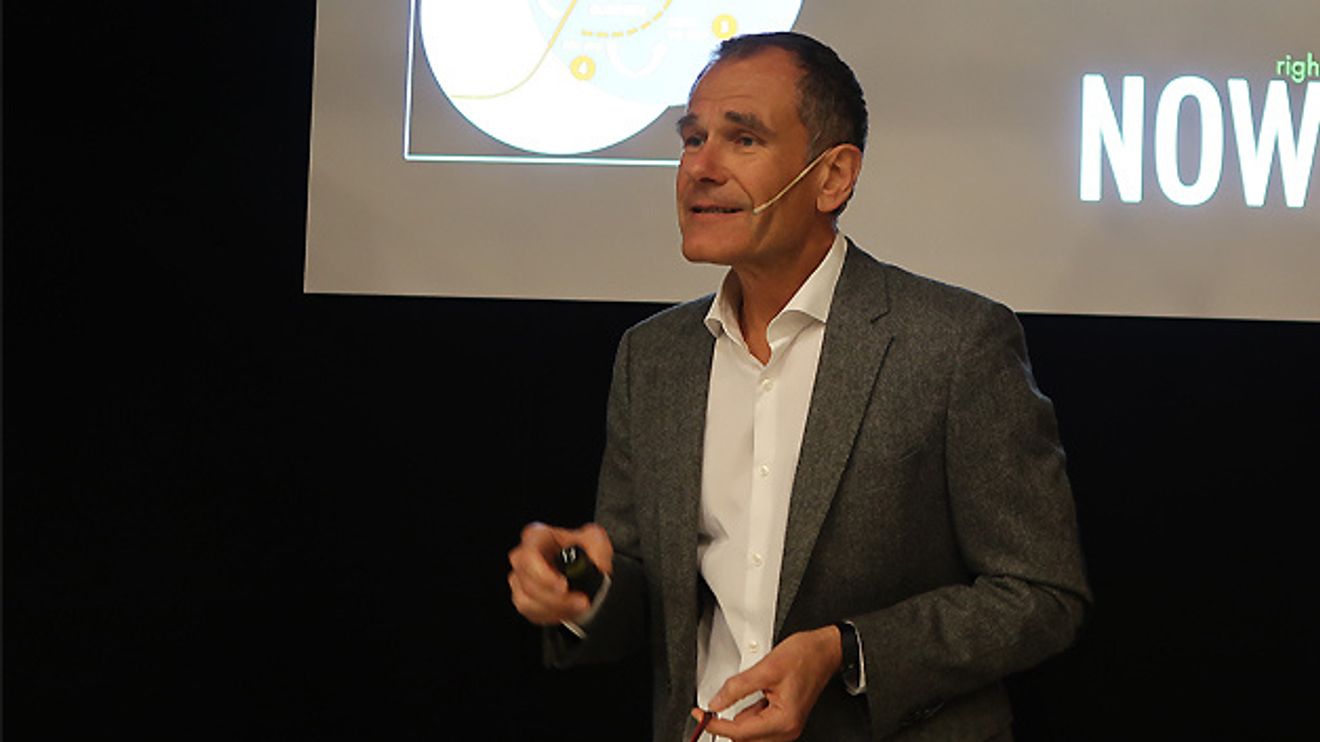
Mr. Schaeffer, you have just written a book on digital manufacturing and IIoT. What are you looking out for in Hanover?
Schaeffer: What interests me has less to do with concepts, technologies or solutions. I'm traveling to Hanover to learn from the pioneers. These are companies that have already developed digitalization strategies, implemented projects and learned from mistakes and progress. These companies know from practical experience how they can achieve value with "Industry 4.0" - and how they cannot. This is precisely the question that is currently occupying almost all companies in the market. So, if you like, I'm not visiting the trade fair for the latest robots, but for proven management best practices.
Do you believe that the concept of "Industry 4.0" will soon be implemented?
Schaeffer: Yes and no. Industry 4.0 is indeed coming into practice - but certainly not so quickly that I could say it will soon be implemented. Companies have understood the fundamental benefits of the paradigm and some are already changing their strategies and processes accordingly. But the actual implementation of the whole thing is by no means easy. Many things seem imponderable and therefore risky, and many managers are not yet clear about the specific steps their company can take. What's more, many of the specific challenges associated with Industry 4.0 are only now slowly becoming clearer as companies take their first steps. I therefore expect that we will remain in the transformation phase for a while yet - with the scope, scale and speed of the transformation constantly increasing.
You talk about uncertainties and risks. How are companies dealing with this?
Schaeffer: So far, mainly through experimentation - trial and error! Individual departments are investing in proof-of-concepts or trial projects relating to IIoT, analytics or even artificial intelligence. Anything that proves promising is then rolled out across the entire company. This is a smart approach per se. But for most industrial companies, it is also a bit new; many companies naturally find this type of iterative approach much more difficult than, say, a software start-up. And, of course, the whole thing is anything but simple: if you don't know exactly what success actually means, if you don't have clear rules for project selection or don't have the necessary expertise to collect and evaluate project data, you can quickly pay too much for this trial and error. This is exactly what most companies no longer want. Boards want to see results that add real value; the days of uncontrolled field trials are over.
So what is your recommendation for these board members? What should they do at the Hannover Messe?
Schaeffer: In my book, I described what companies can basically do to make progress in terms of digitalization: Firstly, invest in acquiring six imperative digital skills that they will definitely need to survive in the industry of the future. And secondly, introduce new processes for effective and efficient innovation - for new products, services or entire business models. Together, these two factors will enable companies to grow their existing business, achieve efficiency gains and thus finance the necessary further transformation towards a digital industry. Accordingly, I would recommend that visitors to the trade fair look for practical examples of the aforementioned prerequisites: Look for the leading companies in your field and see how they are developing digital capabilities or managing innovation.
What are the necessary digital capabilities you are talking about?
Schaeffer: First, you need to start with lifecycle management: synchronize the product and software lifecycles in the company. Next, you need to integrate software and connectivity into the industrial products. Next, you need to use data analytics to gain the necessary insight and decision support within the company; switch to closed-loop manufacturing; work hard to switch to as-a-service business models and last but not least: use platforms and ecosystems.
Eric Schaeffer is an industry expert and managing director of Accenture's global Industrial Practice. His new book, "Industry X.0: Seizing Digital Opportunities in Industry" will be published by Redline in May 2017.


You might also be interested in
Growth spurt through artificial intelligence
Corporate profits will rise sharply thanks to artificial intelligence: This is the conclusion of an Accenture study. But which sectors will benefit the most?
 read more...
The Maturity Index
Many companies do not tackle the topic of Industry 4.0 because they lack a strategy guide. Acatech wants to fill this gap with the 'Industrie 4.0 Maturity Index'.
read more...Industrial Data Space Association
A secure space for data
The Fraunhofer-Gesellschaft founded the 'Industrial Data Space' association over a year ago. An initial reference model of the underlying architecture was published at the Hannover Messe 2017.
read more...Turnover rises to 7 billion euros
According to Bitkom, sales of Industry 4.0 solutions will increase by 21% to EUR 5.9 billion in the current year. This means that the German market for hardware, software and IT services for Industry 4.0 is once again experiencing rapid double-digit...
read more...The 'incredible machine'
100 years ago, in a workshop in Esslingen am Neckar, Festo founder Gottlieb Stoll asked himself how technology could make work easier. To mark the company's 100th anniversary, Festo has now designed and built a machine that shows the fascinating...
read more...SmartFactory-KL at the Hannover Messe
The production island_Phuket
AI applications increase the performance, efficiency and productivity of robots, machines and production systems and also help to save a lot of money because they significantly reduce material usage, energy requirements, CO2 emissions and set-up and...
read more...ZVEI at the Hannover Messe 2025
ZVEI criticizes high regulatory hurdles
At the start of Hannover Messe 2025, the German Electrical and Electronic Manufacturers' Association (ZVEI) described the economic situation in the German electrical and digital industry as challenging.
read more...BDI at the Hannover Messe 2025
Industry in crisis
At the start of Hannover Messe 2025, leading industry associations BDI, VDMA and ZVEI described the economic situation in Germany as worrying. According to BDI President Peter Leibinger, the mood in many companies is worse than ever before.
read more...VDMA at the Hannover Messe 2025
Mechanical engineering calls for far-reaching reforms
At Hannover Messe 2025, the mechanical and plant engineering industry emphasized the need for comprehensive reforms in order to strengthen industrial competitiveness in Germany and Europe. The VDMA believes that the German government and the...
read more...