
50 years of Rauscher
"The pace of development in the AI sector is breathtaking"
This year, the image processing experts at Rauscher are celebrating their 50th anniversary. An interview with the two managing directors Raoul Kimmelmann and Thomas Miller.

Raoul Kimmelmann and Thomas Miller form the management of Rauscher Bildverarbeitung (from left to right).
© Rauscher image processingCongratulations on 50 years of Rauscher! Looking back: What was the most significant technological development of your company?
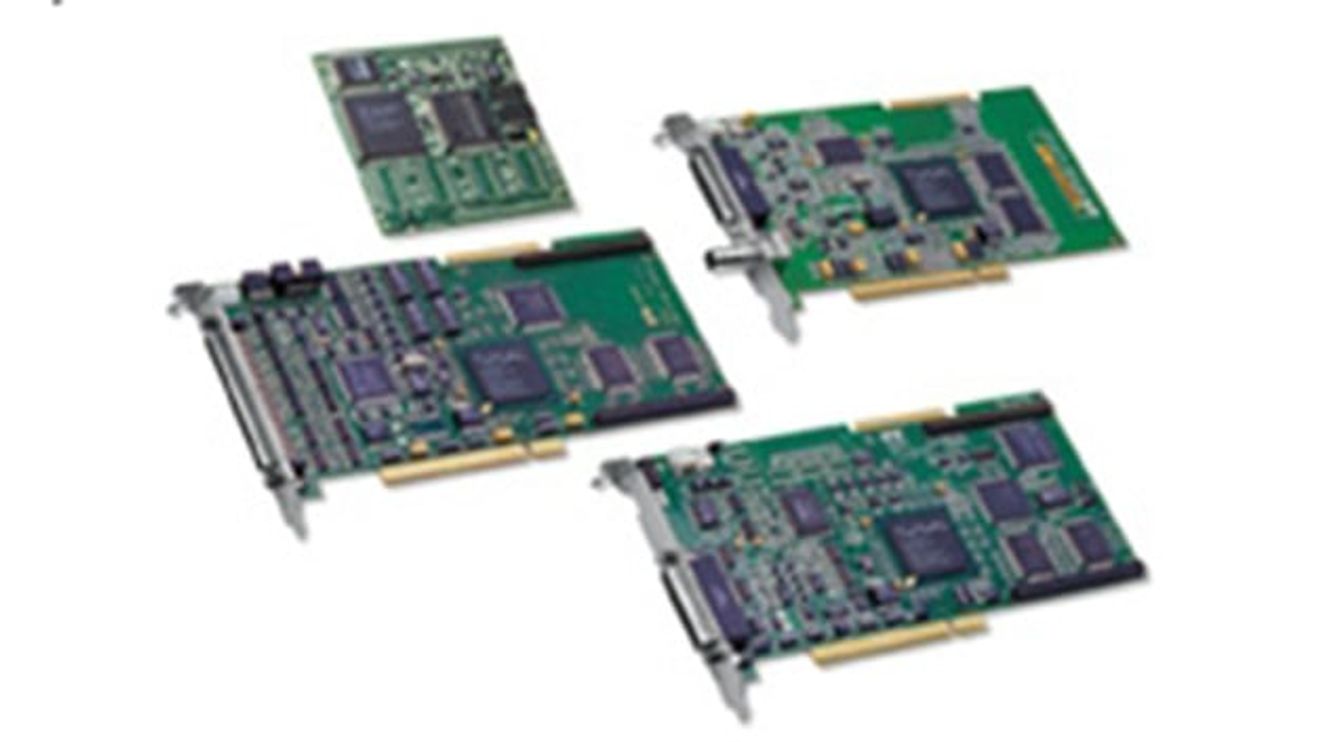
Raoul Kimmelmann: Even in the early phase of the company, the founder Ernst Rauscher recognized that image processing, which was purely scientifically driven at the time, offered great technical possibilities and also had promising potential for efficient solutions for industrial applications. The technology then actually found its way into industry and established itself there as an efficient tool for quality assurance. The most important hobbyhorse of the early Rauscher GmbH were frame grabbers: These image capture cards were absolutely necessary to process the camera data digitally in the PC, but they required explanation, were complex and also virtually non-standardized. For Rauscher, it was a key task at the time to develop an understanding of this technology and to provide the technical resources internally to provide customers with optimum support in the implementation of their image processing systems. Later, various standardizations and new frame grabber-less interfaces such as IEEE1394, GigE and USB3 helped industrial image processing to become widespread in a wide variety of applications, which today also lie outside of industry. Nevertheless, frame grabbers are still relevant and - especially in high-end applications - an essential component of a high-performance solution. These technical developments have been accompanied at Rauscher by numerous new partnerships with international manufacturers of products from all areas of image processing.
Is there an absolute 'bestseller' and what makes it so?
Thomas Miller: Over the course of this long period, there have of course been several bestsellers. The frame grabber series 'Matrox Meteor' and 'Meteor-II', which have been sold successfully for over 30 years and are probably among the most widely used frame grabbers in the world, deserve special mention. The reasons for this are their innovative design, robust hardware, high flexibility for all cameras and the easy-to-use software interface for programming. Today, the 'Matrox Design Assistant' is very successful. With this software, users can not only capture images from any camera without programming, but also implement complete image processing applications at the click of a mouse.
On the camera side, the 'Basler ace' series is certainly a bestseller. From our point of view, it was the first camera series really designed for large quantities. What began many years ago with five models now includes hundreds of different cameras with various interfaces such as GigE, USB3 or 5GigE. With its highly compact design and extensive features, this camera series is still one of the most successful on the market today.
It's not all rosy in 50 years - what do you think was the most difficult time for the company?
Raoul Kimmelmann: Of course, Rauscher also had to face various crises, such as the downturn in the entire global economy in 2008/09, technological changes at major customers or the coronavirus pandemic, which brought with it completely new challenges without customer visits and changes in terms of working from home. I think we have learned a lot from all these crises and have developed significantly as a company as a result.

What does the roadmap for the next ten to 15 years look like?
Thomas Miller: Looking ten to 15 years into the future is not easy, but we will do everything we can to maintain and further expand the good position we have achieved in image processing over the past 50 years in the coming years. With our partners in the fields of lighting, optics, cameras, frame grabbers, PCs, software, 3D and deep learning, I believe we are ideally equipped to do so. We look forward to exciting and challenging applications in the future, which our team of vision experts will tackle together with our customers. We believe that our business model as a distributor for image processing will continue to be a success. We are convinced that the many years of practical experience and close personal cooperation with customers and partners of good distributors such as Rauscher will continue to be the best prerequisites for successfully completing projects in a short space of time. For these reasons, we are very positive about the coming years.
What technological trends do you see that are or will be important for Rauscher?
Raoul Kimmelmann: As in almost all areas of industry, artificial intelligence is playing an increasingly important role in image processing. In certain fields of application, this technology enables innovative solutions that can only be created with extreme effort or not at all using conventional methods. The pace of further developments in this area is breathtaking and will change the entire image processing market in the long term. In addition, other technology trends such as 3D image processing, embedded vision systems and miniaturization with a simultaneous increase in performance have shaped the industry in recent years and are naturally also important for Rauscher.
What do you think will be the biggest challenge in the coming years, in terms of business and/or technology?
Thomas Miller: In general, as in the past, industrial companies will have to adapt to an increasingly difficult business environment in which competitive pressure is increasing rather than decreasing. In light of the technical developments mentioned above, it is therefore extremely important not to lose touch with new technologies. Another major challenge is the shortage of skilled workers, which is also becoming increasingly apparent in the field of image processing. It is one of our goals to remain successful in this demanding environment in the coming years and to keep our finger on the pulse of the times.


You might also be interested in
SWIR hyperspectral camera for industrial high-speed inspection
Teledyne Dalsa launches 'Kaleido', a hyperspectral camera for use in the shortwave infrared (SWIR) range, designed to overcome the existing integration and performance limitations of industrial sorting processes.
 read more...
IDS and Prophesee intensify partnership
IDS and Prophesee are intensifying their partnership for the next generation of event-based industrial cameras. Together they want to explore new sensor architectures that combine classic imaging with Prophesee's event-based 'Metavision' technology.
read more...Dual leadership in Shanghai
Stefan Becker has been appointed Managing Director of Eckelmann Automation Technology in Shanghai and will manage the subsidiary together with Zhongwei Huang.
read more...IDS Imaging Development Systems
Camera series for streaming, monitoring and event recording
IDS Imaging Development Systems launches the 'uEye Live' camera series with the 'uEye SCP' and 'uEye SLE' product ranges. They specialize in monitoring tasks, deliver various live streams and also enable event recording.
read more...AI and streaming meet robustness
IDS Imaging Development Systems is expanding its range of AI cameras with the 'IDS NXT oslo'. The model combines artificial intelligence with video streaming and recording functions in a compact, industrial-grade housing.
read more...With real-time data against disasters
A digital twin is more than just a two- or three-dimensional digital copy. It combines precise data with intelligent analysis and solves complex challenges. With locations in Paderborn and other cities, Eviden relies on the combination of artificial...
read more...Sold to Exaktera
AutoVimation will be part of Exaktera LLC, a portfolio company of Union Park Capital, based in Boston.
read more...Young Professional Award 2024 announced
The EMVA Young Professional Award is an annual prize worth 1500 euros that recognizes the outstanding and innovative work of a student or young professional in the field of machine vision or image processing.
read more...IDS Imaging Development Systems
Design freedom for board cameras
IDS has developed the 'uEye ACP' series, whose modular design principle makes a wide range of camera variants possible. The online configurator can be used to put together models that are available directly from stock.
read more...