
Interview with iT Engineering
The digital twin as a basis
Wolfram Schäfer, Managing Director of iT Engineering Software Innovations, explains in an interview how software is changing automation systems, what opportunities this is creating and what role the digital twin plays in this.
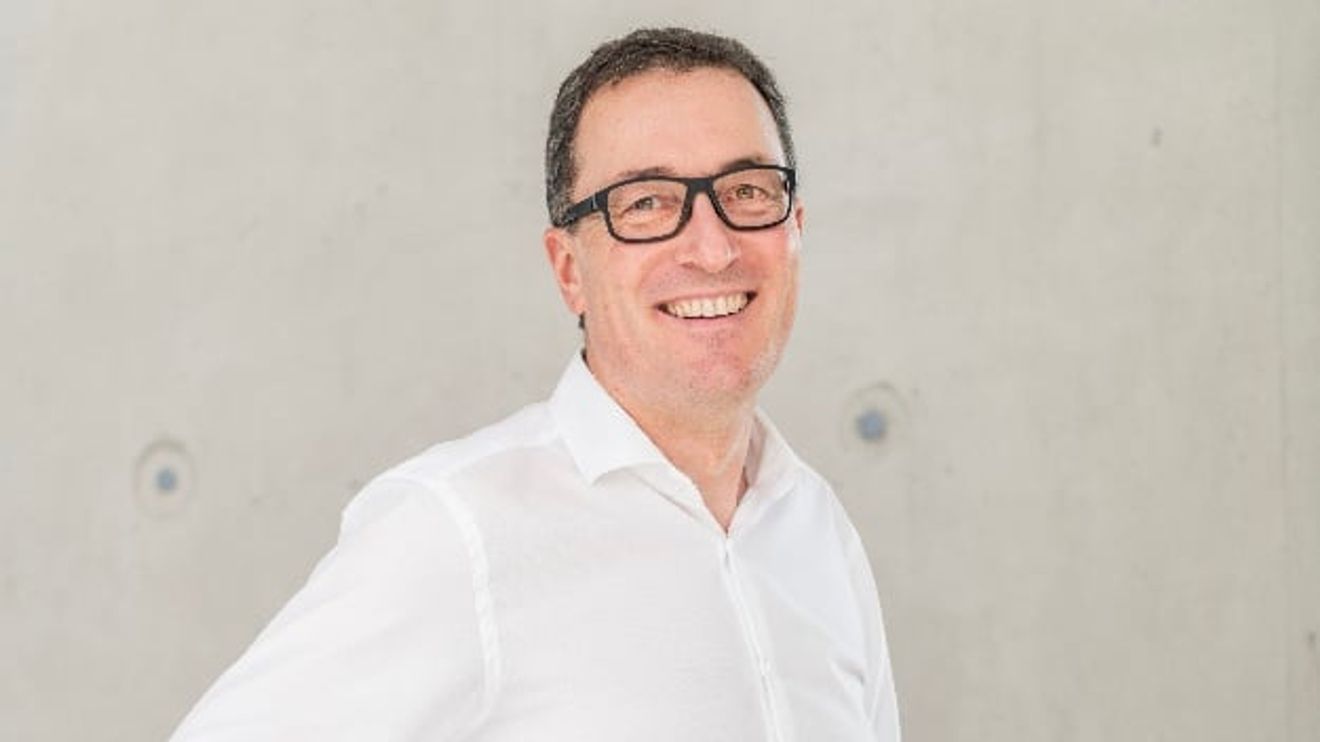
Mr Schäfer, what is Software Defined Manufacturing and what are the significant differences to today's production?
Wolfram Schäfer: As the level of digitalization in production increases, software is increasingly becoming a key strategic element. As a result, software is taking on a central role in our vision of modern production. We refer to this development as 'software-defined manufacturing'. In contrast to today's production, logic and functionality are shifted from the control system to the software, which plans, controls and self-learns to optimize all physical processing steps and processes. This allows a maximum degree of flexibility and adaptability to be achieved in production. Companies also benefit from a higher development speed and the opportunity to develop new business models by applying data-based optimization approaches.
What requirements are placed on the software in this context?
Schäfer: Modularity of all components is of central importance for the implementation of such an approach: on the one hand, the control software should consist of encapsulated modules, whereby each functionality is only available in one module at a time. This means that each machine or each control function accesses the same modules as required. At best, the software is located in the cloud or edge cloud, where all data and information from all machines and process steps are available to it via standardized interfaces. Using machine learning or artificial intelligence, the software can then keep an eye on the entire production process, analyze it and optimize it across the board.
You will be showcasing various use cases at your stand, including predictive maintenance, cycle time optimization and track & trace. Is there a software module for each area?
Schäfer: No, quite the opposite. With these topics, we show how practical use cases of the Industrial Internet of Things can be implemented with the help of our IIoT Building Blocks. The IIoT Building Blocks are a shell for several components that, when used appropriately, are used for data acquisition, data analysis and data evaluation in the production environment. Each of these use cases can be divided into three phases or building blocks: 'Collect' for collecting data, 'Explore' for initial evaluations and visualizations and 'Improve' for combining data and obtaining useful information. This allows individual processes to be analyzed and data-based optimization potential to be identified.
How do you guarantee interoperability in a plant?
Schäfer: Interoperability is an important system characteristic both within a plant and beyond that in the entire production environment. We therefore rely on standardized interfaces and open, manufacturer-independent communication standards such as OPC UA or MQTT for our software. This means that machines from different manufacturers and generations can be easily brought together in one system.
What role does the digital twin play in this and how is it created?
Schäfer: The digital twin closes the circle, so to speak. This is because, as part of the vision of software-driven production, it forms the basis for the simulation, control and improvement of real machines and systems. The digital twin reproduces the real system in detail over the entire product life cycle and is fed with process, status and operating data in real time, i.e. it behaves exactly like the real machine or system.
When creating a digital twin, one quickly thinks of simulations or 3D models, although this is only one type of visual representation and the possibilities are much broader.


You might also be interested in
Siemens and UL Solutions digitize certification process
For the first time, an industrial product was certified for the USA after some of the required tests were digitally simulated and the results confirmed by physical tests. This was made possible with the help of the digital twin.
 read more...
The digital twin in practical use
A digital twin is not only a virtual instance of a physical object, but also a universally usable IT application for adapting the requirements of a wireless modem retrofit application, as in the practical example described.
read more...The digital twin as an add-on
In the IoT world, digital twins are sometimes already included in the scope of delivery. With such a software extension as an accessory, every facet of a product, process or service can be mapped in terms of data and used in a variety of ways.
read more...iT Engineering Software Innovations
Digitization of production
The IIoT Building Blocks from iT Engineering Software Innovations support the entire process of industrial data processing - from the collection of data to its evaluation.
read more...iT Engineering Software Innovations
Predictive maintenance in drive technology
Industry 4.0 is driving the trend towards small batch sizes with high product variance. This puts different loads on drives in machines and systems and makes it more difficult to predict the right time for maintenance. IIoT Building Blocks help with...
read more...Digitization of production
IIoT Building Blocks from iT Engineering Software Innovations is a platform for evaluations and machine learning applications directly in the factory environment.
read more...New Managing Director at Bachmann electronic
Bachmann electronic has appointed Daniel Pfeifer as its new Managing Director with effect from January 1, 2026. He succeeds Bernhard Zangerl, who will be leaving the company.
read more...Dual leadership in Shanghai
Stefan Becker has been appointed Managing Director of Eckelmann Automation Technology in Shanghai and will manage the subsidiary together with Zhongwei Huang.
read more...Secure data management in the cloud
Bachmann presents new functions of the platform-independent visualization solution 'atvise': Thanks to container operation and a consistent client concept, the solution can now also be used securely as a higher-level IoT (Internet of Things) service.
read more...