
RKI on coronavirus / Covid-19
Recommendations for action for major events
We receive cancellations of trade fairs and other major events every day. The decision is based on the Robert Koch Institute's recommendations for action. Read the experts' assessments here.
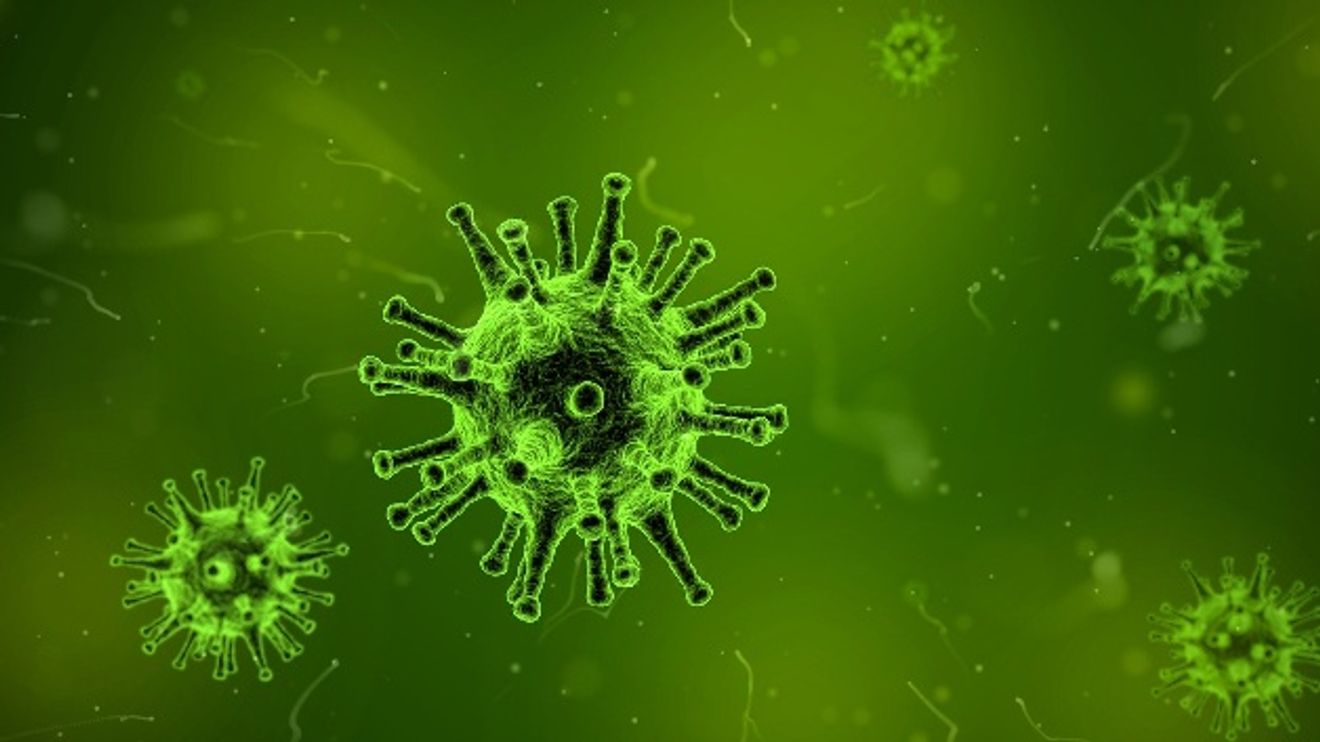
The coronavirus and the resulting lung disease Covid-19 have been keeping the industry busy for several weeks. Companies have canceled their participation in trade fairs, and trade fairs and other major events have either been canceled altogether or postponed to a later date. According to many press releases, these decisions are based on the Robert Koch Institute's risk assessments and recommendations for action for major events.
General principles of risk assessment and recommendations for action for major events - as at 28.02.2020
Mass events can help to spread the virus more quickly. Therefore, depending on the individual case, the cancellation, postponement or reorganization of mass events may be justified in order to take into account the primary health safety of the population.
Transmission routes SARS-CoV-2
The predominant transmission route of SARS-CoV-2 (droplets), e.g. through coughing, sneezing or people who are mildly ill or asymptomatically infected, can lead to human-to-human transmission. Transmission through smear infections has also been described, but only affects a small proportion of cases. Transmission occurs in private and professional settings, but also at larger events. Larger outbreaks have been described in connection with conferences (Singapore), travel groups, church services (South Korea) or carnival events (Germany). At trade fairs, congresses or larger events, transmission to many people can occur under unfavorable conditions. The risks are not the same for all events, which is why those responsible should carefully weigh up the specific measures in a pre-structured risk management process. The following criteria can be included in this process:
Factors that favor SARS-CoV-2 transmission
The risk of large and/or severe COVID-19 outbreaks following SARS-CoV-2 transmission at an event depends on the composition of the participants, the nature and type of event and the possibilities of control in the event of an outbreak. A higher risk can be assumed based on the following criteria
1. more risky composition of participants
- A larger number of people come together, high density?
- Are people from regions with a high incidence of COVID-19 cases participating?
- Are people from other known risk areas taking part?
- Are people with acute respiratory symptoms taking part?
- Are older people or people with underlying illnesses taking part?
2. rather risky nature of the event
- High number and intensity of contact opportunities?
- Close interaction between participants (e.g. dancing)?
- Long duration of the events?
- No central registration of participants
3. rather risky location of the event and implementation
- Have infections already occurred in the region of the event?
- Location conditions: indoor events, limited space, poor ventilation in the rooms?
- Limited opportunities/offerings for adequate hand hygiene
- Willingness of the organizer to cooperate and implement measures
Notes on operational implementation and possible measures
Close coordination between event organizers and local health authorities is necessary in the planning phase, event implementation phase and post-event phase, including sharing availability data (24/7) and establishing communication channels.
The responsibility for initiating measures for events lies with the event organizers and the local authorities on site. In principle, it is possible to hold the event, to allow it to take place subject to conditions, to adapt the format, but it is also possible to postpone or cancel the event.
Risk minimization measures
The following measures could be taken to reduce the risk of transmission and large or severe secondary outbreaks:
- Ventilation of the event venue appropriate to the risk of infection
- Actively informing participants about general infection prevention measures such as hand hygiene, social distancing and cough and cold hygiene
- Limit or reduce the number of participants
- Exclude people with acute respiratory symptoms
- Initial screening for risk exposure and/or symptoms
- Avoid close interaction between participants
- Postpone or cancel event depending on further developments
At trade fairs, congresses or larger events, it is extremely difficult to trace contact persons and, under unfavorable conditions, transmission to many people can occur. It should therefore be taken into consideration whether it is likely to be difficult to trace contact persons quickly in the event of an outbreak.
The Robert Koch Institute has compiled an overview of the coronavirus on its website. On the page you will find recommendations for action, risk assessments and prevention and control measures.


You might also be interested in
VDMA calls for expanded package of measures
Structural change in the automotive industry, a weakening global economy, trade disputes and now the coronavirus pandemic are likely to lead to a 5% decline in production. The VDMA is therefore calling for swift action from politicians.
 read more...
Smart Automation Austria canceled
The trade fair organizer Reed Exhibitions has cancelled Smart Automation Austria in Vienna. There will be no alternative date.
read more...LogiMAT canceled
Due to official orders, LogiMAT 2020 was canceled. The accelerated spread of the coronavirus led to this.
read more...Hannover Messe postponed
The decision has been made: The Hannover Messe will be postponed to the week of July 13-17. This was announced by Deutsche Messe this morning.
read more...Automation meeting 2020 postponed
The Automatisierungstreff 2020 in Böblingen will take place from March 24 to 26 in September.
read more...Twenty2X postponed to June
Deutsche Messe is postponing its new digitalization trade fair for German SMEs, Twenty2X, until the summer. The reason: a comprehensive review of the trade fair participants is not feasible in the short time available.
read more...New date for Light + Building
Messe Frankfurt has announced the new date for Light + Building. The planned date is now 27.9. to 2.10.2020.
read more...all about automation in Friedrichshafen with new date
'all about automation friedrichshafen 2020' has been postponed due to the "rapid worsening of the coronavirus situation and the ban on events in neighboring Switzerland".
read more...Hannover Messe: Decision in week 12
Whether Hannover Messe 2020 will take place will be decided in the 12th calendar week in mid-March. This was announced by Dr. Jochen Köckler, CEO of Deutsche Messe, in a statement.
read more...