

Agreement signed
EU seals free trade agreement with New Zealand
Representatives of the EU and New Zealand have signed a joint free trade agreement. In addition, New Zealand will be part of the multi-billion euro research and exchange program Horizon Europe, as the EU Commission announced on Sunday.
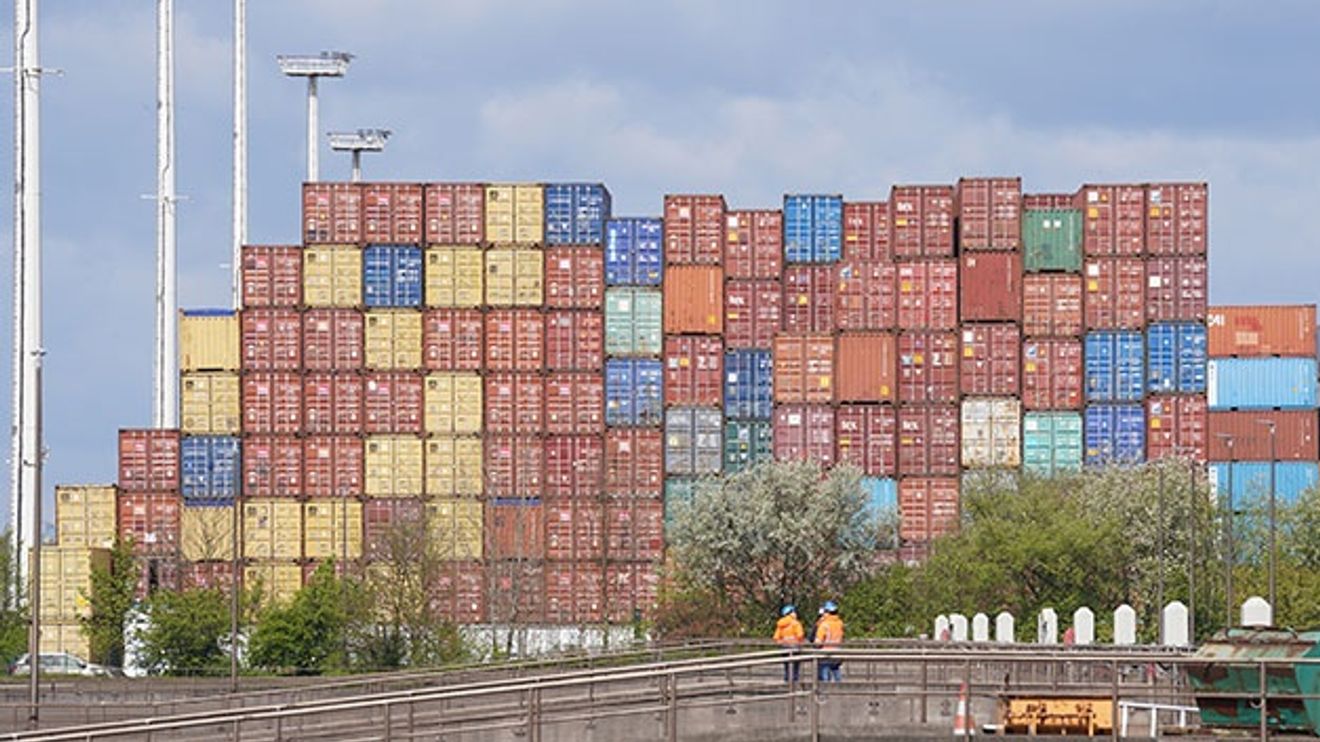
At the signing ceremony, EU Commission President Ursula von der Leyen said that trade between the two partners could increase by an estimated 30 percent as a result of the agreement. EU investments in New Zealand could increase by up to 80 percent, said EU Commission Vice-President Valdis Dombrovskis.
According to the EU states, exports from the EU to New Zealand alone could increase by up to 4.5 billion euros per year. According to the information, companies could already save around 140 million euros in customs duties in the first year. The agreement should be able to enter into force in 2024.
Volker Treier, Head of Foreign Trade at the German Chamber of Industry and Commerce (DIHK), described the agreement as a "bright signal in an otherwise gloomy foreign trade environment". It is a counterpoint to increasing protectionism worldwide. The Chairman of the CDU/CSU group in the European Parliament, Daniel Caspary (CDU), emphasized that the agreement stipulates compliance with the Paris Climate Agreement. "It also ensures that violations of the agreed sustainability regulations can be sanctioned for the first time." The Chair of the Internal Market Committee in the European Parliament, Anna Cavazzini (Greens), stated that robust sustainability requirements in trade agreements must become the gold standard.
According to the German government, Germany was most recently New Zealand's most important trading partner within the EU, while New Zealand ranked 59th globally. According to the report, the main exports from Germany are vehicles, machinery and pharmaceutical products. New Zealand's most important exports to Germany were recently agricultural and forestry products such as sheep and game meat, fruit, dairy products and wool.
Once signed, the text will be sent to the European Parliament for approval. Then


You might also be interested in
What happens to my device data?
Despite warnings from large companies, the EU has agreed on the "Data Act". The aim is to make better use of data from all kinds of devices, from coffee machines to wind turbines. Not everyone is happy with the planned regulations.
 read more...
International Federation of Robotics
EU industry invests heavily in robotics
Almost 72,000 industrial robots were installed in the 27 member states of the European Union in 2022 - an increase of 6% compared to the previous year. These are the preliminary results presented by the International Federation of Robotics.
read more...Patent figures remain at a high level
Endress+Hauser invested more money in research and development in 2022 than ever before - a total of 7.2 % of turnover was invested in R&D.
read more...Patents for communication technology
China overtakes USA
According to an analysis by the German Patent and Trade Mark Office (DPMA), China has greatly increased its pace of innovation in digital technology. China has even overtaken the USA in digital communication technology.
read more...Interview with Hector Tejero, Arrow
Working as a team for greater safety
Cybersecurity affects the entire product life cycle: from development to end-of-life. An important component: the supply chain. Hector Tejero explains how distributors secure this and why they are a valuable member in the implementation of a...
read more...Interview with Eric Wendt, DigiKey
All on one platform
DigiKey continues to expand its offering in the field of automation technology. In this interview, Eric Wendt, Director Industrial Automation at DigiKey, talks about the background, the potential of automation industry and the distributor's new...
read more...100 years of Conrad Electronic
"What has always driven us is our pioneering spirit"
It all started with the radio: 100 years ago, company founder Max Conrad delivered the first radio kit. Today, Conrad Electronic is an international procurement platform. CEO Ralf Bühler talks in an interview about difficult decisions and...
read more...DigiKey with a new brand identity
DigiKey has updated its brand system. The new logo and slogan are intended to reflect the evolution of the distributor, among other things.
read more...Interview with Ralf Bühler, Conrad
"We don't just want to sell products"
What does a modern B2B distributor need to achieve? What role does the platform economy play in this environment? Ralf Bühler, CEO of Conrad Electronic, talks in an interview about the current challenges and why a distributor must face up to change.
read more...