
Interview with Ansgar Hinz, VDE
Departure into the future
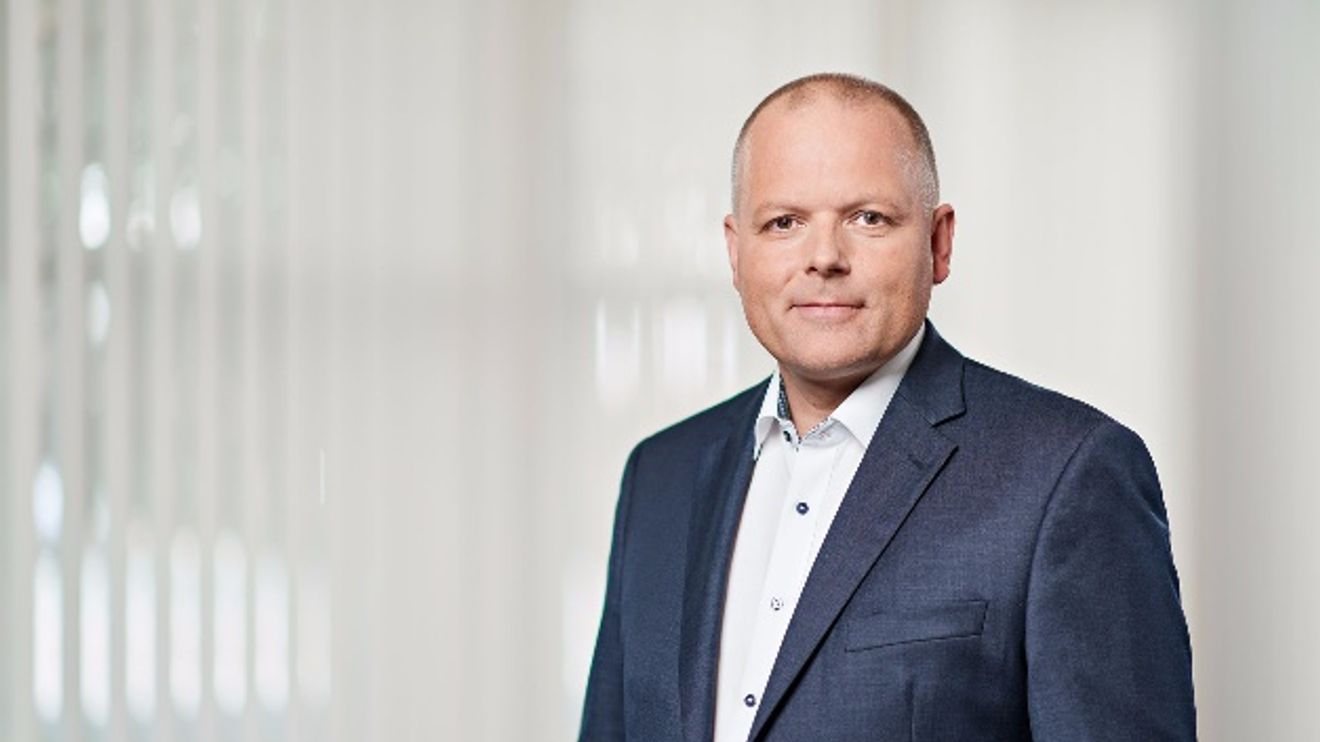
Ansgar Hinz, CEO of VDE, is certain that the coronavirus pandemic has managed to bring German companies out of their "comfort zone and lethargy". Now it's just a matter of not falling back into old patterns, because there is still a lot to do.
IT and OT are growing ever closer together. What challenges does this pose for the automation industry?
For the vast majority of VDE member companies, Industry 4.0, i.e. the trend away from mass production towards individual production, represents a great opportunity to maintain and expand competitiveness, create new, innovative jobs and increase the attractiveness of the "Made in Germany" brand. Internet of Things (IoT) technology and the semantic interoperability approach in particular offer a wide range of opportunities for new services and business models. The previous business model of selling hardware that fulfills certain functions must now be reconsidered. At the same time, the merging of IT (information technology) and OT (operational technology) brings with it several challenges, including higher requirements for semantic interoperability, IT security and functional safety.
Different development processes and cycles need to be coordinated. While IT, i.e. software, has short cycles, OT, on the other hand, has much longer ones. On average, software products are on sale for two to five years, with a further two to five years for maintenance, such as security-related updates. In total, that's a maximum of ten years. With OT, on the other hand, we are talking about much longer cycles and therefore different development and certification processes. Take, for example, the service life of systems in the chemical industry. Here we are talking about periods of 60 years in some cases, as well as comprehensive certification processes for the systems. As you can see, these processes are at odds with the (semi-)automated development processes made possible by Industry 4.0. Industry 4.0 simply requires new life cycles, including new safety cycles.
How will artificial intelligence change the industry?
Artificial intelligence, or AI for short, will massively change all areas of society - including industry. If Hannover Messe had not been canceled this year due to the coronavirus pandemic, we would have seen in April what the industry has already achieved in the field of industrial AI. After all, digitalization has dominated the world's most important industrial trade fair for the past three years. In contrast to the consumer industry, however, AI in Industry 4.0 is not an end in itself. Rather, it is measured by its added value for the classic challenges in production, such as cost reduction, quality optimization, functional enhancement, etc. In product development, AI ensures that the software component of products becomes even more important. As a result, established software development methods and processes are also being put to the test and need to be improved. The performance and safety of AI are difficult to test comprehensively according to the current state of science. There is an urgent need for research here or short-term workarounds must be found, such as the certification of development processes instead of products.
In addition to hardware, software is increasingly playing a central role. How will this change standardization and certification?
Standardization and conformity assessment are becoming increasingly important in an AI-driven industry. We need to find ways of testing and certifying development processes. Until now, the established development and certification processes in the industry have required manual steps. For example, risk analysis and assessment is carried out by an expert who is guided by the specified standards. This is at odds with the (semi-) automated development processes that Industry 4.0 aims to enable. In addition, standardization generally claims to be technology-neutral. However, AI brings completely new properties to standardization - keyword black box character, self-learning systems - that were hardly conceivable in previous standardization work. The task now is to update many existing standards that have been tried and tested in the industry and to set up new certification processes. This is not only a challenge in terms of content, but also requires considerable additional resources. It should be noted that standardization is shaped by over 9,000 volunteer experts at VDE|DKE. To support companies in the digital transformation, the VDE founded the Standardization Council Industry 4.0 (SCI 4.0) years ago together with other partners. The task of the experts, who work together with all organizational units of the VDE Group, including VDE|DKE, is to orchestrate national and international standardization activities. In this sense, the SCI 4.0 bundles the interested specialist groups in Germany, develops a consolidated national basic position together with its partners and pursues the goal of initiating standards for digital production and coordinating these nationally and internationally. The Industrie 4.0 standardization roadmap is a central tool for overcoming the challenges, especially semantic interoperability.
The digital transformation is also creating new fields of expertise and professions. How prepared is Germany for this?
With Industry 4.0, we are talking about the fourth industrial revolution, which will lead to significant changes in the job profiles of engineers, technicians and computer scientists. On the one hand, the faculties of mechanical engineering, electrical engineering and computer science will move closer together, and on the other, the digital transformation will demand a high degree of creativity, system understanding and social skills from employees. Universities must adapt to this and offer further academic training. Because for all of us, the future means lifelong learning. It will be important to develop a cross-disciplinary and cross-process understanding of the system and to develop methods and skills so that we can acquire knowledge and problem recognition and solution skills "on the job". Take traditional production. Its primary goal is to use digitalization to individualize products in production at mass production costs. To achieve this, electrical engineers, mechanical engineers and computer scientists need to work together, speak the same language and develop an understanding, even know-how, for the other domain.
Is Germany prepared for this? Just a year ago, I would have said 'no, innovation and change are taking place elsewhere, namely in the USA and China', the gaps are too big, the comfort is just as great thanks to full order books. Today I say 'yes, definitely'. The coronavirus pandemic is showing us how quickly Germany can break out of its comfort zone, how quickly companies, including SMEs, are able to drive digitalization in-house and even convert their production in the shortest possible time. I am certain that Germany will emerge stronger from this crisis. Our mindset has changed. Instead of comfort and lethargy, the motto is now "new beginnings". The motto: just don't fall back into old "feel-good" patterns. Personally, I hope that many young people will now realize that the pandemic can be overcome with the help of technology and decide to train in electrical and information technology, mechanical engineering or IT.


You might also be interested in
"Almost exclusively in Asia or the USA"
The VDE sees photonic-electronically integrated microchips as an under-promoted key technology for sensor technology. The necessary industrial semiconductor processes, for example, are almost exclusively mastered in Asia and the USA.
 read more...
SPS Connect 24.11. - 14:00 - 14:20
Stay fit for the future
The topic "Staying fit for the future - the importance of platforms and digital solutions for mechanical engineering" explains the interaction between machine builders, machine operators and digital solutions.
read more...SPS Connect 11/24 - 1:35 - 1:55 pm
Interoperability as a prerequisite for new services...
In April 2019, the German Industry 4.0 platform presented its strategic agenda for the coming years with the launch of its 2030 vision. Interoperability is one of the three pillars of this agenda and standardization plays a central role here.
read more...Cabling - still the safest option!
5G is creating new opportunities for manufacturing companies to network system components and processes. What potential does 5G have to implement viable business models? Stefan Ehrlich, CEO of SQL Projekt AG, gives his forecast.
read more...The Industry 4.0 hype - an opportunity?
The number of successful Industry 4.0 implementations is still relatively small. Why is it that the industrial revolution that was touted years ago is not really making progress?
read more...Prof. Dr. Armin Schnettler is the new VDE President
As the new President of the VDE, Prof. Dr. Armin Schnettler, CEO Energy Business at Siemens Energy, wants to focus on safety, security and sustainability.
read more...The second phase
The BMBF project 'Basissystem Industrie 4.0' came to an end a year ago. Now, small and medium-sized companies are to be supported in the introduction of Industry 4.0 on the basis of the project. Project manager Dr. Thomas Kuhn explains the...
read more...IoT and AI are gaining in importance
Artificial intelligence and the Internet of Things are more important than ever for one in five SMEs - especially when it comes to surviving the coronavirus pandemic. This is the result of a study commissioned by Microsoft.
read more...Industry 4.0 in mechanical engineering
Since 2008, Michaela Rothhöft has been conducting the "Industrial Communication / Industry 4.0" market study every three to five years with the support of the VDMA. The results of the 2020 update.
read more...