

Siemens / Microsoft
Converging Digital Twin Models
Siemens and Microsoft are working together to facilitate the exchange of digital twin models and data. To this end, they are merging Digital Twin Definition Language with the W3C Thing Description Standard.
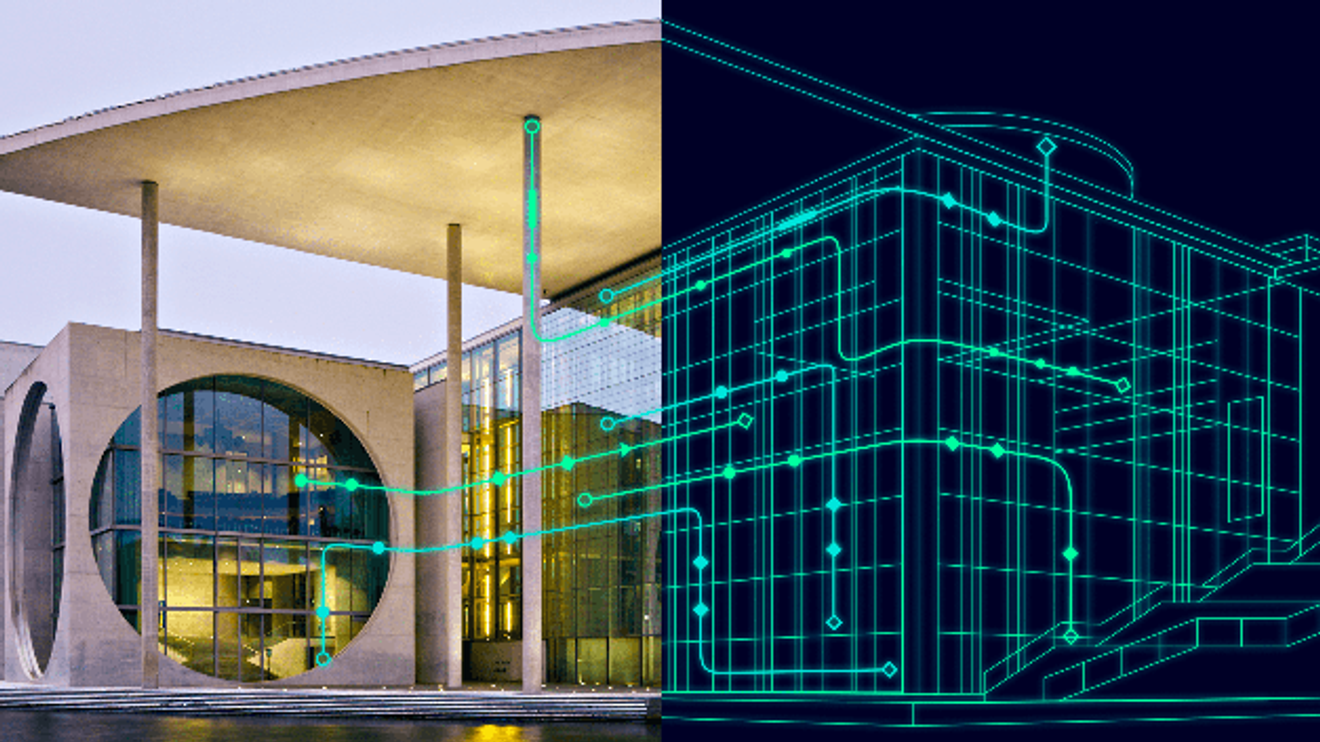
In a collaborative move with the W3C Consortium, Siemens and Microsoft have announced their commitment to converge the Digital Twin Definition Language (DTDL) with the Thing Description standard from international standards organization, W3C.
By unifying both languages, customers are offered consistent modeling experiences, mitigating fragmentation in an evolving IoT landscape. With customers typically deploying a mix of vendors in their infrastructure leading to lock-in and high integration efforts, this convergence will allow for simpler system integration and interoperability.
As virtual replicas of physical objects, processes, or systems that mirror their real-world counterparts in a digital environment, digital twins enable organizations to monitor, predict, and improve the performance of their assets, enhancing efficiency and reducing costs. Standardizing Digital Twin languages is therefore crucial for interoperability, ensuring seamless communication and integration between different digital twin systems and platforms.
With Siemens already facilitating the emerging W3C Thing Description standard for future products in building management, power distribution and smart grids, extending this interoperability strategy to Microsoft Azure will bring about substantial benefits to customers.
Microsoft's Digital Twin Definition Language enables modeling of the physical world with Azure services, while the W3C Thing Description standard provides an interoperable representation of device interfaces and their incorporation of standard industry ontologies. Both languages have revealed many conceptual similarities during the initial stages of convergence.


You might also be interested in
Digital twin in action for the environment
A Hessian municipality wants to become climate-neutral by 2030 by using a digital twin for environmental modeling. The digital twin uses environmental data and 3D simulations to replicate real-life conditions.
 read more...
Siemens sells Innomotics for 3.5 billion euros
Siemens sells Innomotics to KPS Capital Partners for 3.5 billion euros. Preparations for an IPO of the manufacturer of electric motors and large drives were announced in November.
read more...Digitization through photorealistic digital twins
Framence has announced a strategic partnership with the Indian company Pratiti. The aim is to support companies in their digital transformation by combining Framence's digital twins with Pratiti's understanding of digital technology.
read more...Siemens and UL Solutions digitize certification process
For the first time, an industrial product was certified for the USA after some of the required tests were digitally simulated and the results confirmed by physical tests. This was made possible with the help of the digital twin.
read more...The digital twin in practical use
A digital twin is not only a virtual instance of a physical object, but also a universally usable IT application for adapting the requirements of a wireless modem retrofit application, as in the practical example described.
read more...Digital twin - concrete!
A defined standard for the asset administration shell is crucial for the interoperable and efficient exchange of digital twin data - so much for the theory. Nine partners showed what a specific use case looks like at the Hannover Messe.
read more...Digital Twin Consortium / OPC Foundation
The digital twin in production
The Digital Twin Consortium (DTC) and the OPC Foundation have now announced a collaboration to accelerate the development and adoption of digital twin technologies.
read more...First control cabinet made of green steel
The Siemens subsidiary Alpha Verteilertechnik claims to offer the first control cabinet for industry made entirely of green steel.
read more...Siemens quarterly figures Q3-2024
Siemens confirms forecast with a "but"
Siemens is struggling with a weakening automation market in the third quarter. The software business, on the other hand, is developing strongly. It remains to be seen whether this will continue after the switch to a SaaS model.
read more...