
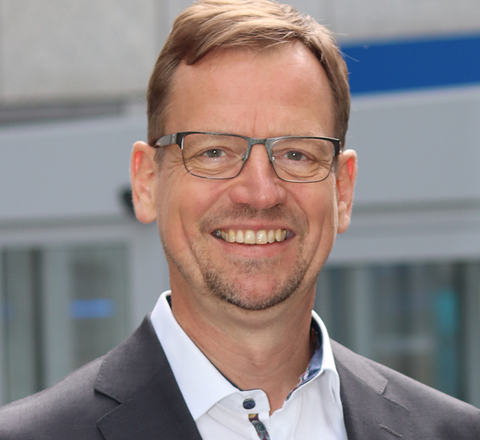
Interview with Gunther Koschnick, ZVEI
ZVEI calls for better framework conditions for electrification
Electrification brings challenges and opportunities in various sectors. In an interview, Gunther Koschnick from the ZVEI Automation Association emphasizes that standardization, digitalization and regulatory framework conditions are decisive factors for the successful implementation of the "All Electric Society".

What common challenges do you see in the various sectors when it comes to switching to all-electric solutions?
First of all, it must be said: A lot is happening in the individual areas. We are getting closer to an electrified, digitalized and automated world step by step. However, there are still a few areas that are lagging behind. We see challenges in standardization and the framework conditions. Without these, systemic networking is not realistic. One example is smart metering systems. In Germany, we are not as far along as we could be. At the same time, the digitalization and flexibilization of controllable consumers are a basis for the all-electric society: we will only be on the right track when the washing machine runs exactly when electricity is cheap, when the electric car contributes to grid stability as an intermediate storage device and when energy production and consumption are coordinated as efficiently as possible, including in industry.
How do infrastructural differences between the sectors affect the progress of electrification?
Firstly, the most important prerequisite remains the availability of energy. Electrification - whether direct or indirect, for example via hydrogen - will prevail when the cost advantages of renewables finally translate into lower prices. This is where politics comes in: taxes and levies urgently need to be reduced. Secondly, digital networking requires standardized data models that include everyone - from producers to consumers in industry, commerce and private households to storage facilities. One example that we at ZVEI are actively working on is the Digital Product Passport 4.0 (DPP 4.0), which is based on the digital twin of the Asset Administration Shell (AAS). Such standards are what make the networking that forms the basis of the All Electric Society possible in the first place.
To what extent do different regulatory frameworks affect the cross-sector implementation of the All Electric Society vision?
The risk lies less in differing standards than in overly comprehensive and sometimes contradictory regulation or even double regulation. This is why the ZVEI is calling for a regulatory moratorium in the digital sector. The large number of regulations that have been introduced at EU level in recent years is a problem. Their implementation ties up a lot of resources at companies, which cannot be used for actual business tasks. And because we at the All Electric Society are talking about the digital networks of the future, the EU's entire digital regulation applies here: Data Act, Cyber Resilience Act, AI Act - the motives may be right, but the implementation overshoots the mark.
How can companies and associations from different sectors jointly develop standards to facilitate the transition to an all-electric society?
The most important thing is to focus on practice. It is not primarily about structures and abstract goals, but about concrete application scenarios and use cases. With this perspective, standards can be created that bring real benefits for users. At ZVEI, we are shaping this for the topic of direct current, among others. There is a great deal of interest: around 80 companies are involved in the international Open Direct Current Alliance (ODCA) working group. Direct current grids are an important technology for an electrified future, as conversion losses are eliminated. This significantly increases efficiency while simultaneously reducing resource consumption. However, companies can only gain the knowledge we need for implementation by gaining practical experience.
Which technologies offer cross-sector synergies that could accelerate the electrification process, and why these in particular?
The key words have already been used: It's about renewable energies, smart and flexible grids and storage systems, direct current - and, above all, about integrating virtually all consumers into sector coupling. After all, the real potential in terms of efficiency and resilience lies in smart networking, where the supply and demand of energy can be controlled digitally. In this way, we can reduceCO2 emissions, minimize losses, reduce primary energy consumption and save costs.
How do interdisciplinary research and development projects contribute to overcoming cross-sectoral challenges?
In most cases, the phase we are in is no longer about basic research. We have the technology we need. Systemically, the task now is to use and scale it. Programmes are particularly helpful when they bring companies and research institutes together and promote an exchange on the obstacles to implementation - such as a lack of standardization. Only then can existing technologies be used across the board.
How can close collaboration between public and private actors support cross-sector transformation?
Politics and administration must not slow down the transition to the All Electric Society, which explicitly includes the indirect use of electricity. At this year's Hannover Messe in the All Electric Society Arena at the ZVEI main stand in Hall 11, we are once again holding precisely the necessary discussion by bringing together company representatives with politicians and scientists. In practice, we can learn a lot from neighboring countries. We need better framework conditions for storage technologies and must enable companies to make the necessary investments. The bureaucratic burden is a major obstacle that we urgently need to eliminate. The enormous amount of work involved inhibits innovation and damages competitiveness.
What long-term strategies do you think are promising to ensure a smooth and coordinated transition of all sectors to electric systems?
The key point is that, technically speaking, electrical energy is the clear winner in terms of emissions and efficiency. The overarching strategy must now be to promote motivation - and the best motivation would be a competitive price. The ZVEI has long been calling for it to be freed from additional costs. Electricity must be cheap for investment to take place.
What role do government funding programs or initiatives play in the cross-sector coordination of electrification strategies?
If the framework conditions are right, cross-sector regulations will prevail simply because they make technical and economic sense. The main challenge is to provide all stakeholders, from manufacturers to users, with long-term investment security. The negative example of a lack of reliable policy is the electric car: the sudden discontinuation of a subsidy immediately leads to overcapacity. This shifts the market - and it is possible to fall behind what has already been achieved.
| The eMonitor - a guide to the energy transition |
|
The ZVEI's 'eMonitor' measures and documents the progress of electrification in Germany. The aim is to make the transition to an "all-electric society" visible and to highlight the scope for action. The results to date confirm that progress has been made, but that there is also a need to catch up - particularly in the transport sector. The eMonitor not only provides data, but also places it in a political and economic context in order to make well-founded recommendations for action. The intelligent networking of electricity consumers, storage systems and producers plays a central role in this. Find out more about the eMonitor: In this interview, Mark Becker-von Bredow, Head of Electrification and Climate at ZVEI, provides insights into the background, objectives and planned further developments of the electrification benchmark. |


You might also be interested in
Industry invests more in AI
A survey by the ZVEI shows: Almost every second company in the electrical and digital industry is already using industrial AI productively. Many are planning increasing investments and expect rapid economic effects. The industry is forecasting...
 read more...
ZVEI calls for AI reforms at EU level
According to the ZVEI, Industrial AI opens up new potential for efficiency and productivity in automation. At SPS, the association is calling for bold structural reforms and better framework conditions. Despite global uncertainties, the industry...
read more...Collaboration on Open Energy Standards
Weidmüller Joins the EEBus Initiative
Weidmüller has joined the EEBus Initiative. Together, they aim to further promote the international EEBus communication standard for smart grids and intelligent energy management.
read more...AI Platform Aims to Enable Energy Sharing in Industry
As part of the EU project FlexBit, Fraunhofer IFF is developing an AI-powered platform to optimize energy storage systems and manage industrial energy-sharing systems. The concept is being tested in an Industrial Energy Community in Magdeburg and is...
read more...EMC and radio testing in Germany and worldwide
In a world filled with smartphones, connected cars, medical devices and smart appliances, supporting optimal electromagnetic compatibility (EMC) and wireless performance to minimize interference between electronic products is critical.
read more...Marco Geiser becomes new Vice President Secure Power DACH
Marco Geiser has held the position of Vice President of Secure Power DACH since April 1, 2026. In this role, he will strategically develop the Secure Power business in Germany, Austria and Switzerland, strengthen it operationally and focus it on...
read more...Promoting the use of direct current
Current/OS and the Open Direct Current Alliance (ODCA) have agreed a strategic partnership aimed at accelerating the creation of a coherent and interoperable ecosystem for direct current (DC). A Memorandum of Understanding (MoU) has been signed by...
read more...IT Partnership in the Energy Market
CGI and Schneider Electric cooperate
CGI and Schneider Electric are expanding their collaboration in the DACH region. The aim is to support energy suppliers with grid modernization, digitalization and regulatory requirements. The focus is on ADMS-, GIS- and AI-based solutions.
read more...Switch-mode power supplies for industrial automation
The compact switching power supplies 'PFA10-T' from E-T-A have been specially developed for demanding industrial environments, both for 24 V(DC) and 48 V(DC) applications.
read more...