

Think tank
Greenhouse gas emissions at their lowest level since the 1950s
Germany is emitting fewer greenhouse gases than it has for a long time. This is the assumption of experts from the Agora Energiewende think tank. But that sounds better than it is.
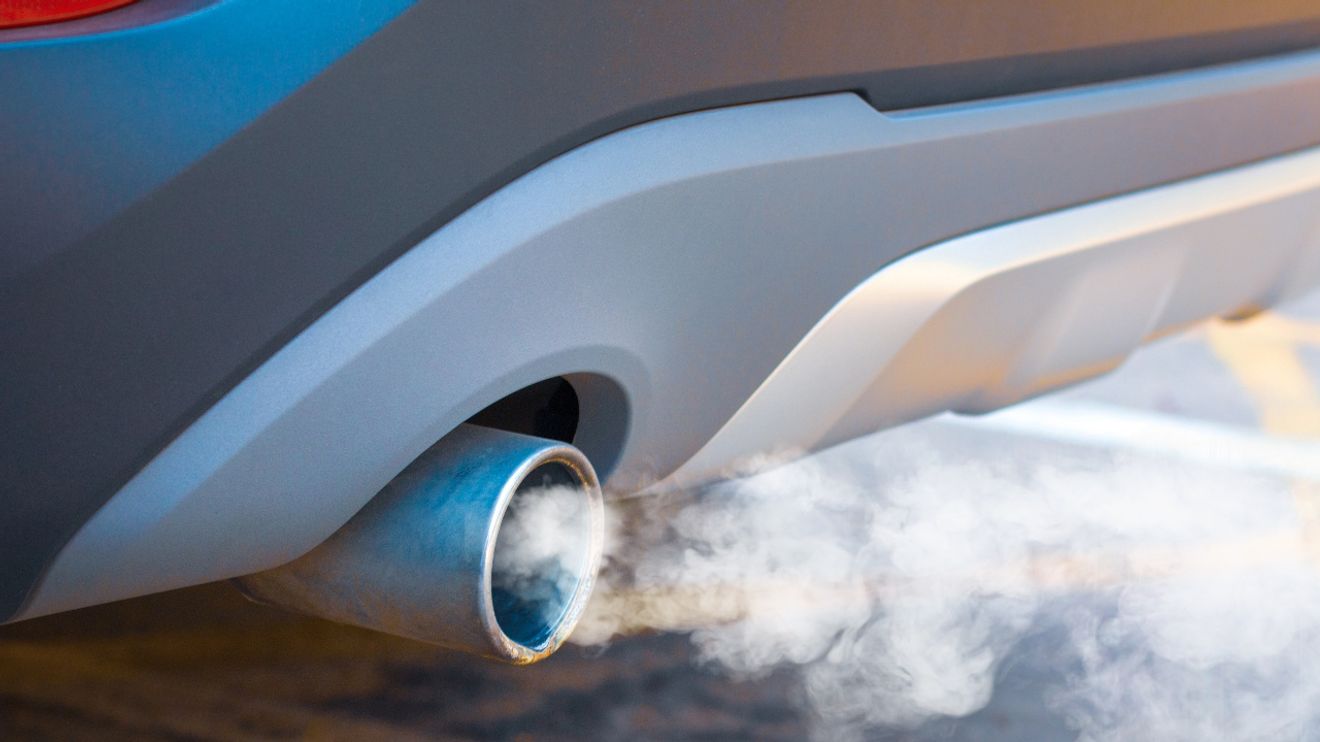
Berlin (dpa) - According to preliminary calculations by the think tank Agora Energiewende, Germany produced fewer greenhouse gases last year than it has in seven decades. According to the study,CO2 emissions fell by 73 million tons compared to 2022 to a total of 673 million tons - a decrease of 46 percent compared to 1990. This is according to a study entitled "The energy transition in Germany: state of play 2023", which will be presented in Berlin this Thursday and is available to Deutsche Presse-Agentur in Berlin.
"In 2023, emissions will have reached their lowest level since the 1950s. At the same time, this is the largest year-on-year decline in this period," Agora's Germany Director Simon Müller told dpa. For the period before reunification, the authors combined data on greenhouse gas emissions from the Federal Republic and the GDR. However, according to the experts' analysis, the record year does not represent a lasting success for climate protection.
Why emissions have fallen
The authors of the study attribute only around 15 percent of the decline to permanent savings, for example through the expansion of renewable energies, more efficient use of energy and the switch to more climate-friendly fuels. According to the study, around half is due to short-term effects such as lower electricity consumption. The lower emissions are also due to the weakness of German industry, with production in energy-intensive industries in particular slumping. "The slump in production caused by the crisis is weakening Germany as an industrial location. If emissions are simply shifted abroad as a result, nothing is gained for the climate either," emphasized Müller.
According to Agora, however, the main reason for the improved climate balance is that less electricity was generated from the climate-damaging burning of coal last year. Emissions from electricity generation fell by 46 million to 177 million tons ofCO2, more than halving compared to 1990. As usual,CO2 or carbon dioxide here includes other greenhouse gases that have been converted intoCO2 for better comparability. The fact that less coal was used to generate electricity was due to the price-related decline in electricity consumption of 3.9 percent compared to 2022. Energy prices had risen as a result of the Ukraine crisis. Across Europe, there was also a strong year for electricity from renewable energies, according to the authors of the study. Renewable energies also increased in Germany.
Federal Minister for Economic Affairs and Climate Protection Robert Habeck (Greens) was pleased with the growth in renewables and the decline in coal-fired power generation, but expressed a differentiated view on the decline in emissions in industry: "It is good that investments are being made in climate protection and energy efficiency. What is not good is that the Russian war of aggression in Ukraine and the price crisis wanted by Putin are leading to a decline in production. My goal as Minister of Economic Affairs is for Germany to remain a strong industrial location and become climate neutral."
Buildings and traffic as problem children
Agora assumes that the building sector has failed to meet its climate target for the fourth time in a row. According to the calculations, emissions here only fell by 3 million to 109 million tons ofCO2, which was due to lower heating requirements due to mild weather. The sector is therefore 8 million tons above the path required to achieve the 2030 target.
The transport sector has therefore missed the target set out in the Climate Protection Act for the third time in a row. According to Agora, emissions here have also fallen by 3 million to 145 million tons ofCO2 compared to the previous year. This is 12 million tons above the current target path. The share of electric cars in new registrations stagnated.
The WWF called for accelerated building renovation and a speed limit in traffic, for example. The German Ecological Transport Association also called for this, as well as tax incentives for lower-emission vehicles.
Solar booms, wind weakens
According to figures from the Federal Network Agency, renewable energies accounted for more than half of German electricity generation for the first time in 2023, at 56%.
According to Agora, the expansion of solar power reached record levels last year: 14.4 gigawatts of new capacity were added, 6.2 gigawatts (GW) more than in the previous peak year of 2012. Although there were fewer hours of sunshine than in the previous year, the amount of electricity generated increased. The German government is aiming for an installed capacity of 215 GW for photovoltaics by 2030, with Agora forecasting 81.9 GW for 2023. The systems are being built even when there was no money from the state: according to the think tank, 9 percent of the solar capacity added on open spaces was built outside of EEG tenders and therefore without state funding.
"We are on track for the 2030 climate targets in this area," said Müller. "The expansion and digitalization of the distribution grids are a prerequisite for keeping it that way." The German government wants to reduce greenhouse gas emissions by 65 percent by 2030 compared to 1990.
According to the study, thanks to favorable weather conditions and a slight increase in capacity, wind turbines will produce 138 terawatt hours (TWh) more electricity in 2023 than German coal-fired power plants at 132 TWh. However, with an increase of 2.9 GW for onshore wind, the growth in generation capacity was far too low to achieve the German government's target of an installed capacity of around 115 GW by 2030. "This is also due to the much more complicated approval procedures compared to solar power," Müller noted. However, approvals for onshore wind turbines have increased significantly.
Failure to meet EU climate targets could be costly
Together with the other EU member states, Germany has also set itself greenhouse gas reduction targets for the period 2021 to 2030. This affects areas that are not part of European emissions trading, i.e. transport, buildings, agriculture and waste, as well as parts of the industrial sector. The Federal Environment Agency also predicted a significant gap here by 2030. Germany would then have to buy rights to emit greenhouse gases from other EU countries or risk infringement proceedings by the EU Commission with possible fines. "If Germany does not make progress on climate protection in buildings and transport, it could face costs in the billions," warned Müller.
Funding uncertain
How exactly the climate-friendly restructuring of the German economy will continue is unclear following the budget ruling by the Federal Constitutional Court. According to Agora, the federal government's agreement on next year's budget does secure key elements. However, there is still a lack of a concept for the medium and long-term financing of necessary investments. Müller warned: "Non-action also causes costs."


You might also be interested in
Reducing the CO2 footprint with machine learning
The ecological transformation can be accelerated with the digital transformation. Various examples show how artificial intelligence can be used to reduce the carbon footprint in production. But how sustainable is AI?
 read more...
Association for CO2 network Estainium founded
How much CO2 is emitted by a product? Manufacturers often don't know themselves because a large proportion is produced by suppliers. An association promoted by Siemens aims to remedy this situation.
read more...Measure CO2 content in welding systems
The sensors in the 'FlowEVO' series from Smartgas measure the CO2 content in MAG welding systems and therefore allow conclusions to be drawn about the result of the welding process.
read more...ABB manufactures CO2-neutral at the Lüdenscheid site
After a two-year planning and construction phase, ABB has presented its first CO2-neutral site in Germany to the public. As a visible sign of this, a solar power plant officially went into operation at the subsidiary Busch-Jaeger in Lüdenscheid on...
read more...The 'AI marketplace' becomes a start-up
The 'AI Marketplace' project initiated by it's OWL and funded by the Federal Ministry for Economic Affairs and Climate Protection has come to an end. To enable companies to benefit from the findings, the project team is continuing as the start-up...
read more...The potential in the manufacturing industry
A study commissioned by the German Federal Ministry for Economic Affairs and Energy demonstrates the high value creation potential of AI in the manufacturing industry. The authors of the study, Dr. Inessa Seifert and Dr. Leo Wangler, provide...
read more...Collaboration on Open Energy Standards
Weidmüller Joins the EEBus Initiative
Weidmüller has joined the EEBus Initiative. Together, they aim to further promote the international EEBus communication standard for smart grids and intelligent energy management.
read more...AI Platform Aims to Enable Energy Sharing in Industry
As part of the EU project FlexBit, Fraunhofer IFF is developing an AI-powered platform to optimize energy storage systems and manage industrial energy-sharing systems. The concept is being tested in an Industrial Energy Community in Magdeburg and is...
read more...EMC and radio testing in Germany and worldwide
In a world filled with smartphones, connected cars, medical devices and smart appliances, supporting optimal electromagnetic compatibility (EMC) and wireless performance to minimize interference between electronic products is critical.
read more...