

Interview with Karsten Fuchs, Lapp
DC voltage in the industry
What are the prospects for DC voltage technology in industry? Andreas Mühlbauer spoke about this with Karsten Fuchs, research engineer in the Innovation and Advanced Technology department at Lapp Holding.
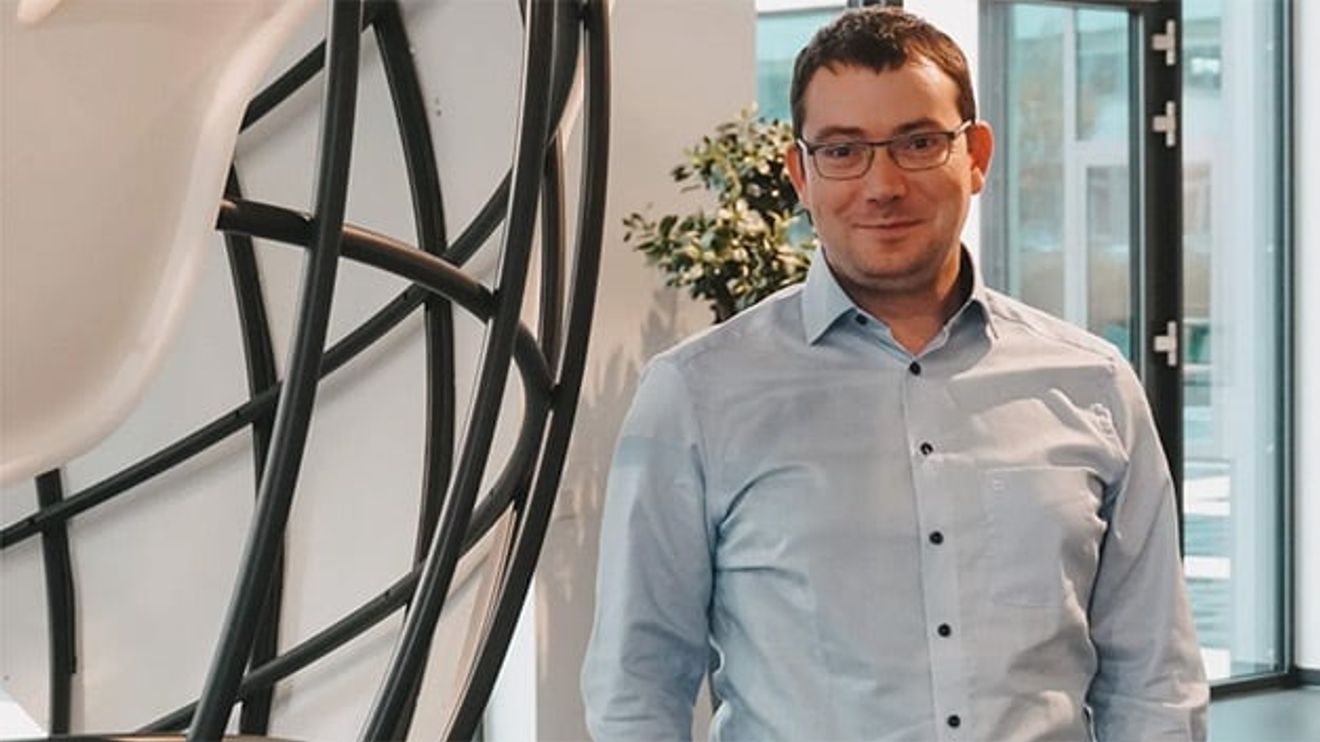
Lapp has been working on DC voltage technology for industrial production for several years and is also focusing on this topic at the Hannover Messe. What originally prompted you to invest in this field of research and development?
Karsten Fuchs: We want to position ourselves as an innovative solution provider and technology leader in the field of connection solutions. We want to address economic and industrial trends with innovations. Direct current is such an important topic for the future. In order to identify such trend topics, we set up a Technology Advisory Board over ten years ago, which advises the Lapp Management Board on technological issues of the future. It consists of renowned experts from various technical universities and research institutes. At the same time, we have reorganized the area of global research and development as well as the management of laboratory and test center activities in order to make us faster and more agile in this area as well.
A key factor in the supply of direct current is energy efficiency - also a core topic at this year's Hannover Messe. How does this compare quantitatively with an alternating current supply and how high do you estimate the real savings potential to be?
Fuchs: The use of direct current is particularly efficient when the source of electricity generation comes from renewable energies such as photovoltaics. Direct current (DC) is generated there, which must first be converted into alternating current (AC) via inverters. However, if the end consumer is also a digital device such as a laptop, iPhone, an LED light or the charging point for electric vehicles, it must be converted twice, as these end consumers only work with direct current (DC). This results in conversion losses. Intelligent production units in a factory also often contain an internal DC intermediate circuit, for which the DC supply eliminates a conversion stage. Experts believe that the consistent use of direct current in industry not only makes it easier to integrate renewable energy sources, but can also avoid conversion losses between AC and DC in the single-digit percentage range, depending on the application. In addition, the use of DC also leads to material savings, for example with copper in the cables and lines. This reduces the cross-section and improves resource efficiency.
A potential switch to a DC voltage supply will certainly require appropriate legal and normative framework conditions. Are these already sufficiently in place and what areas still need to be addressed?
Fuchs: There has already been a lot of research and talk, but ultimately there is still no major breakthrough in terms of standardization. That's why Lapp has been a founding member of the Open Direct Current Alliance (ODCA) since fall 2022. This is an alliance of companies, research institutions and the ZVEI with the aim of giving DC technology new momentum. The ODCA is therefore the international and practical continuation of the German DC research projects DC-Industrie and DC-Industrie2, which have been working with over 40 partners from industry and research since 2016 to implement the energy transition in industrial production. Lapp was also actively involved in these research projects. The ODCA concentrates on six focus topics: Building an international DC ecosystem and establishing DC technology for many applications. Strengthening cooperation between users, planners, manufacturers, suppliers, research institutions, standardization organizations and associations. The international dissemination of knowledge and solutions for DC grids as well as investment protection through the development and establishment of an innovative and sustainable DC system. At the same time, the ODCA serves as a platform for designing further research projects and is intended to convince politicians and society of the opportunities of direct current on the way to a resource-saving andCO2-neutral world.
What approaches has Lapp pursued so far in the field of DC supply and what particular challenges does the technology present?
Fuchs: Lapp is active in the development of cables and wires for low-voltage DC networks for industrial applications. We were a funded partner in the DC-Industrie2 research project and researched the long-term stability of insulation materials for cables and wires. Much earlier, together with the Ilmenau University of Technology, we had already discovered in tests that the insulation materials exhibit a different ageing behavior in a DC voltage field than in an AC voltage field. Cables with PVC or polyolefin insulation failed significantly faster with direct current than all test specimens with TPE insulation. Further research is needed to make more precise statements. Nevertheless, there is no reason to dispense with cables with PVC insulation in DC applications. However, the prerequisite is that these cables are laid firmly, i.e. without movement, and without mechanical stress, for example due to excessively tight bending radii. In addition, the environment should always be dry. If these conditions are not met, for example in moving applications in energy chains, users can switch to other insulation materials such as TPE.
What products have already emerged from this? As far as I know, you have concentrated on cables for robotics, among other things?
Fuchs: Lapp was the first in the world to present a DC portfolio - and not just for robotics. This includes, for example, the Ölflex DC GRID 100 - a DC cable for connecting buildings and industrial plants. It is suitable for setting up energy-saving DC networks in industrial systems in the low-voltage range, for example for use on control systems, motors and frequency converters. The DC portfolio also includes the Ölflex DC 100 with new color coding of the cores in accordance with the DIN EN 60445 (VDE 0197) standard for DC cables, which was updated in 2018. Other cables include the Ölflex DC Servo 700 for stationary applications and the Ölflex DC Chain 800 made of TPE for moving applications, the first DC robot cable Ölflex DC Robot 900 with TPE core insulation and a PUR sheath and the halogen-free, highly flame-retardant single-core cable Ölflex DC ESS SC for DC applications up to 1.5 kV for use in energy storage systems (ESS).
How do you assess the potential of direct current technology in industry and what is the timeframe for this development?
Fuchs: An energy grid consistently designed for direct current would achieve a much higher overall efficiency compared to today. Several large lignite-fired power plants could then be shut down. However, a complete switch to direct current is probably utopian. Nevertheless, I very much hope that the use of direct current will become more and more widespread. The demand for electricity for industry, households and transportation will continue to rise in the coming years due to increasing electrification. Without conversion losses, our electricity grid would be much more efficient. However, I don't dare to make a time forecast.
What other topics is Lapp addressing at this year's Hannover Messe?
Fuchs: At the Hannover Messe, we will primarily be presenting our major trend topics, including DC technology, electromagnetic compatibility and the services we offer our customers as added value.
Lapp at the Hannover Messe 2023: Hall 11, Stand C05


You might also be interested in
A long way to go
At Hannover Messe 2023, there was a lot of publicity for direct current (DC), as it could make an important contribution to the energy transition and sustainability, as the use of DC grids significantly reduces energy requirements in existing...
 read more...
Largest single investment in the company's history
The Lapp Group is planning a comprehensive expansion and modernization of its logistics center in Ludwigsburg, near the A8 motorway. This will be the largest single investment in the company's history.
read more...New COO for the LA EMEA region
Effective July 1, Michael Seddig (55) will become Lapp's new Chief Operating Officer for the LA EMEA region (Latin America, Europe, Middle East, Africa). This role was previously held by an interim trio for several months.
read more...Lapp uses bio-based plastic from BASF
Lapp presented the first Ethernet cable with a bio-based sheathing at the Hannover Messe. The compound was developed by the chemical company BASF.
read more...The associations at the Hannover Messe
Loss of competitiveness?
The major associations BDI, VDMA and ZVEI are calling for more efforts to ensure that Germany remains competitive in an international comparison. At the moment, however, Germany is falling behind in international comparison.
read more...Electric, efficient, energy-saving
The storage and retrieval machines in a high-bay warehouse have been equipped with energy storage systems that reuse braking energy and reduce peak loads. This solution was the result of cooperation between the plant manufacturer Lödige Industries...
read more...New Board of Directors for Innovation and Technology
With effect from April 1, 2023, the Supervisory Board of Lapp Holding has appointed Hubertus Breier (45) as the new Chief Innovation and Technology Officer.
read more...Sales up 31 %
Despite geopolitical and economic challenges, the Lapp Group closed the past 2021/2022 financial year (October 1 to September 30) successfully: A 31% increase in turnover is impressive.
read more...Interview with Maria Dobritzsch, Lapp
Green copper
Lapp aims to reduce the carbon footprint of its products by 20 percent by 2025, based on the 2020/2021 financial year. Maria Dobritzsch, responsible for sustainability at Lapp, explains the role of copper as a raw material in this.
read more...