
Connection technology
UL certification - what machine builders should know
In general, UL approval makes it easier to enter the Canadian and US markets, as it provides a basic level of acceptance. However, not all ULs are the same. The choice of approval type for electrical cables, for example, should therefore be carefully considered.
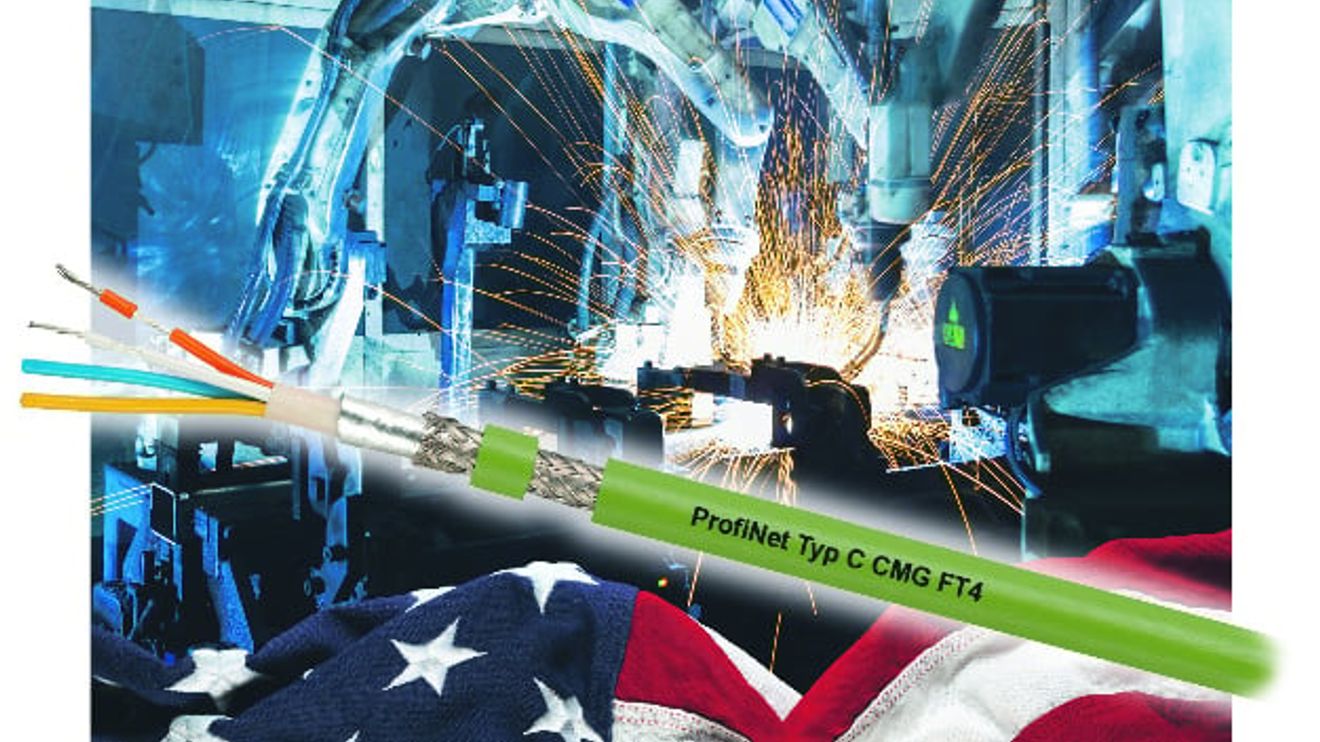
The North American market is an important sales market for the German mechanical and plant engineering industry and requires UL approval. Either a machine as a whole can be UL approved or all individual components used can have a UL marking. The second option facilitates acceptance in general.
The 'Underwriters Laboratories' - UL for short - was founded in 1894 as an independent organization. It tests and certifies products with regard to their safety. "Our customers often request UL approval without knowing the content, advantages and disadvantages of the individual approval types," says Horst Messerer, Product Manager Data/Network & Bus Technology at Helukabel, identifying a fundamental problem. In general, UL approval makes it easier to enter the Canadian and US markets, as it provides a basic level of acceptance. However, there are major differences in the individual types of approval and how they are handled by the inspectors.
Horst Messerer explains the problem using a typical example: "A machine manufacturer sets up several machines in a factory building. These are wired with a drag chain cable with a PUR sheath, which has a 'UL-Recognized AWM Style' or 'UL-Listed CMX' approval. PUR is an excellent material for permanently moving cables with a long service life. Due to its chemical composition, however, the material is not highly flame-retardant." According to Messerer, this cable is very suitable for cabling within the machine, but not as soon as the individual machines are connected to each other. Then the following problem arises: the cables are laid on the floor in cable ducts or via cable support rails, for example. This type of installation falls under building cabling (CM/CMG), which must fulfill a bundle fire test. The Americans require a high level of flame resistance for so-called flatbed installation. The consequence: "The testing fire marshal will therefore inspect the cabling in the machine, but not the cabling between the machines. The installed cable must then be completely or partially removed and replaced with a version with a PVC sheath and UL-listed CMG, for example."
The US testing authorities make a fundamental distinction between the UL-Listed standard and the 'UL-Recognized' seal of approval. "UL-Listed standard contents are generally known. This means that the standard for cabling in buildings, factory equipment and field cabling for machines and systems enjoys greater acceptance among inspectors," explains the Helukabel product manager, adding: "The inspector usually has the recurring standards in mind and can therefore make a quicker decision during the acceptance process." This results in significant time savings and considerably lower testing and acceptance costs for the machine and system manufacturer.
undefined
What is behind UL-Recognized?
UL-Recognized refers to hundreds of AWM styles (Appliance Wiring Material), which can be found under the so-called 'Yellow Card' (UL's identification card, which identifies the existing AWM styles of a manufacturer). This type of approval is comparable to the VDE register number. Approval is granted as follows: A product for machine/device wiring is submitted to UL with application details regarding voltage level, flame retardancy, temperature range, etc. The authority checks this product with regard to the requirements and - if the parameters are suitable - issues an existing AWM style. If this is not the case, a new AWM style is issued.
undefined
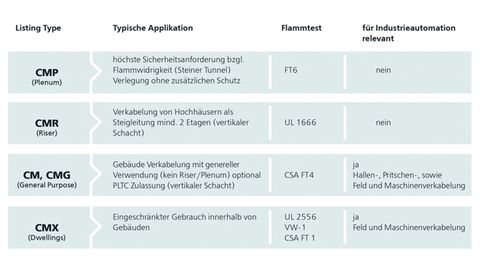
Due to the large number of AWM styles, the inspector does not immediately know which classifications are behind them. He has to look them up, which can be very time-consuming with 50 to 80 different cables per machine. In doing so, he may come across a criterion that prevents acceptance. The machine manufacturer then has to retool and obtain approval again. This takes time and is expensive. Messerer therefore advises: "The purchaser or technician should always opt for the standard first, because the standard on the cable is easier to check and approval is faster. Only if they don't find what they are looking for here can they look at the AWM styles. With a product according to the standard, he has the inspector on his side because he saves him the AWM research, so to speak."
However, AWM styles certainly have advantages: they are tailored to the application, as not all applications can be squeezed into the UL standard. A woodworking machine places different demands on the cabling than a metalworking machine or the mechanics of robots.
"Our customers are often not even aware of the actual requirements of their application and what the installation options are in North America with the various providers. This can even differ from state to state," the cable specialist points out. He hopes that purchasers and technicians will look into the UL issue and discuss the application with the installers. Unfortunately, it is often the case that too few people understand the topic or are prepared to find out about it.
Practical example: Trailing chain cable
The following example describes the procedure for selecting the right cable: A drag chain cable is to be designed in UL. Two standard qualities can be selected for this: PUR and PVC. The PVC quality can be CM or CMG listed. The PUR quality can be designed in an AWM style or as CMX-Listed. However, the latter version only fulfills the single cable fire test, so there is no advantage in terms of fire technology. While the tester is immediately aware of the relatively weak fire test with the CMX standard, he has to check the AWM style. If the CMG drag chain cable with PVC sheath is used, this cable will not last as long in the chain as the PUR cable. However, the cable can also be laid in the flatbed and the inspector will approve it.
However, the European and North American approvals do not always conform because many things and approaches have evolved historically. In the case of European approvals, the main focus is on the ingredients, such as the proportion of high-risk plasticizers or the absence of lead (RohS or REACH). Cables that are laid in buildings must be halogen-free and/or have a low smoke density or toxicity. American certifications, on the other hand, prioritize flame retardancy. Unfortunately, it is of no interest here which fire or toxic gases or smoke are produced in the event of a fire. Ultimately, it is debatable which is the right approach. The fact is, however, that even in America with extremely flame-retardant cables, fires are caused by all the harmful substances and are no less preventable than with European solutions.
UL-listed for data cables
Data cables are described in the UL444 standard. Depending on the application and flame retardancy, the individual chapters contain the standard classifications CMP, CMR, CM, CMG and CMX according to the respective criteria for data cables. Helukabel, for example, has CM- or CMG-UL-Listed (bundle fire test) as well as AWM-Style UL-Recognized (vertical or horizontal single fire test) in its portfolio for various PVC versions. The same applies to FRNC versions (Flame Retardant Non-Corrosive). CMX-UL-Listed or UL-Recognized are available for the PUR versions. Both are only available with vertical or horizontal single fire test.
Cables with a PE sheath for outdoor or underground installation have no flame retardancy and therefore no UL certification. PUR can never fulfill a bundle fire test in terms of flame resistance, but this material has a wide range of chemical and mechanical resistances. In chain applications, the cable generally offers a longer service life compared to PVC-based materials. Conclusion: "I recommend that our customers always opt for the standard first, because the standard on the cable is easier to test and approval is quicker," concludes Horst Messerer.
Author: Angela Struck is a freelance journalist from Langenpreising.


You might also be interested in
Same cables for AC and DC?
Are alternating current cables also suitable for direct current? Not always, as a working group at the TU Ilmenau has proven.
 read more...
Programming via drag & drop
One of the biggest obstacles to the acquisition of industrial robots in medium-sized manufacturing companies is the lack of skilled workers. With this in mind, a new operating system was developed that allows programs to be created easily via drag...
read more...Reduce costs and throughput times with cobots
They carry out pick & place tasks, screw and assemble parts and, last but not least, are used for packaging - we are talking about the eight collaborative robot arms that A. Jung has now integrated into its production lines for electrical...
read more...Schunk increases gripping force to 450 N
The series grippers previously certified for collaborative applications were usually limited in their gripping force. This is now a thing of the past: Schunk is now launching a large stroke gripper on the market that can achieve gripping forces of...
read more...What about 'Drive 4.0'?
Drives are the core component in industrial production. In combination with sensors and software, they enable the digitalization of the production process and thus the transparency of technical processes. In short: Industry 4.0 only works with...
read more...Project 'DC Industry' - Part 1
DC instead of AC in the production grid
Research and industry are working hard to redesign the power supply for industrial systems via a smart, open DC grid. The article describes the challenges of the 'DC Industry' project and the system specification developed so far.
read more...Artificial intelligence in the Simatic
Artificial intelligence (AI) - is opening a new chapter in the digital transformation of manufacturing. Implemented in the control system - and therefore directly on the machine - it helps to significantly reduce conventional programming and...
read more...A clear view thanks to the 19-inch IPC
Due to their great flexibility, industrial PCs in 19-inch format continue to enjoy great popularity - for example as the basis for pioneering testing technology applications.
read more...Engineering meets digital twin
Better planning with the digital twin: this is the principle that technology service provider Alexander Bürkle strives for in the engineering and assembly of switchgear. The prerequisite for this is a software platform that enables interdisciplinary...
read more...