

USB-C for everyone
European Parliament votes in favor of a standard charging cable
Less electronic waste, lower costs for consumers and less environmental pollution - this is what standardized charging cables are supposed to deliver. MEPs from all political parties have agreed to the project. However, industry representatives are concerned.
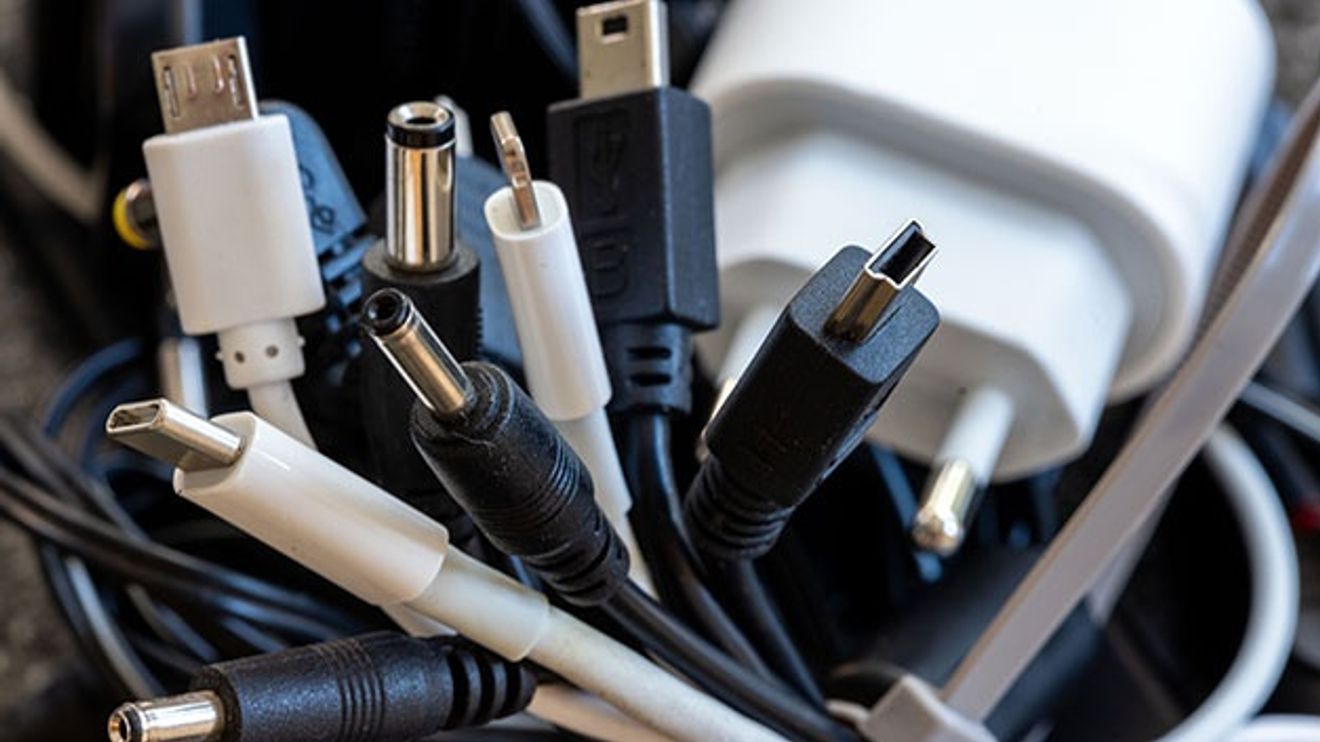
The EU Parliament has given its final approval to the uniform USB-C charging standard for smartphones and many other devices. On Tuesday, MEPs voted almost unanimously in favor of a regulation previously agreed by negotiators from Parliament and the EU member states. Accordingly, the new requirements will come into force in 2024. In a final step, the EU member states still have to agree, which is scheduled for October 24. However, this is considered a formality.
Legal requirements have been a long time coming. The Commission first raised the issue of charging cables more than ten years ago. 14 manufacturers - including Apple - agreed on a uniform standard for cell phone power adapters in a voluntary commitment. For the sockets in smartphones and tablet computers, three of several dozen types were left: USB-C, Apple's Lightning connector and Micro-USB.
Representatives of various parties are celebrating the result. Andreas Schwab (CDU), internal market policy spokesperson for the EPP group, points out that it will also be easier to switch from one manufacturer to another. However, remaining stocks of other charging cables could still be sold later. His SPD colleague René Repasi also welcomed the fact that the EU Commission is yet to present a uniform standard for wireless charging.
In contrast, the software, IT and digital industry association Bitkom has voiced vehement criticism. The plan runs counter to the principle of technological openness, it said. "Innovations in charging times or data transmission, for example, will be slowed down politically," said Bitkom CEO Bernhard Rohleder.
Green MP Anna Cavazzini disagrees with this. "Contrary to what some lobbyists claim, the agreement on the standardized charging cable is open to innovation." If there is a better connection in the future, USB-C could be replaced - but only by a new uniform standard.
However, there are also company representatives who are happy about the new rules. "Standardized charging cables stop annoying cable clutter and save resources and consumers' nerves," said the Association of Municipal Enterprises. The association represents the interests of the waste management industry, among others.
In addition to cell phones, numerous other devices are now also covered by the new rules. These include tablets, digital cameras, headphones, loudspeakers, e-readers, keyboards and mice. The rules will apply to laptops from spring 2026. According to the EU Parliament, the new guidelines should lead to consumers in the EU saving 250 million euros per year by avoiding unnecessary purchases of chargers.
In future, it should also be clear at the point of purchase whether a device is sold with or without a charging cable. In addition, special labels should make it easier to determine whether existing chargers are compatible with the end device. "This will also enable the buying public to make an informed decision as to whether it is necessary to buy a new charger with a new device," said the EU Parliament.


You might also be interested in
Cable converter with click-off hinge
Redur is expanding its portfolio to include a cable wrap with click-off hinge.
 read more...
Power supplies with power boost function
Lütze is expanding its range of 3-phase Compact power supplies with two versions with 120 W (5 A) and 240 W (10 A).
read more...Start of applications for the 2023 Innovation Award
The AMA Association for Sensors and Measurement (AMA) invites individuals and development teams from science and industry to apply for the AMA Innovation Award 2023.
read more...Final EU negotiations can begin
According to the EU Commission, an estimated 11,000 tons of electrical waste is generated every year by disposed and unused chargers. This could now change, as standardized charging cables for cell phones and other devices are coming closer.
read more...Leuchteinheit integriert
Leoni stellt mit dem iEVC (illuminated Electrical Vehicle charging Cable) ein Ladekabel mit statusindizierter Leuchtfunktion vor. Das Kabel begleitet visuell den Ladevorgang eines Fahrzeuges durch einen Farbwechsel des Kabelmantels.
read more...Ladekabel für die gewöhnliche Steckdose
Mit dem 'In Cable Control and Protection Device (IC-CPD)' von Phoenix Contact ist ein Ladekabel nach Mode 2, mit dem Elektrofahrzeuge an jeder gewöhnlichen Steckdose zu Hause oder unterwegs geladen werden können. Die Ladeleistung von maximal 3 kW...
read more...Battle for the EU as an industrial location
Von der Leyen sees need for billions
The sums involved are in the hundreds of billions. Industries of the future, such as clean energy production, are being courted worldwide. Following an initiative by Ursula von der Leyen, the EU is now facing intensive debates.
read more...EU Commission wants to protect victims of artificial intelligence
According to the EU Commission, anyone who suffers damage due to artificial intelligence should be able to claim compensation more easily in future. According to the Commission, this should also increase confidence in new technologies.
read more...Dispute over patent protection
EU launches new WTO case against China
China is intimidating European companies with litigation bans. The EU no longer wants to stand idly by and watch.
read more...