
Skills shortage
Employer president fears loss of prosperity
You can see it in restaurants, craft businesses and many other sectors: There is a shortage of skilled workers. The employer president describes what this could mean.
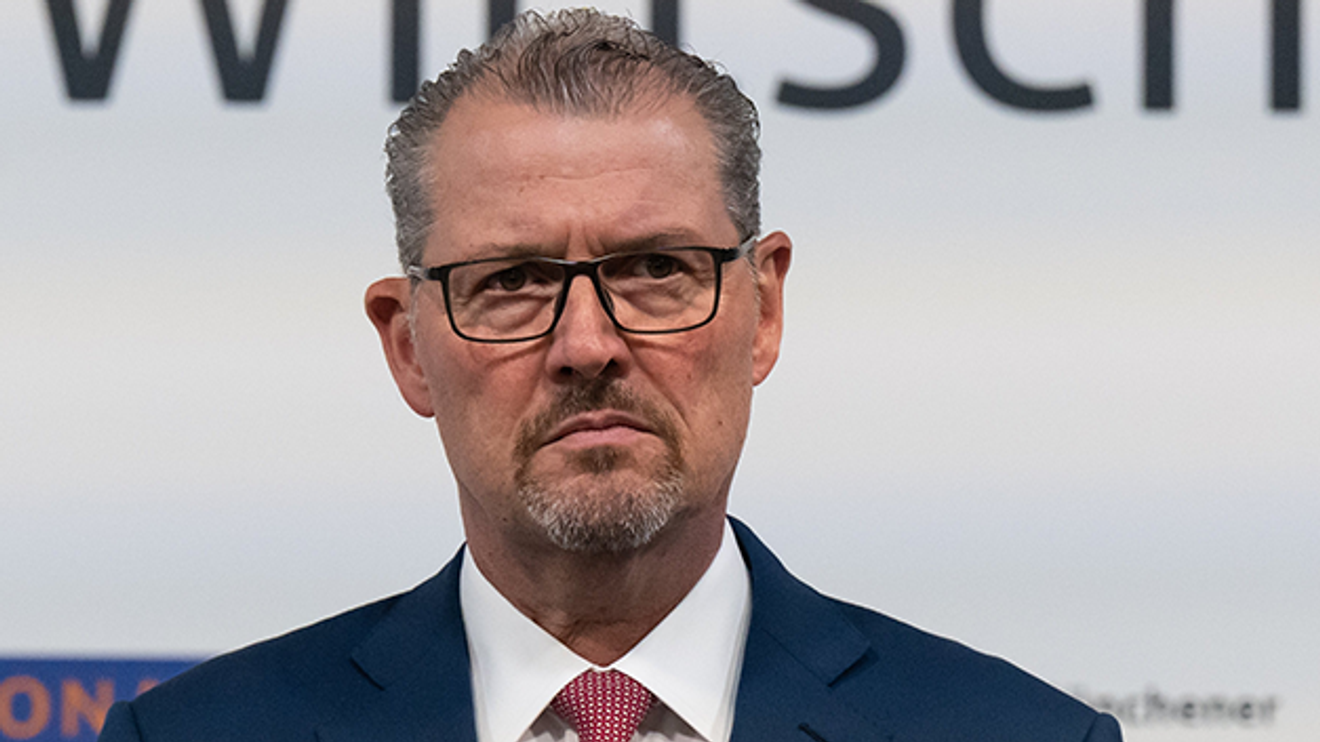
Employers' President Rainer Dulger has warned of the massive consequences of the shortage of skilled workers in Germany. Dulger told the German Press Agency: "The shortage of skilled workers is so threatening that we will probably have to accept a loss of prosperity over the next ten years." The right approach would be to immediately adopt a highly flexible immigration policy and enable quick and uncomplicated immigration for skilled workers. Dulger believes that at least 500,000 more skilled workers are needed every year.
"The demographic turnaround will begin in 2025," said Dulger with a view to the so-called Bayboomer cohorts, who are increasingly retiring. "We currently have a record number of around 45 million people working in the German economy. Over the next ten years, we will lose around 5 million of these people as they take their well-earned retirement."
In addition to immigration, domestic potential must be tapped, said the President of the Confederation of German Employers' Associations. "Everyone who has not yet graduated should be given a second and third chance. We also need to step up the pace when it comes to reconciling work and family life. There has been a shortage of childcare workers in nurseries for years." It is time to finally make substantial improvements to childcare.
Money for the welfare state will be lacking
"If we don't succeed, we will have to accept a loss of prosperity because, of course, 5 million fewer people in employment will be paying taxes and paying into the social security system. This money will be missing," said Dulger. "Our welfare state will no longer have the funds available that were previously available." The state would then no longer be able to afford the help it currently provides to the poor and needy.
"If we don't reform our pensions now, we will no longer have to put around 100 billion euros into pensions in the future, but we will have to put 180 and 200 billion into pensions - simply because there will be more pensioners." If this were to be offset by even lower contributions, the state would have to compensate more and more from tax revenue. "Which it won't be able to do as well in future, because fewer and fewer taxes will flow in because there are fewer and fewer people in work," says Dulger.
Proposals from German associations on recruiting foreign skilled workers
The Confederation of German Employers' Associations and the Association of German Chambers of Industry and Commerce had made suggestions as to how more immigrants could come to Germany more quickly. For example, procedures should be digitized and thus accelerated. Long waiting times for visa appointments should come to an end. Dulger suggested a central agency that would be responsible for enabling interested parties from all over the world to apply online - "and then be informed by this agency exactly what they need and what documents they have to submit".


You might also be interested in
40-hour week demanded as the norm
In the debate about working hours in Germany, the mechanical engineering association VDMA is calling for an increase in weekly working hours instead of a reduction.
 read more...
Foreign skilled workers must be welcome
The East German economy is booming. The Federal Chancellor is convinced of this at a conference. The shortage of skilled workers remains one of the problems. Scholz and the BDI President find clear words.
read more...Family businesses create more jobs than DAX companies
The rise in energy prices is fueling fears of companies moving abroad. According to a new study, family-owned companies are more loyal to Germany as a business location than listed companies without a controlling family.
read more...Skills shortage at its peak
The shortage of skilled workers has reached a peak and is placing an increasing burden on the German economy. Labor market experts do not expect the situation to ease for the time being.
read more...Foreign specialists for mechanical and plant engineering
Karl Haeusgen calls on politicians to allow the recruitment of foreign skilled workers by recruitment agencies. In a letter to Nancy Faeser and Hubertus Heil, the VDMA President calls for every possibility to be considered in order to get the...
read more...Full steam ahead back into the skills shortage?
The agonizingly long-lasting coronavirus pandemic has also caused the job market for engineers to freeze in many places, but it has not come to a complete standstill, as a survey of recruiters shows. Will there be a race to catch up?
read more...Kontron Begins Production of 5G Modules in Düsseldorf
Kontron has launched mass production of 5G communication modules in Düsseldorf. The modules, which were developed in Berlin, are used in a variety of sectors, including industry, transportation, and critical infrastructure.
read more...Weidmüller Builds Asian Headquarters in Suzhou
Weidmüller is investing in a new corporate headquarters in Suzhou. The facility will bring together development, manufacturing, and logistics, and production capacity is expected to more than triple.
read more...Expansion of the Sensor Portfolio
Infineon Completes Acquisition of ams Osram's Sensor Business
Infineon has completed the acquisition of ams Osram's non-optical analog/mixed-signal sensor portfolio. The business is expected to generate approximately 230 million euros in revenue in 2026.
read more...