
Preventing burnout
Effective stress management
For some, it is easier to admit to burnout than to consider depression. However, both are often caused by stress. Effective stress management can help you find a work-life balance.
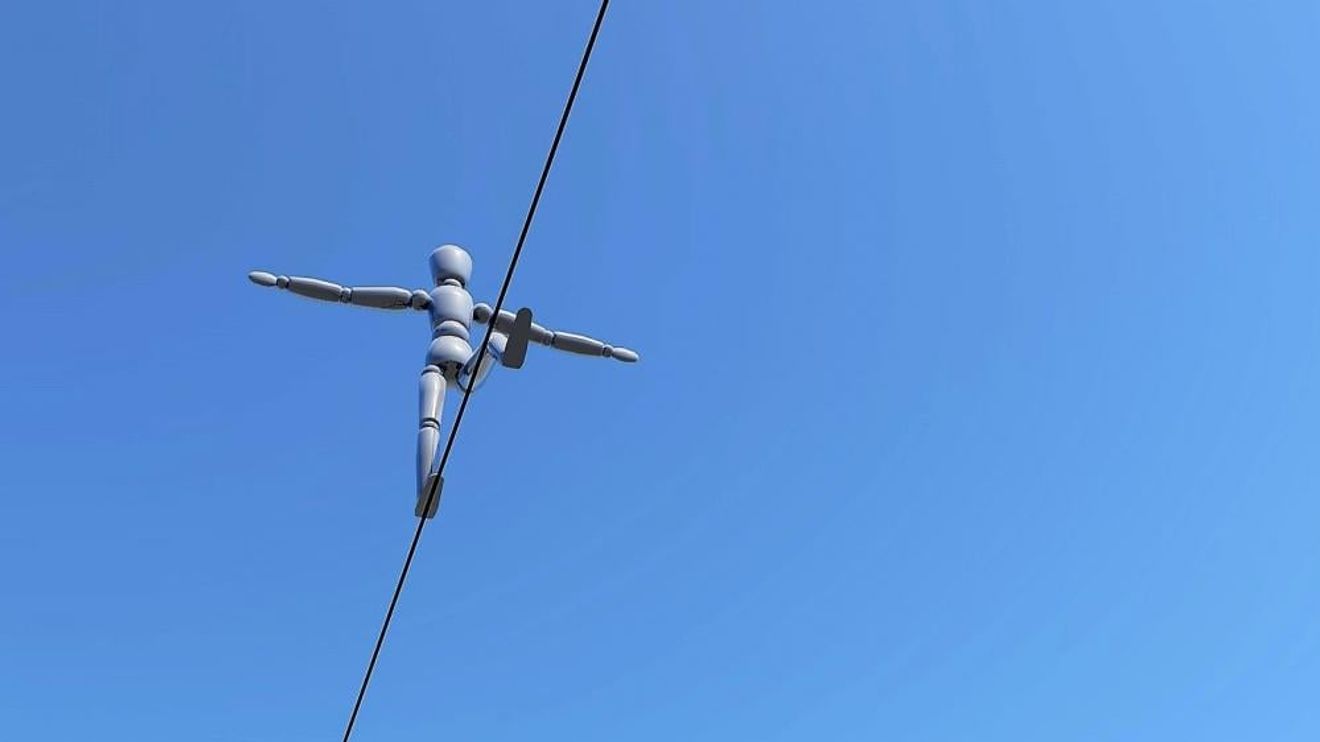
Finding a work-life balance.
© Pixabay/CC0It seems to be an organizational necessity that everyone is talking about stress, burnout and stress management. The figures from health insurance companies speak for themselves, as do the articles in the print media: the consequences of globalization are increasing competitive pressure and the renewal cycles of IT-driven corporate management are doing their part. This is one side of the coin. The other is that people today are more willing to admit that they are exhausted. GPs are also more willing to recognize states of exhaustion or burnout as reasons for taking sick leave. Similarly, some managers find it easier to admit to burnout than to consider depression. True to the nimbus: Only those who have burned for something are allowed to burn out!
Don't lose sight of yourself - a case study
A department manager (AL) received support in the form of coaching because he had been absent for nine months due to burnout. The AL was a socially oriented man, 47 years old and father of two children. His attitude of helping others meant that he lost sight of himself and his needs. For example, he tried to drink as little as possible during the day to avoid having to go to the toilet too often. During the coaching session, he shook his head about how he could have neglected himself so much. The coaching included basic content on physiological stress, interactions between his attitudes, new ways of being mindful of himself and his needs. This included concrete strategies for building up 'selfish' behavior and learning units for switching off and calming down.
Stress management is individual
Stress management must start with the individual, but must not end there. In coaching, however, it very often starts with the individual manager - the coach needs knowledge about the causes of stress, physiological effects and the skills to be promoted. Prof. Kaluza's basic model (GKM Institute/Marburg) provides three useful levels of stress:
- Stressors: external events or conditions that trigger stress reactions. These can be physical (e.g. noise), bodily (e.g. pain), social (e.g. conflicts) or psychomental, for example performance requirements, time pressure. Today, the focus is mostly on social and psychomental stressors.
- Personal stress intensifiers/drivers: personal attitudes, motives and ways of thinking that contribute to exacerbating stress reactions or triggering them in the first place, as well as
- Stress reactions: physical and psychological responses to the stressors. These result in a comprehensive activation and provision of energy to cope with the stressor. In the long term, chronic stress reactions lead to exhaustion and a wide variety of illnesses if there are no regeneration phases.
Accordingly, individual managers need the following stress skills:
Instrumental stress competence as a starting point for stressors
This means dealing with external pressures and demands in the professional and private sphere, reducing them as far as possible or eliminating them completely. The aim is to make your own everyday life less stressful in order to prevent stress from arising in the first place, for example through self-management. This means optimizing work organization: defining professional/private priorities, realistic time planning, delegation, setting boundaries, '0ffline' times.
Mental stress competence as a starting point for personal stress boosters
This means becoming self-critically aware of your own stress-generating or exacerbating attitudes and assessments, gradually changing them and developing beneficial attitudes and ways of thinking. For example, reviewing perfectionist performance expectations and accepting performance limits.
Regenerative stress competence as a starting point for stress reactions
Means dampening and reducing physical and mental arousal, ensuring regular rest and thus maintaining one's own resilience in the long term. For example, regular practice of a relaxation technique.
The approach of a coach
As a coach, I begin to analyze the three levels together with the coachee: what stressors are present, what personal stress intensifiers are making life difficult for him/her and what activating or exhausting stress reactions are already taking place.
The following applies to company management: What you can't measure, you can't manage! This also applies to managers when dealing with themselves. Those who are mindful of themselves can pay attention to their strengths and limits. Mindfulness as the key to self-awareness needs to be practised - like everything new - and must therefore also be incorporated into coaching as an exercise unit: in the form of awareness exercises, defusing drivers, breathing relaxation techniques that enable the restorative effect of being centered on oneself and activate the relaxation-inducing parasympathetic mode.
Talking about it alone is not enough, there must be a number of moments of experience to develop the new neuronal networks. Transferring the learning step from the protected space into real life, applying it permanently and asserting it against the encroaching reality is another step that requires discipline and practice anyway.
The author
Bernhard Broekman is a qualified psychologist. As a DBVC senior coach and stress management trainer at Leadership Choices, he coaches managers at all levels on topics including leadership, roles, communication and, increasingly, stress levels, work-life balance and health.


You might also be interested in
Effective time management for managers
How can you make better use of your time? Many managers ask themselves these questions in their search for a balance between employee management, strategic work and operational business.
 read more...
How virtual teams boost their performance
Colleagues are working from home. As a manager, how do you keep the team together and increase performance at the same time? Coach Martin Kruse gives tips here.
read more...Making controversial decisions
Controversial discussions lead to decisions that not everyone agrees with. Read on to find out how you can still make decisions that are well thought out and hardly arouse any sensitivities.
read more...Maintaining personal proximity and trust
Virtual leadership, the management of employees via electronic media, has become the "new normal" in many cases. For managers, however, this has consequences that go beyond technology and operational work organization.
read more...Self-management in the home office
During the coronavirus pandemic, many employees have switched to working from home. But how do you manage to keep work and private life separate? How do you meet targets, plans, deadlines and quality standards? And how do you prevent burnout?
read more...VDE worried about decline at universities
"We are heading towards an unchecked shortage of experts"
The coronavirus crisis has not alleviated the shortage of engineers, but is instead igniting the turbo: in view of the latest figures for new students, the VDE warns of a new shortage of experts that is heading "unchecked".
read more...Full steam ahead back into the skills shortage?
The agonizingly long-lasting coronavirus pandemic has also caused the job market for engineers to freeze in many places, but it has not come to a complete standstill, as a survey of recruiters shows. Will there be a race to catch up?
read more...Compassionate corporate culture makes the difference
Topics such as dying, death and mourning are often seen as private matters that receive little attention in the professional environment. However, a new approach that integrates these aspects of life could give companies a competitive advantage.
read more...How can you stay motivated after 20 years on the job?
Constant change, unpredictable changes, increasing complexity - motivation can suffer. Coach Oliver Erbe explains what you can do about it.
read more...