

Interview with Hartmut Rauen, VDMA
A job with meaning
The shortage of skilled workers is real. Hartmut Rauen knows that this is not due to the attractiveness of the training program. Rather, the aim is to improve communication and highlight the importance of technology for the future. Another topic: the German jungle of regulations.
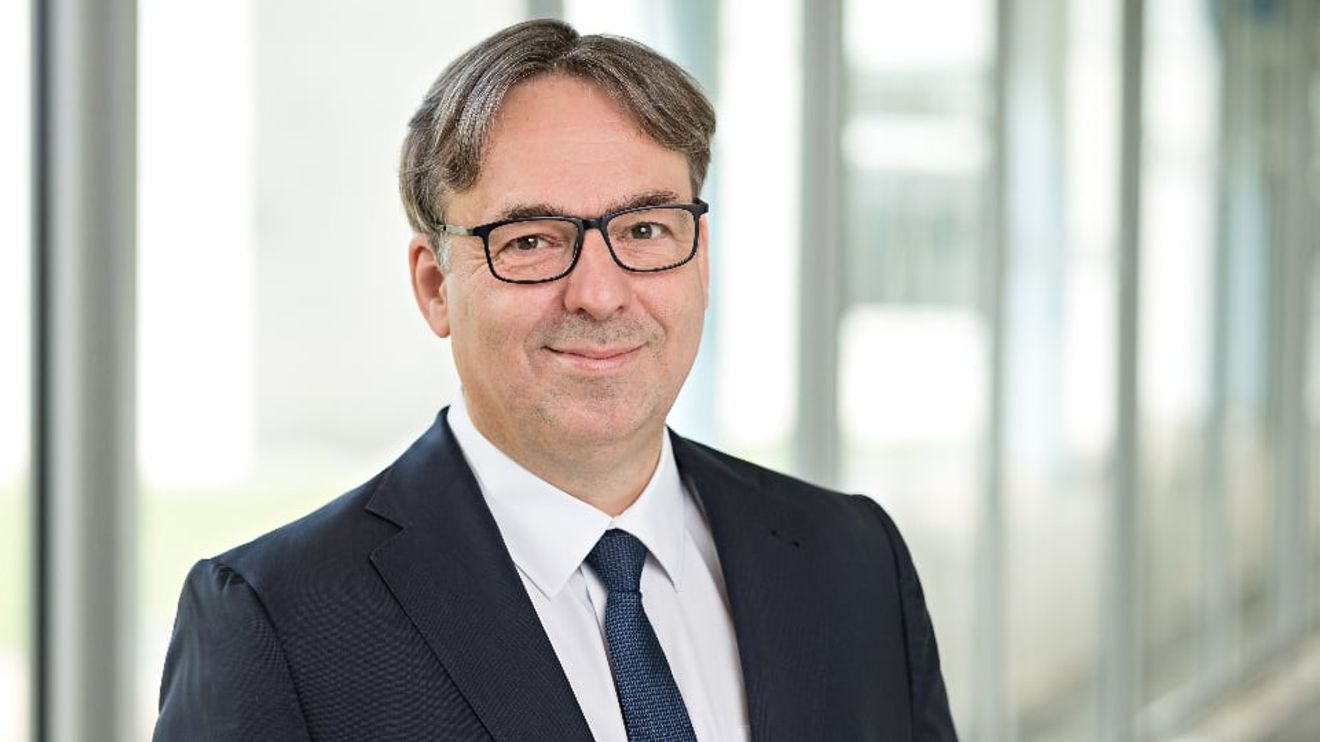
The mechanical and plant engineering industry in Germany is on the lookout for skilled workers. How many companies are specifically affected?
Hartmut Rauen: The latest survey results among VDMA member companies from the end of June (editor's note N = 660, managing directors) show that 98 percent of companies are feeling the shortage of skilled workers - in other words, more or less all companies are affected. 79 percent of companies are noticeably (54 percent) or severely (25 percent) affected. Only four percent of companies expect the situation to ease in the next three months.
Should the excesses of the current skills shortage be seen as the harbingers of demographic change or should the issues be considered separately?
Rauen: Demographic change is the central factor behind the skills shortage. While only around 14 percent of the workforce in mechanical and plant engineering was over 55 years old in 2005, this proportion was around 24 percent in 2022. The baby boomers will retire in the next few years. Many jobs will then need to be replaced. At the same time, the number of first-year students and the number of young people applying for apprenticeships will decrease. The number of first-semester students in mechanical engineering has fallen by 39% since 2016, and by 32% in electrical engineering.
There are now more apprenticeships on offer on the training market than there are applicants. And the number of unfilled apprenticeships has multiplied in recent years. Last year, around one in ten training places in the technical professions relevant to mechanical engineering could not be filled.
To what extent can companies close the gaps, for example by training and further education of employees?
Rauen: Training will only reduce the gap to a limited extent. We cannot carve out the missing young talent. In any case, it is important that more young people graduate from school. Too many still fail here. This is a challenge for school policy. Further training can be an effective way of combating the shortage of skilled workers. People whose jobs are being replaced by automation within a company, for example, should be qualified for other tasks at an early stage. The VDMA also supports companies in this area through its work in the Mechanical Engineering Young Talent Foundation, which makes an important contribution to improving the quality of training.
How could the training program be made more attractive?
Rauen: Our training program is already very attractive. In DGB surveys on trainee satisfaction, our most important professions such as mechatronics technician, industrial mechanic and electronics technician are always among the top 5.
|
|
|---|
It is much more important to make it clear to young people who are about to choose a career or course of study that technical professions are attractive. After all, pay and working conditions are good here, the work-life balance is good and teamwork is important. Many young students, especially female students, simply don't know that the essential issues facing humanity, such as climate change, can only be solved with modern technology. This is where our companies and we as an association need to improve our communication.
If you follow the daily press, you might get the impression that young people in particular want more free time instead of more work for the same or even higher pay. What feedback do you get from companies?
Rauen: Young people place more value on leisure time and a better work-life balance. We also get this feedback from our companies. But that doesn't necessarily mean that young people are less willing to work hard. Although this is often claimed, it has not been confirmed by studies. In any case, the market has changed for our companies. They have to come up with much more than they used to in order to be attractive to young people.
In Germany, many companies are bound by collective agreements, which means that the labor market is over-regulated. To what extent do these regulations affect Germany's ability to compete for skilled workers from abroad?
Rauen: More flexible framework conditions could also create a more attractive environment for employees. Take the Working Hours Act, for example. Specifically, the statutory rule stipulating a rest period of eleven hours between two working days should be relaxed, especially if employees can organize their own working hours. The maximum working time should be defined per week rather than per day, as provided for in the EU Working Time Directive. This would open up significantly more scope - also for employees - to better reconcile professional and private interests.
The bureaucratic burden for companies wishing to recruit foreign skilled workers is very high; smaller companies in particular often have no capacity or find it difficult to navigate the jungle of regulations. How can the VDMA provide support?
Rauen: Essentially, the VDMA is campaigning for the jungle of regulations to be reduced and for the practical handling of skilled worker migration to be made much easier. A central demand remains the integration of temporary work into the skilled labor immigration system. Until now, it has been forbidden for workers from third countries to come to Germany via a temporary employment agency. Temporary work has already proven its expertise as a recruitment agency for foreign workers in the German labor market in the integration of refugees. It is strictly regulated and collective bargaining coverage is almost 100 percent. Temporary employment agencies have the same obligations as other employers. Reservations that this could be 'precarious' employment are therefore unfounded. The predominantly medium-sized companies in the mechanical engineering sector do not have the resources to search for suitable personnel on a 'global' labor market. By including temporary work, they would also minimize the risk of a 'bad choice' when selecting an applicant from a third country. Temporary work would act as a kind of buffer: if a temporary worker has proven themselves, they will be offered a job by the client company. Otherwise, they remain employed by the temporary employment agency with all rights and obligations, which gives the immigrant skilled worker job security.
|
|
|---|
Automation technology is seen as a solution to demographic change. How high is the potential in a highly automated country like Germany?
Rauen: Although Germany is highly automated - we are in fourth place worldwide in terms of robot density - automation is not evenly distributed. There is still huge potential for robotics and automation, particularly in the SME sector. There are also additional potential applications for collaborative robotics, which enables direct and safe cooperation between robots and humans without a safety fence. New, intuitive programming and operating concepts now make robotics and automation easy to use, even without any special prior knowledge. This is driving forward the use of automation. The potential is far from exhausted.
In which areas of automation technology do you see the greatest opportunities for growth in the next five to ten years?
Rauen: Automation will become increasingly prevalent in SMEs and the skilled trades. In addition to classic 'high-speed robotics behind safety fences', collaborative lightweight robots are increasingly being used to enable the flexible and economical production of small and medium-sized series. Autonomously navigating mobile robots take over transport tasks and minimize walking distances for employees. Professional service robots - for example in laboratory automation, catering or the healthcare sector - will become the norm in the next few years. Overall, the aim is to relieve people of repetitive, boring and unergonomic tasks.


You might also be interested in
Frugal innovations in mechanical and plant engineering
Frugal innovations aim to address price-sensitive customers and markets with precisely tailored quality products. A new study by the VDMA's Impuls Foundation addresses precisely this topic.
 read more...
Staff expansion in mechanical engineering
The chances of finding a job in mechanical and plant engineering remain very good. However, bottlenecks on the labor market remain a challenge. A quick survey by the VDMA provides some insight.
read more...Siemens reports strong order intake
Solid is how the results for the 3rd quarter can be described. Siemens was able to increase sales by 10 % and incoming orders were 15 % up on the same period last year at 24.2 billion euros. However, the forecast has not been raised.
read more...Thomas Hähn, United Robotics Group
"People must remain in control"
Service robots interact with people in a wide variety of areas. But how is the acceptance of service robots? Computer&Automation spoke to Thomas Hähn, CEO of the United Robotics Group, about this.
read more...Robotics and automation - quo vadis?
The German robotics and automation industry expects sector growth of 9% to 15.7 billion euros in 2023. Patrick Schwarzkopf, Managing Director of the VDMA Robotics + Automation Association, comments on current trends and developments.
read more...Foreign skilled workers must be welcome
The East German economy is booming. The Federal Chancellor is convinced of this at a conference. The shortage of skilled workers remains one of the problems. Scholz and the BDI President find clear words.
read more...Check with Prof. Dr. Peter Fromm
Regularly slowed down
The embedded industry is struggling with a shortage of components and skilled workers. Prof. Dr. Peter Fromm from Darmstadt University of Applied Sciences knows that the latter is now the bigger problem. In this interview, he explains what logistics...
read more...Regulated handover to the next generation
How can the generational conflict be overcome? Coach Prof. Dr. Alexander Koeberle-Schmid gives tips for a successful company handover.
read more...Compassionate corporate culture makes the difference
Topics such as dying, death and mourning are often seen as private matters that receive little attention in the professional environment. However, a new approach that integrates these aspects of life could give companies a competitive advantage.
read more...