
EBE sensors + motion
Non-contact differentiation between air, foam and liquid
With the 'QCRC' series, EBE sensors + motion presents a new solution for process monitoring that is particularly suitable for sensitive production environments. The sensors in the series work through closed vessel and hose walls and enable clear differentiation between air, foam and liquid completely contact-free.
Foam is a critical process factor in many branches of industry. In laboratory environments in particular, it can severely disrupt the stability and efficiency of processes. The problem is particularly evident in fully automated laboratory workstations or bioreactors: these systems are not only highly complex and cost-intensive, but are also tightly packed with a large number of sensors and components, especially in the lid area. Additional installations at this point considerably exacerbate the space problem. Added to this are the high hygiene requirements. As the process media must not come into contact with foreign substances, contactless sensor solutions have a clear advantage over conventional solutions that are directly immersed in the medium. At the same time, cleaning in the event of foaming is time-consuming and associated with expensive downtimes.
EBE 's QCRC sensors provide continuous real-time information on the current media status and thus reliably safeguard processes. The technology is based on the simultaneous detection of capacitive and conductive parameters. This interaction enables stable differentiation between air, foam and liquid, even if the ambient conditions fluctuate or the process control is particularly demanding. This allows any foam formation to be monitored. However, the sensor also detects whether a container is filled with liquid, foam, powdery media or even air. This opens up new possibilities for manufacturers to increase safety and efficiency in the production process.
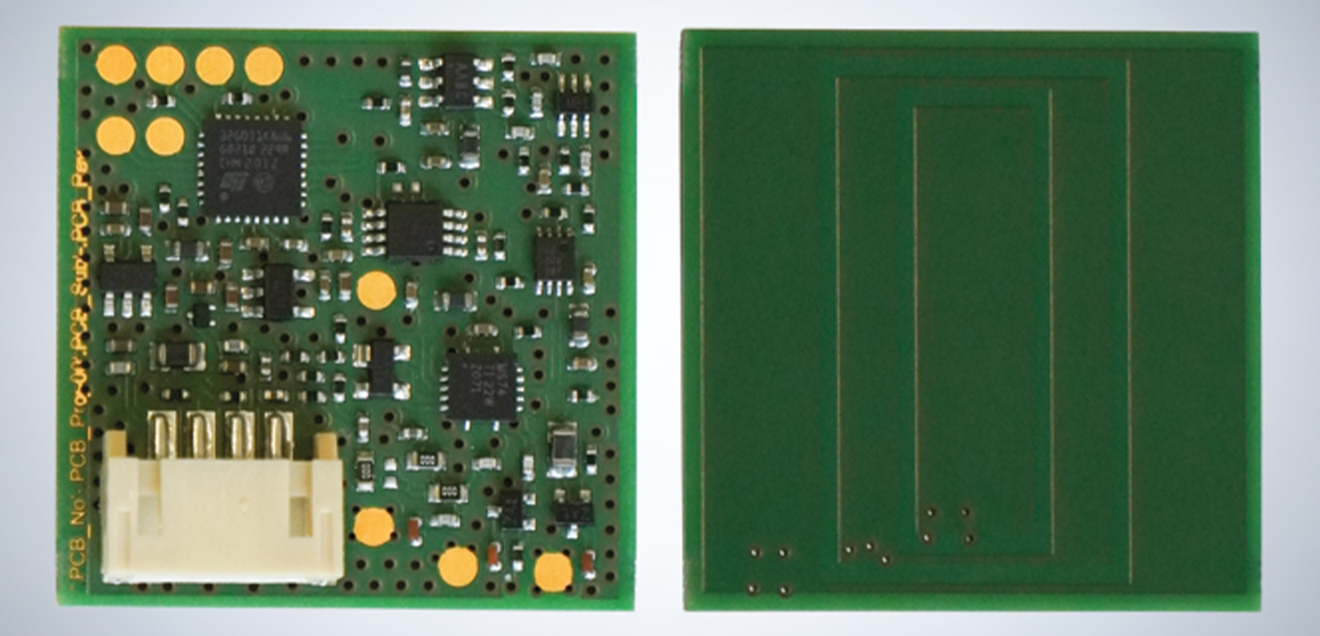
The entire measuring structure is housed in the sensor module itself. With dimensions of just 30 mm × 30 mm, the technology can also be integrated into very confined installation spaces. Measured values are available immediately after installation via a standardized I²C interface, which enables fast commissioning and easy integration into existing systems. EBE provides an evaluation kit for research and development, which contains all components for direct commissioning. This allows the sensors to be integrated into existing test environments within a short space of time. Manufacturers can thus gain experience at an early stage and validate the suitability of the technology for their specific processes.


You might also be interested in
Technologies for precise data and analytics
From June 9 to 11, 2026, Sensor+Test once again brought together trade visitors from the fields of sensor technology, measurement, and testing in Nuremberg. With its focus on these core technologies and the wide range of application areas, the trade...
 read more...
Increased revenue and expanded production capacity
The Fraba Group, a manufacturer of sensors for industrial motion control, looks back on a successful 2025, during which both revenue and the number of employees increased.
read more...From sensor to intelligent system
Sensors, measurement technology and artificial intelligence are merging to form intelligent systems. From June 9 to 11, 2026, Sensor+Test in Nuremberg will showcase the most important trends in a changing industry.
read more...Dr. Volker Frey becomes CTO
On May 1, 2026, there were personnel changes in the top management of the ifm group of companies. Dr. Volker Frey succeeds Benno Kathan as CTO, who has retired.
read more...Self-learning sensor systems monitor industrial manufacturing processes
In the 'GenSATIOn-Edge' project, the Fraunhofer Institute for Microelectronic Circuits and Systems IMS is working with partners to develop intelligent sensor systems for the continuous monitoring of industrial processes. AI models run directly on...
read more...Sales growth in a turbulent market environment
Thanks to innovations and a focus on strategic industrial markets, Sick was able to moderately increase its sales in the 2025 financial year. In a turbulent market environment, the company was able to maintain its position and gain market share with...
read more...Networking identification systems at field level
'IdentChain' is a platform from Leuze with which identification systems can be networked at field level.
read more...Successful year despite geopolitical challenges
According to the company, 2025 ended on a very positive note for the ifm Group. Adjusted for currency effects, turnover increased by 10 percent to EUR 1.47 billion.
read more...Human-like sense of touch for robots
The sense of touch is one of robots' greatest weaknesses. Researchers have now developed a miniaturized tactile sensor that could give robots something much closer to the human sense of touch.
read more...