

Bürkert
"It's important to channel the forces well"
Georg Stawowy has moved from cable and connection systems manufacturer Lapp to fluidics specialist Bürkert, where he took over as CEO in April. The new CEO's main focus is on the digital transformation of the company.
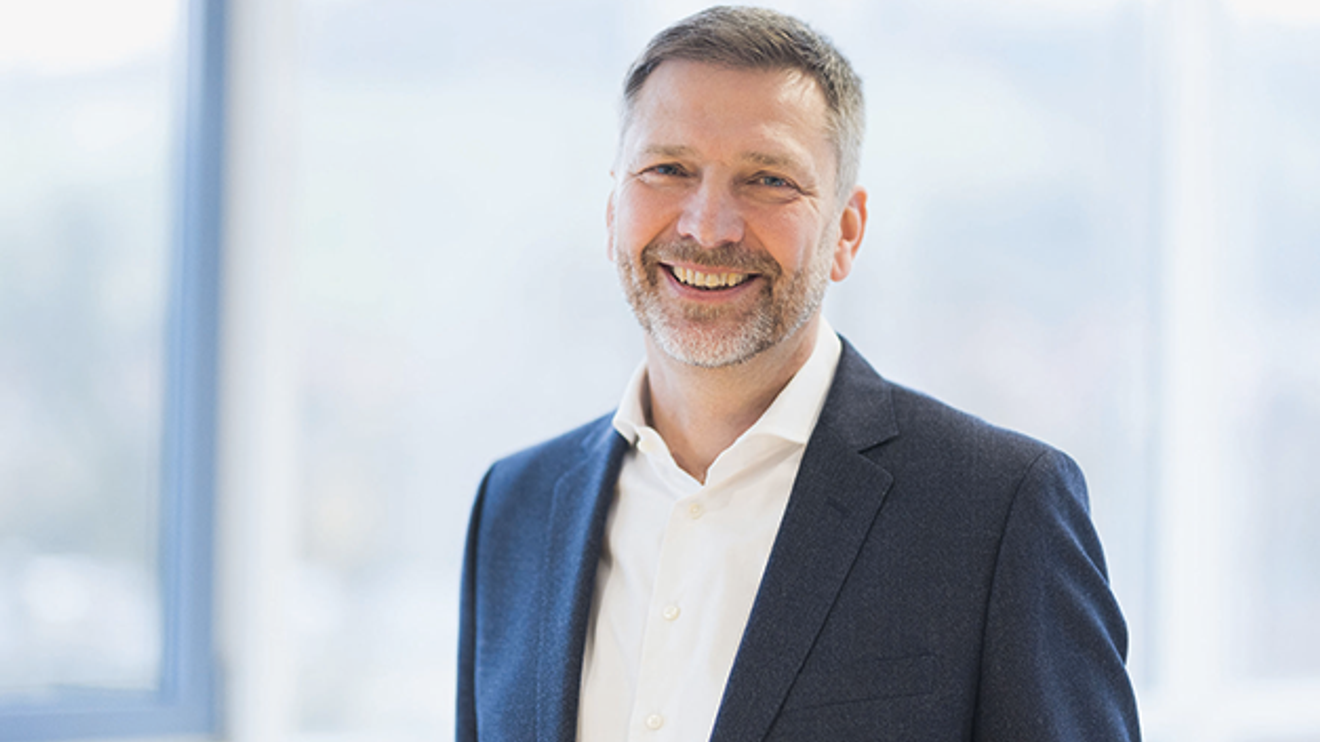
Mr. Stawowy, you have been with Lapp since 2013 - first as Director Technology and Innovation, then from January 2015 as Director Innovation and Technology. Now you have moved to Bürkert. Why did you do this?
Georg Stawowy: First and foremost because of my curiosity and my desire to constantly develop and reinvent myself. I have to move out of my own comfort zone and learn to listen more and approach new people and things with an open mind. Ultimately, it is also the appeal of bringing my diverse professional experience to a CEO role. The fact that this is now possible for me in a great company like Bürkert is something I see as a happy coincidence.
If you had to summarize your time at Lapp in three sentences, what would they be?
Firstly, in a tough competition for commodities, quality, expertise and service won out in the end.
Secondly, culture can be changed in five to ten years if everyone contributes.
And thirdly, if you want innovation, you have to start with the attitude and appreciate the little things. The rest will follow.
Can you tell me about your greatest personal success at Lapp?
Overall, I've been very lucky in getting the right people involved in my topics: in initiatives, projects and direct line responsibility. This has resulted in 'Ölflex Connect', a comprehensive service package for system technology, and Lapp is now a strong, competent partner in industrial communication. I am proud of that.
What points are on your roadmap for Bürkert - in the near future and in perspective?
First of all, I need to understand what makes Bürkert so successful and get to know the people. The success of recent years has led to extremely ambitious initiatives. Together with my management team, we will refocus our priorities in the coming weeks. After a very demanding and exhausting three years, we now need to channel our energies well.
Looking ahead, we face the same challenges as many SMEs: we need efficiency gains through digitalization in order to achieve growth. We need to strengthen the value and supply chains in the growing regions. And, of course, the issue of sustainability is changing from a purely ethical responsibility to an increasingly important economic factor. We also need to find the right answers to this.
If you can answer that at this stage - are there any similarities between the two corporate cultures?
First impressions are not always the whole truth, but they are of course an important indicator. And there are strong parallels: Both companies are aiming for medium-term, sustainable success and have understood that this can only be achieved with well-trained and motivated employees. Both cultures are therefore characterized by a very high level of employee orientation - everyone is important in the function they have to perform. Both companies also have a strong global presence, and you immediately notice that this international cooperation is an enrichment for many and makes the company more cosmopolitan.
At Lapp, you were committed to the topic of digitalization, among other things - where do you see Bürkert in this respect?
Bürkert is on a very good path, as process and project management was introduced here over ten years ago as a result of the 2008 financial crisis. Without standardized processes, it is difficult to drive digitalization forward. Bürkert has also already achieved an - almost - comprehensive, standardized system landscape for the 'ERP backbone' and the e-shops. Further modules, such as the current MES system, are being built on this strong foundation. With the 'Bürkert Next' transformation program, there is a conceptual roadmap that encompasses the digital transformation of processes, resources and products.
What do you take away from your years at Lapp?
Over the years of my professional life, some basic convictions have grown as to how leadership can enable corporate success. The complexity of larger companies can only be mastered if people meet at eye level and responsibility is assumed where people are directly capable of making decisions.


You might also be interested in
Strategic investment in the microfluidics sector
On June 1, 2023, Bürkert Fluid Control Systems from Ingelfingen acquired a majority stake in the Swiss start-up ReseaTech from Burgdorf. The two companies have been working successfully on joint projects since 2021.
 read more...
Management team complete from November
From November 1, 2023, Roman Gaida will be responsible for global sales and marketing activities at Bürkert Fluid Control Systems as Chief Sales Officer (CSO) and member of the Management Board.
read more...The e-paper for the special issue
Sensor & Vision 2023
Intelligent sensor technology always requires smooth interaction with software and surrounding systems. The examples in this e-paper demonstrate what this can look like in individual cases. This shows that team play counts - in sensor technology as...
read more...Products of the year - The e-paper special
"Products of the Year 2023" goes interactive: the new e-paper including video news is here! The winners of the readers' poll have been chosen and in our interactive special edition you will find all the winning products at a glance and exclusive...
read more...Automation system in the ATEX control cabinet
The Bürkert valve terminal Airline Ex (type 8650) for Siemens Simatic ET 200iSP has been optimized for future requirements.
read more...From sensor to intelligent system
Sensors, measurement technology and artificial intelligence are merging to form intelligent systems. From June 9 to 11, 2026, Sensor+Test in Nuremberg will showcase the most important trends in a changing industry.
read more...Human-like sense of touch for robots
The sense of touch is one of robots' greatest weaknesses. Researchers have now developed a miniaturized tactile sensor that could give robots something much closer to the human sense of touch.
read more...Sensors and measurement technology
Application start for AMA Innovation Award 2026
The AMA Association for Sensors and Measurement (AMA) is inviting scientists and developers from industry and research to apply for the AMA Innovation Award 2026. We are looking for research and development results in sensor and measurement...
read more...Electronic pressure measurement technology for industrial applications
Reliable measurement of pressure and level - with this one competence in mind, BD|SENSORS is the full supplier of an extensive product range of electronic measuring devices for pressure and level as well as the most precise evaluation and display...
read more...