
ETH ZurichArtificial muscles for robotic leg
Researchers at ETH Zurich and the Max Planck Institute for Intelligent Systems have developed a robotic leg with artificial electro-hydraulic muscles that automatically adapts to uneven terrain.
Page [3 of 3]
 | | | Image 3 of 3 | | | |
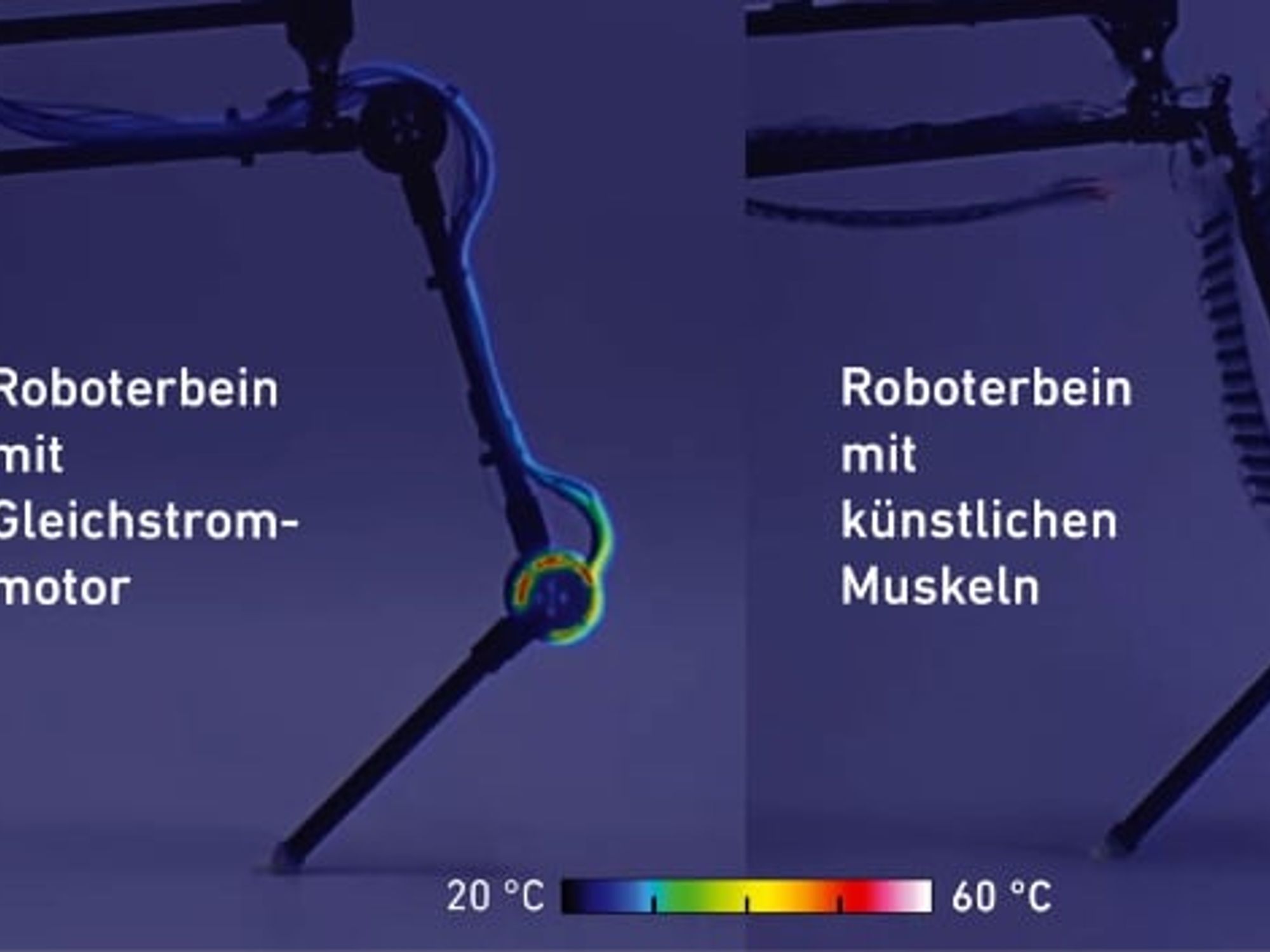
<p>If robot legs have to hold a certain position for a long time, a lot of current flows through the driving DC motor (left). Over time, energy is lost in the form of heat. In contrast, the artificial muscles remain cold (right). The artificial muscles work on the principle of electrostatics and are efficient because they have no current flow under constant load.</p>
© Thomas Buchner / ETH Zurich and Toshihiko Fukushima / MPI-IS