
IFR / ZEW study
"Robots create jobs"
The rapid expansion of industrial robots is leading to a positive job balance in companies: In addition to tasks that are now performed by machines, new jobs have been created for employees. This is the conclusion of a ZEW study.
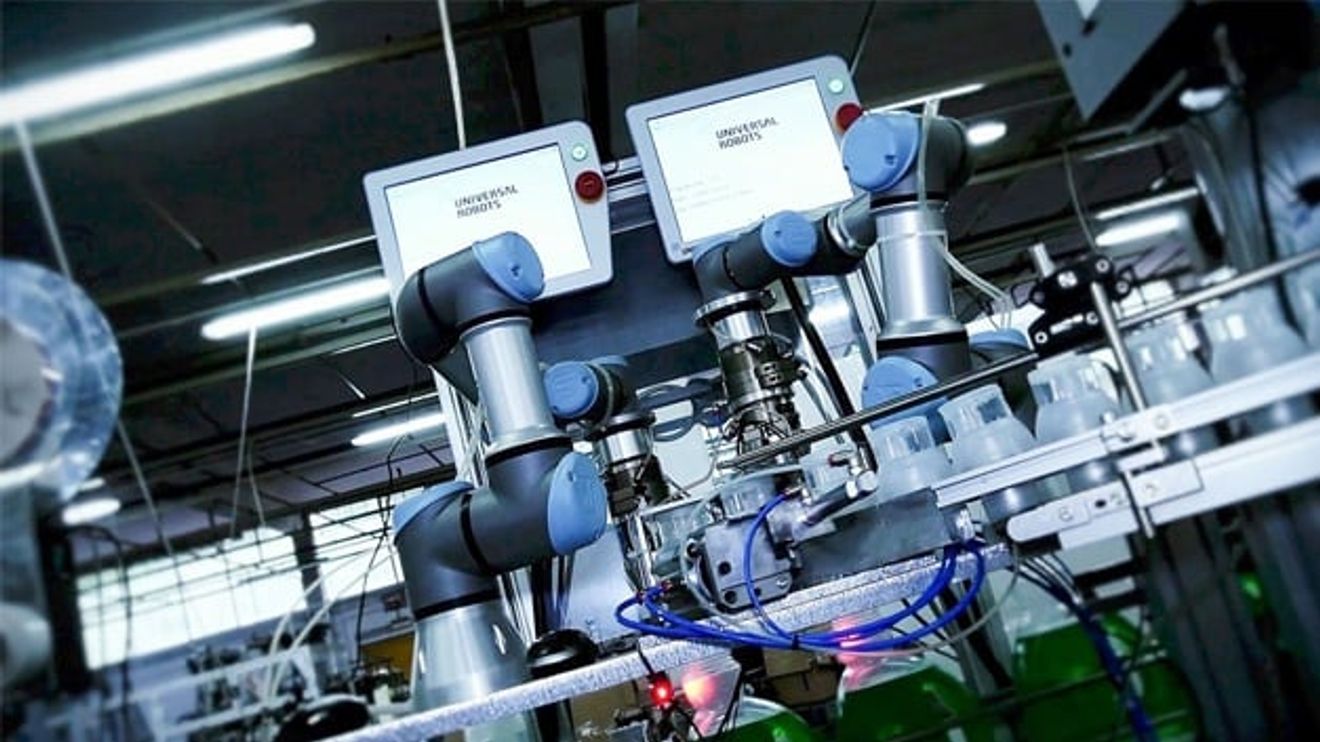
According to the International Federation of Robotics (IFR), the robot density in the German manufacturing industry ranks third in the world with 309 units per 10,000 employees. At the same time, the number of people employed in Germany in 2017 reached its highest level since reunification, with around 44 million people in employment. The IFR therefore comes to a positive job balance in companies, which is also underpinned by the latest survey by the Center for European Economic Research (ZEW).
"The results of the ZEW study for the labor market confirm what we are seeing in the leading industrial nations worldwide in terms of automation with industrial robots," says Junji Tsuda, President of the IFR. "The modernization of production means that dangerous, unhealthy and monotonous work in particular is being taken over by machines. In the vast majority of cases, the new division of labor between man and machine only affects individual activities in a workplace and not the entire range of work performed by an employee." However, if there are job cuts - according to the ZEW, 5% of employees have been replaced within five years - these are offset in the overall balance by new jobs.
In Germany, the increased use of machinery has led to a 1% increase in the total number of jobs. This trend is likely to continue in the future: Based on the information provided by the companies surveyed, the ZEW estimates that further automation and digitalization in companies will trigger processes that will lead to a 1.8% increase in employment by 2021.
According to the IFR, this development is in line with the historical experience gained from the 1990s onwards with the triumph of the computer. Although the mass use of IT in companies has made traditional clerical jobs redundant, according to ZEW calculations, employment rose by just under 0.2% per year between 1995 and 2011.
Computer&AUTOMATION offers the ZEW study for download.


You might also be interested in
'Joseph F. Engelberger Robotics Award'
Robotics prize for Gudrun Litzenberger and Esben Østergaard
The American Robotic Industries Association (RIA) has honored Gudrun Litzenberger and Esben Østergaard with the 'Engelberger Robotics Award 2018'. Both have made outstanding contributions to the robotics industry.
 read more...
Available on vacation?
The proportion of employees who can also be reached on business while on vacation remains high. Younger people are the most likely to be able to disconnect completely. These are the findings of a recent Bitkom survey.
read more...International Federation of Robotics
Industrial robot sales increase by 29% worldwide
Global sales of industrial robots reached a record 380,550 units in 2017. China recorded the highest growth in demand for industrial robots with an increase of 58%. In the USA, sales rose by 6% and in Germany by 8% compared to the previous year.
read more...Labor market sensors and measurement...
Growing number of vacancies
Sensors and sensor systems are key technologies for digitalization, and the number of vacancies is growing. However, the industry, which is dominated by SMEs, is often based in the region and finds it difficult to recruit engineers.
read more...Dekra labor market report 2018
Mechanical and electrical engineers less in demand
Software developers and programmers were most in demand on the job market in spring. Demand for traditional engineering disciplines has fallen compared to the previous year. These are the findings of the Dekra Akademie's Labor Market Report'18.
read more...Merger of three gripper manufacturers
The US company Perception Robotics, the Hungarian company OptoForce and On Robot from Denmark are merging to form the 'new' company OnRobot with the support of the Danish Growth Fund. It is managed by Enrico Krog Iversen.
read more...Job profile of a data scientist
Around a quarter more jobs for data experts
Growing volumes of data are generating new job profiles such as data scientist. The career platform Joblift analyzed around 14 million job advertisements from the last 24 months to find out more about the job profile and the demand for it.
read more...Intelligent robotics - enabler of Industry 4.0
Robotics is a key cornerstone of flexible manufacturing concepts on the way to Industry 4.0. Our video review shows what was on show at Hannover Messe 2018 in this regard.
read more...Teradyne takes over Mobile Industrial Robots
Teradyne, a provider of automation technology for test and industrial applications, and the shareholders of Mobile Industrial Robots (MiR) have announced the acquisition of the previously privately held company. The purchase price is 121 million...
read more...