

Siemens
Visualization overcomes boundaries
Until now, the worlds of operation and monitoring were separate: here machine-oriented operation, there plant-wide monitoring. Modern visualization systems act as a gateway from OT to the IT world, enabling a consistent solution for HMI and SCADA tasks.
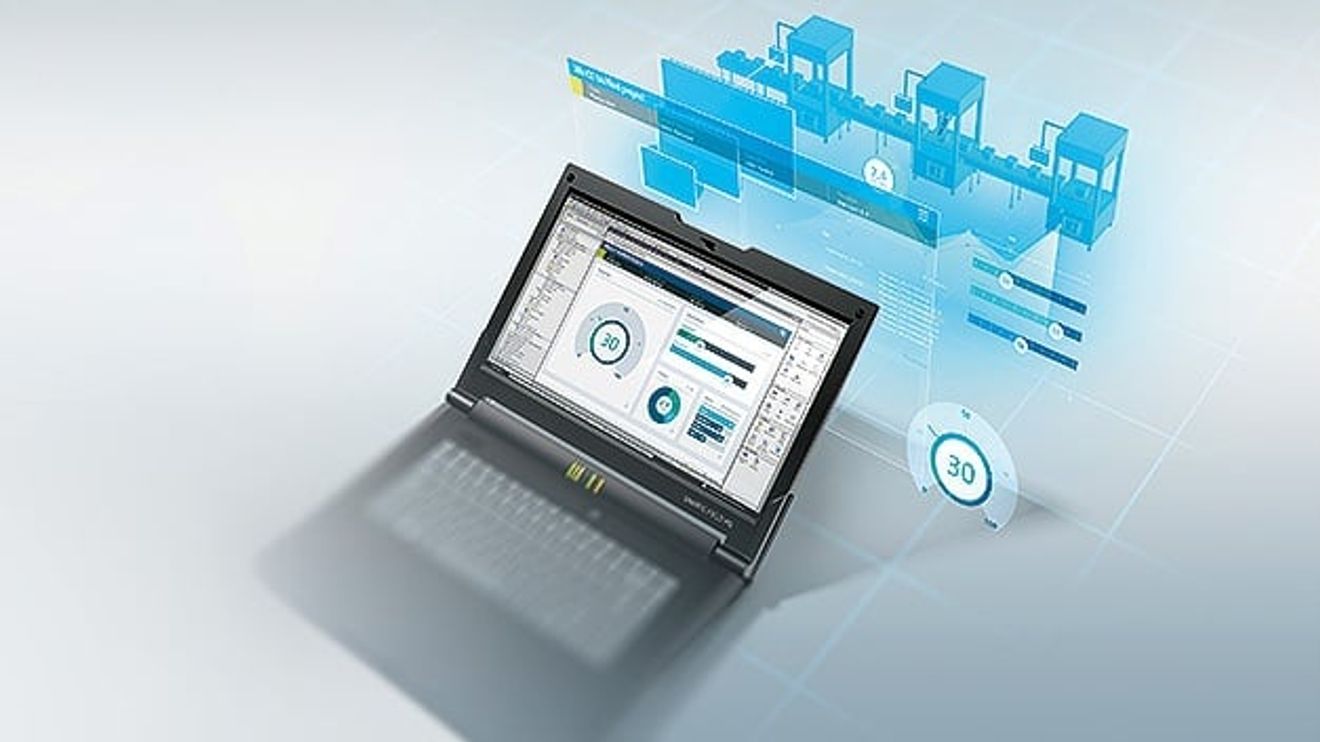
With the Simatic WinCC Unified Option Calendar Control, users can easily configure production times and schedules at runtime.
© SiemensIntegrated tools and environments became established many years ago in the engineering of automation and visualization solutions. In this way, machine and plant manufacturers, as well as operators, have been able to significantly reduce the effort required to create and maintain automation systems. On the other hand, there are still more or less pronounced system discontinuities in the area of superimposed system visualization itself. Typically, there are two independent solutions for SCADA and machine-related HMI - the result: double engineering, double data management and inconsistencies in the data. In addition, information is not available everywhere or is displayed differently. An inhomogeneous visualization landscape also harbours numerous hidden costs and risks: Operating errors, restrictions on the use of resources and poorer system transparency for employees. Last but not least, the acceptance of the visualization solution decreases if operators have to 'read in' to many different displays if consistent solutions are not possible; especially because in the private environment it is now taken for granted that the essential functions of the PC are also available on the smartphone, applications and apps have a similar look and feel and functions can be added or removed without great effort. Users increasingly want to use these options in an industrial environment, especially as modern technology is required in the context of digitalization and rapidly growing data volumes. At the same time, companies want to benefit from the lower costs of an end-to-end solution for industrial visualization, which result from more efficient planning, implementation and maintenance or expansion.
Technologies for a consistent user experience

Figure 1: The Simatic WinCC Unified system consists of the Simatic WinCC Unified visualization software and the new generation of HMI operating devices: Simatic HMI Unified Comfort Panels. The runtime of the newly developed Simatic WinCC Unified visualization software in TIA Portal is based on native web technologies such as HTML5, SVG and JavaScript.
© SiemensThe new generation of a visualization system now takes these changed requirements into account: Simatic WinCC Unified enables a uniform solution for industrial visualization regardless of the respective end device or application scenario. At its core, this solution is based on browser-based plant visualization. Simatic WinCC Unified uses web technologies such as HTML5, SVG and JavaScript. The user interfaces can be configured in the TIA Portal so that users can use a tool for configuring automation and visualization as usual. Elements can be reused and graphics can be scaled without loss of quality. Furthermore, any design can be used on a panel as well as on a PC-based SCADA system. In addition, thanks to HTML5 support, machines and systems can be monitored and controlled from HTML5-enabled mobile devices(Fig. 1).
Thanks to its open interfaces (API), WinCC Unified is able to integrate other software applications, such as its own web controls, and combine them into a standardized operating concept. This makes WinCC Unified an integration platform for linking data from production with other data and information. In addition, a uniform visualization system at production level facilitates the integration of systems and data. This means that modular system concepts with different configurations or even extensions within a line can be implemented more easily than before, including in the visualization. To this end, the visualization system works with a collaboration mechanism that can initially be used to exchange operating screens - and soon variables, alarms and historical data - between WinCC Unified systems. This saves users duplicate project planning for different areas of a plant. Distributed configurations can also be implemented using this mechanism. The visualization of individual machines can be easily integrated into a superimposed line monitoring system, where it can be expanded to include cross-line content.
Another innovation concerns the concept of the visualization solution. In addition to the classic, data point-oriented configuration, users can now work object-oriented with 'type-instance' concepts and structure the visualization according to the technological hierarchy of the plant: Each plant object consists of properties such as visualization, tag, message. This structure can then also be found in operation: The user navigates through the plant using the technological hierarchy and automatically receives the information filtered or bundled for the respective plant section, such as messages from an object at a lower hierarchy level, which are displayed on the superimposed nodes. The messages of the node or the assigned visualization of the node can then be displayed directly.

Figure 2: Integrated visualization solutions from the machine to the SCADA level make the operation and monitoring of systems simpler and more efficient.
© SiemensIf the data is structured according to the system context, it can also be used for further evaluations. To do this, users can either integrate their own application into the system or use available options to expand the system. For optimized plant operation, for example, there is the Plant Intelligence option Performance Insight, which can be used to calculate and visualize key performance indicators (KPIs) such as Overall Equipment Efficiency (OEE). Furthermore, the hierarchical structure for production or shift planning integrated into the visualization can be used for structured planning of production processes. A calendar option is available for this purpose, with which users can define templates for typical production days and switching operations at runtime and apply them to specific days(Fig. 2).
Visualization for the Industrial Internet of Things
The new operating devices are part of the Simatic WinCC Unified system and offer the same number of hardware interfaces and the same functionality across all display sizes. Among other things, the display quality has been improved and the devices have been equipped with a responsive multi-touch display. Preparation for Industrial Edge was also a decisive factor for the new generation of panels, allowing users to install their own apps on the operating devices, for example.

With the preparation for Siemens Industrial Edge, Simatic WinCC Unified will close the gap between machine-oriented visualization and the world of big data: In future, it will be possible to analyse data directly in the field, where the quality of the data itself is at its highest. This means that functions such as KPI calculation can be implemented either as an industrial edge or as a cloud application. In future, users will be able to decide for themselves where they want to analyze their data and thus optimize the latency and costs of data analysis. Thanks to the openness of WinCC Unified, applications with machine learning can also be used directly in the machine and in real time on site for process optimization.


You might also be interested in
Making machines talk to each other better
Siemens and Merck want to enable machines to communicate more and better with each other in order to ensure the quality of manufactured products.
 read more...
Condition monitoring made easy
The combination of the numerous interfaces of the IoTmaxx gateways and the intuitive user interface of the Anyviz cloud makes it possible to set up the visualization of machine data in just a few minutes.
read more...Interview with Felix Kranert, Siemens
Configuring instead of programming
In this interview, Felix Kranert talks about the advantages of a modern visualization system and the role of user experience and apps today and in the future.
read more...Robotic visualization system nominated
Three teams have been nominated for the German Future Prize with their innovations. Among them: a robotic visualization system, EUV lithography and façade insulation.
read more...Visualization via app
With the industrialPhysics app from Machineering, which is available via iTunes, simulation models created on the desktop can also be transferred to handheld devices.
read more...Visualization system functionally expandable via app
Siemens presents a system for operating and monitoring: The web-based visualization system consists of the Simatic WinCC Unified visualization software and the Simatic HMI Unified Comfort Panels HMI operating devices.
read more...First control cabinet made of green steel
The Siemens subsidiary Alpha Verteilertechnik claims to offer the first control cabinet for industry made entirely of green steel.
read more...Siemens quarterly figures Q3-2024
Siemens confirms forecast with a "but"
Siemens is struggling with a weakening automation market in the third quarter. The software business, on the other hand, is developing strongly. It remains to be seen whether this will continue after the switch to a SaaS model.
read more...Edge rack server in robust
The trend towards hyper-convergent infrastructures is not stopping at the manufacturing and automation industry. Siemens has now launched the first edge rack server in robust industrial PC quality. How is the inner workings of the server designed?
read more...