
Fraunhofer IIS/EAS
Intelligent monitoring using airborne sound monitoring
Structure-borne noise signals from corresponding system components are often evaluated for condition-based machine monitoring. A practical test compares the alternative approach of airborne noise monitoring in combination with AI algorithms with previous methods.
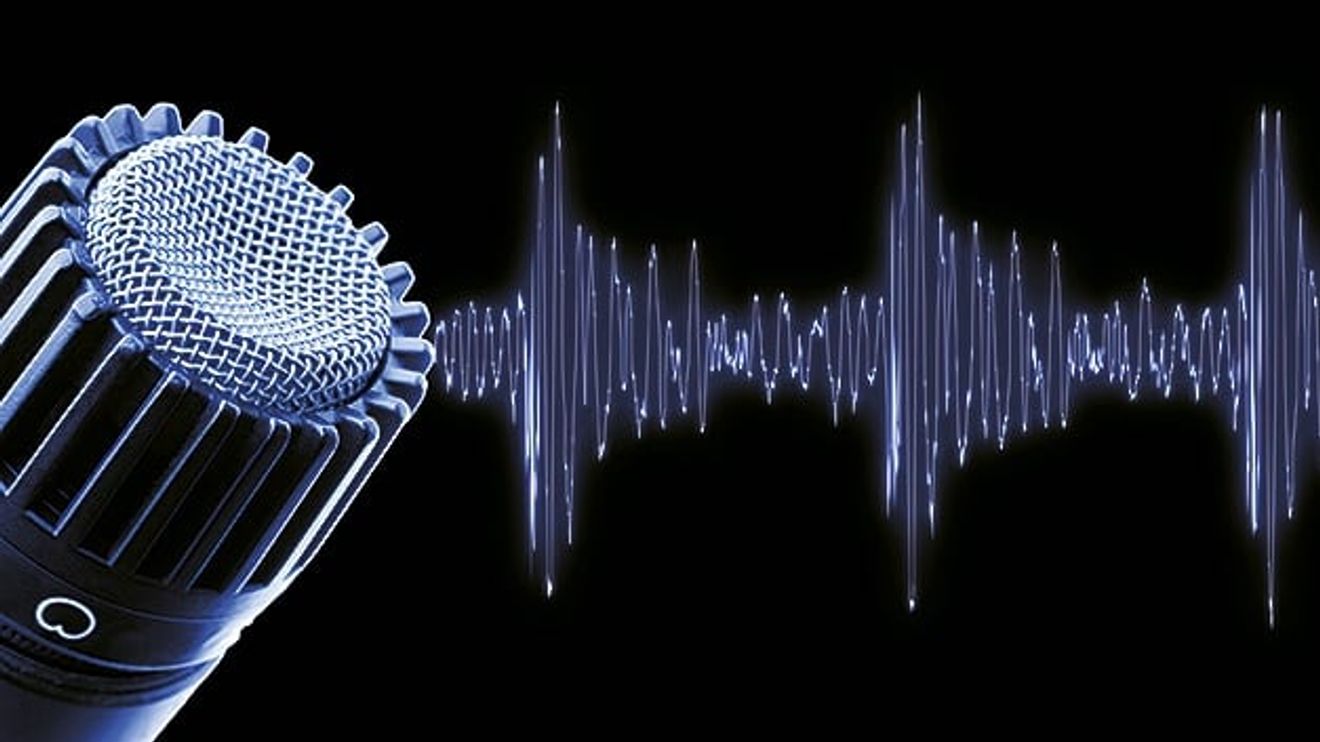
Structure-borne sound signals from corresponding system components are often evaluated for condition-based machine monitoring systems. An alternative approach is based on airborne noise information. In a practical test, airborne noise monitoring in combination with AI algorithms was compared with previous methods.
© Igor Smichkov - Shutterstock.comThe economic efficiency of the machines and systems used is one of the most important issues for companies today. This applies across all sectors in industrial production as well as in process technology. In order to properly consider the cost-benefit analysis, not only the acquisition costs of an asset must be taken into account, but also the costs for its smooth operation. In light of current digitalization activities and the growing use of intelligent AI-based systems in industry, the latter cost area in particular offers very favourable conditions. In order to keep operating costs as low as possible, a high level of asset availability must be ensured. Even the failure of a small component on a machine or system can bring the entire system to a standstill and thus cause considerable economic damage. In other words, the availability of entire systems can be significantly improved by reducing the downtime of the weakest component, for example through condition monitoring systems. The use of artificial intelligence methods also offers interesting potential.
For condition-based monitoring of systems, it is first necessary to determine the state of wear of an asset at certain intervals. This requires continuous monitoring of certain sensor values - often vibration acceleration, but also temperature, force/torque and much more. In order to be able to meaningfully compare the resulting data with each other, it is also necessary to record the respective operating status, for example speeds, control parameters or control variables. The latter data can often be obtained relatively easily from the higher-level process control system. In most cases, however, additional measurements are required to determine the wear condition of a system, which would not be necessary for a successful process sequence, i.e. are not already directly available. From this mix of data, conclusions can be drawn about the current wear condition of the monitored systems. The use of such condition monitoring systems enables a predictive inspection of technical systems and thus a predictive maintenance strategy.
Condition-based monitoring for hydraulic pumps
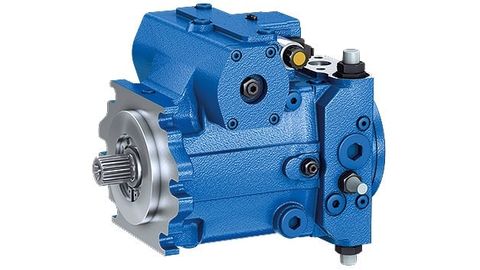
Figure 1: Hydraulic pumps, and axial piston pumps in particular, are considered to be cost-effective components in a complex automation system. Nevertheless, condition monitoring is advisable. Airborne noise monitoring is a cost-effective method for this purpose.
© Bosch RexrothHydraulic pumps and, in particular, axial piston pumps (Fig. 1) are among the most widely used automation and power components in industry and process technology. They are often referred to as the 'workhorses' of hydraulics and can certainly be considered inexpensive devices compared to complex machines or systems. As a result, it appears to be a viable option for production management to keep sufficient spare equipment on hand. In the
In the event of a failure of such a pump, it is then possible to react relatively quickly - assuming appropriate stock levels. On the one hand, however, the equipment kept in stock is simply dead capital for the company. On the other hand, consequential damage that may occur in the event of a pump failure can still result in enormous financial losses. For this reason, the use of condition-based monitoring systems for condition monitoring or predictive maintenance is also appropriate and sensible for such basic components of automation technology. In the case of an average axial piston pump, however, the additional costs for such a monitoring system, including the associated sensors, should be comparatively low. And this is where previous solutions have a problem.
Determining the wear condition of a hydraulic pump is a complex undertaking. The first choice appears to be the use of vibration sensors - i.e. the measurement of structure-borne noise. A Fraunhofer research group in partnership with a manufacturer of axial piston pumps, among others, has already carried out many years of research in this area. As a result, however, the cost ratio of the monitoring system to the pump is too unfavorable, at least for standard pump sizes. Another idea is therefore
the use of microphones to record measured values. The advantage of this method is that the measurements can be carried out relatively easily and inexpensively using standard microphones. This increases the flexibility in terms of possible applications in both stationary and mobile hydraulics. On the other hand, there is the disadvantage that a lot of interference in the form of ambient noise makes evaluation more difficult. Depending on the application, it is therefore important to find solutions for suppressing the interference to such an extent that the relevant information is retained in the measurements. If this is possible, airborne noise measurement becomes a genuine monitoring alternative.
Artificial intelligence as a tool
In the partners' investigations, the use of a condition monitoring system (CMS) available on the market was not an option for axial piston pumps, as these are cost-intensive special solutions that are not suitable or only suitable to a very limited extent. With such systems, the user is also often faced with the problem of first having to select certain characteristic values to be determined from the measurements and then having to specify limits for these themselves, above which alarms are to be triggered in various stages. This procedure is neither sensible nor practicable for the application under consideration.
For the evaluation of the airborne noise measurements, the partners therefore relied on methods that use approaches from the field of artificial intelligence. Using this approach, the researchers at Fraunhofer IIS/EAS, in collaboration with the industrial partner's engineers, have implemented a novel monitoring approach for low-cost machine components. To this end, they carried out an automatic analysis of the data from different operating environments and examined various classifiers.
Using mathematical algorithms, the system initially learns the operating states relevant for monitoring the pump independently. This is done through a data-analytical evaluation of the recorded operating status variables, which in the case of an axial piston pump are generally the speed and the swivel angle of the swash plate. Frequently occurring constellations are determined, for example, by evaluating certain histograms and thus defining corresponding operating states.
Furthermore, an individual 'data fingerprint' can be created for each of these operating states. Changes to this then indicate a change in the current wear situation. To recognize the various wear situations, a generic algorithm calculates numerous statistical parameters both from the time signals of the fingerprints and from their frequency transformations. The ultimately relevant distinguishing features are automatically determined from these parameters. A prerequisite for this procedure is the availability of a sufficient number of measurements for all operating states under consideration.
Implementation for the axial piston pump
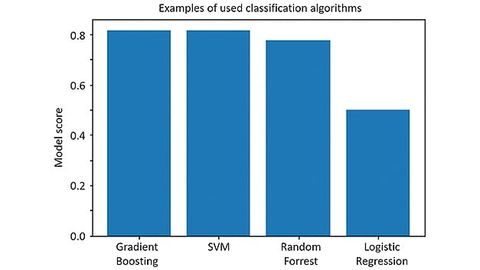
Figure 2: Comparison of the classification success when using different classification methods.
© Fraunhofer IIS/EASDue to its design, the axial piston pump contains both rotating and linear moving parts. In this respect, it is not possible to determine the necessary characteristics from measurements based on physical correlations, as is very well known for roller bearings, for example. Instead, vibrations of all kinds, i.e. structure-borne sound and airborne sound, are evaluated in order to be able to establish correlations with the wear situations.
Previous investigations by the partners have shown that the smallest changes in the surrounding situation can lead to changes in vibration characteristics. This primarily concerns the bolting situation. Operating pressures, oil volumes and hose lengths are also important. This means that in the case of a hydraulic pump, it is not possible to generalize the wear effects and the associated characteristics in the measurements. Instead, the data pool for training the AI must be built up during the use of a 'healthy' pump. On this basis, anomaly investigations and later classifications - i.e. the assignment to already known classes - are then possible. Figure 2 shows an example of the comparison of the classification success when using different classification methods for a test data set. For effective use, it must be possible to process both the training of the AI and its use as a fully trained method on small, local hardware - an edge system.
What are the benefits for the user?
Predictive maintenance strategies are not yet very widespread. For systems and components that are difficult to monitor and are also considered to be rather inexpensive, the development of a sensible solution is usually not even tackled. However, as already mentioned, such a predictive maintenance strategy can generate enormous cost benefits even for very inexpensive components. An important point here is the increase in operating hours until maintenance or replacement of components is required. Far more interesting in financial terms, however, is the avoidance of consequential damage that can occur due to unrecognized wear situations. While a worn component can usually be replaced with little effort, the costs for resulting damage within a system are often disproportionately higher. By introducing a monitoring system with several alarm levels, a replacement part can be ordered in good time if required. This allows the necessary maintenance and servicing work to be planned in advance. This in turn means that a company can reduce its spare parts inventory while at the same time reducing the risk of machine or system failure. In this way, effective management of production or technical processes can be successfully implemented with data support.

The author: Dr. Olaf Enge-Rosenblatt heads the Data Analysis Systems research group at Fraunhofer IIS/EAS.
© Fraunhofer IIS/EASThe AI-supported airborne noise monitoring system tested on the axial piston pump can, in principle, also be transferred to other basic components. The Fraunhofer researchers' system offers a promising approach for operators or manufacturers of such - often inexpensive - components to take advantage of these benefits without much effort: simple and cost-effective data acquisition, automatic data analysis and self-learning classification combine the benefits of a CMS with the ease of use of autonomous software. This opens up completely new areas of application that go beyond classic condition monitoring. Process monitoring is the buzzword that researchers are focusing on here. The data collected on a basic component can and should be included for this as well as corresponding data from other system components. In addition to the appropriate equipment with microphones, it is also necessary to merge these sensor values with the process data. This makes it possible to use both data categories on an equal footing, which means that intelligent condition monitoring can even be used to detect and automatically report changes in an entire production or process engineering process, which in turn enables appropriate responses to be made in good time.


You might also be interested in
All information at a glance
The modular sensor module system 'CAPBs' from Afriso has been extended: With its TFT color display, the modular basic handle CAPBs device provides measurement data and information directly at a glance.
 read more...
Test platform supports manufacturers of 5G devices
Keysight's 5G Protocol R&D Toolset, part of the company's range of network emulation solutions, enables mobile operators such as Qualcomm Technologies and device vendors to validate designs based on 3GPP Rel-16.
read more...Condition monitoring based on AI
The requirements for an industrial sensor system used for condition monitoring tasks are changing dynamically. In addition to battery operation, OTA updates and secure end-to-end communication, AI-based edge data analyses are becoming increasingly...
read more...Next generation condition monitoring
A mesh network consisting of vibration sensors, a gateway with a SIM card, cloud data analysis and an app is set to take condition monitoring to a new level. The highlight: every operator of production sites can monitor machines and units themselves...
read more...Energy self-sufficient IoT communication in 5G networks
In the Internet of Things, sensors act as core components for data acquisition and communication. How can they be connected as wirelessly as possible and supplied autonomously in order to make installations cost-effective?
read more...With a focus on edge & cloud computing
The e-paper of issue 03/23
Sustainability is at the top of the embedded community's agenda. Prof. Dr. Peter Fromm from Darmstadt University of Applied Sciences explains in an interview why embedded technologies are becoming the key to a sustainable future - in cars, in...
read more...Sensor platform for AI testing in SMEs
KNIME is free software for analyzing large amounts of data. The KNIME2Edge platform is designed to enable companies to get started with AI technology without having to invest a large amount of resources and specialist staff at the outset.
read more...The IoT-Bus - what's behind it?
Fraunhofer IIS presented the IoT-Bus with integrated security concept for the first time at embedded world 2017. Project manager Andreas Oeder explains the background.
read more...Keysight Expands Test Automation
Keysight is expanding its Eggplant test platform with the "Find by Description" feature. This feature identifies UI elements based on descriptions rather than screenshots, reducing the maintenance effort required for automated tests.
read more...