

70 years of Endress+Hauser
"Digitalization remains a driver on many levels"
Endress+Hauser can look back on 70 years of company history this year. To mark this anniversary, we spoke to Matthias Altendorf, CEO of the Endress+Hauser Group since 2014.
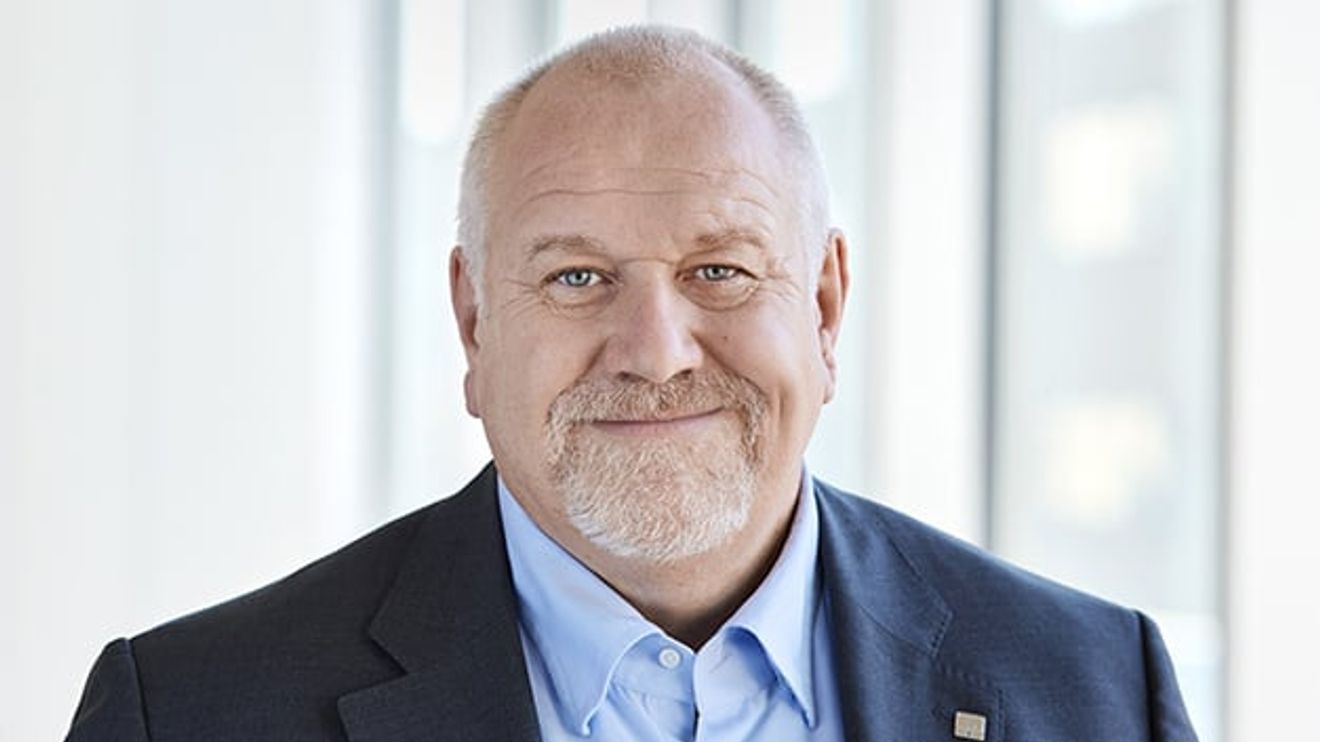
Matthias Altendorf has been CEO of the Endress+Hauser Group since 2014. In 2024, he will move to the Board of Directors as Chairman and hand over operational management to Dr. Peter Selders.
© Endress-HauserCongratulations on 70 years of Endress+Hauser! Looking back: What was the most significant technological development of your company?
It's not so easy to say, because Endress+Hauser has seen many pioneering developments in 70 years - starting with the capacitive level sensors that our founder Georg H. Endress launched on the market: from the first Coriolis flowmeter with a straight measuring tube to the contactless, digital 'Memosens' technology for liquid analysis and the self-calibrating 'TrustSens' thermometer. But if you look at market success and benefits, then the 'Liquiphant' probably deserves this label. Our level limit switch has probably prevented hundreds of thousands of tanks from overfilling and just as many pumps from running dry!
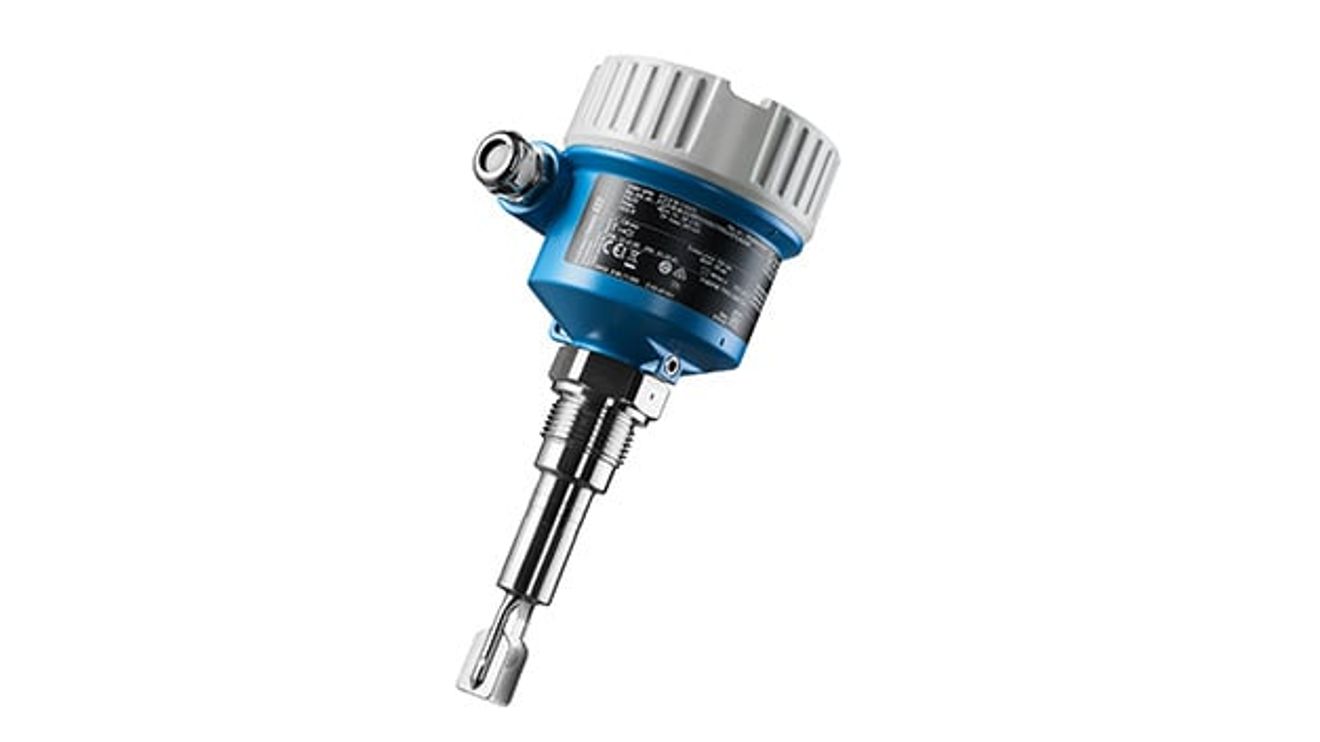
The tuning fork principle of the 'Liquiphant' level switch - a bestseller in the range for decades - was developed from A to Z at Endress+Hauser.
© Endress+HauserIs there an absolute 'bestseller' and what makes it so?
For a long time, the 'Liquiphant' was actually the product that we manufactured in the largest quantities. Now it is our 'iTherm' temperature transmitter 'TMT82'. This testifies to our dynamic growth in temperature measurement technology - and to the high technical standards we set ourselves.
It's not all rosy in 70 years - what do you think was the most difficult time for the company?
The global economic crisis of 2008/2009 was difficult because a lot of business was lost at the same time, as was the coronavirus pandemic because it was associated with concerns about people's health. We emerged stronger from both crises - also because we made it clear from the outset that jobs were secure. There was a really critical phase some time ago. Endress+Hauser had built a new building in the early 1970s. The project became considerably more expensive. Then came the oil crisis. In addition, co-owner Ludwig Hauser died around this time and his descendants wanted to be paid out. Endress+Hauser had to cut around 70 jobs and relocate its employees elsewhere, for example to a chocolate manufacturer. But just two years later, the company was doing very well again. We opened up new areas of work through takeovers and start-ups - and most of the redundant employees returned to their jobs!
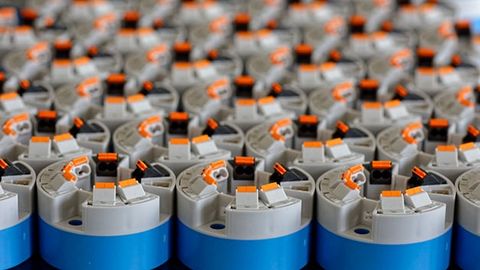
The 'iTherm' temperature transmitter 'TMT82' is Endress+Hauser's best-selling product today. It enables the optimum evaluation of sensor signals.
© Endress+HauserWhat is the roadmap for the next ten to 15 years?
We want to continue to grow organically above average. Our strategy helps us to make the right decisions - for example, to focus our sales and services even better on our customers around the world, to use the opportunities offered by digitalization in our products and processes, to drive forward our strategy for analysis in the laboratory and process - and to continue to inspire young talent and experienced specialists to work at Endress+Hauser in the future. As a family business, we are currently experiencing how the third generation is taking on responsibility. No member of the family will be working operationally in the company for the foreseeable future, but our shareholder family will remain closely connected to Endress+Hauser and will have a formative influence through the Board of Directors, for example.
What technological trends do you see that are or will be important for Endress+Hauser?
Digitalization remains a driver on many levels. We are only just beginning to tap into the potential in most areas of the process industries. Ethernet APL will certainly be a booster here. Bluetooth technology and apps are already making it easier to operate and configure our devices. Our 'Heartbeat Technology' enables entry into predictive maintenance through device diagnostics and verification. Cloud solutions and smart algorithms open the door to new applications such as our 'QWX43' fermentation monitor. We also see great potential in optical analysis methods. Inline measurements with Raman spectroscopy, for example, are becoming increasingly useful in more and more applications.
What do you think will be the biggest challenge in the coming years, in terms of business and/or technology?
Geopolitical tensions, with their impact on supply chains and open access to markets, present us with challenges, as do demographic developments - the keyword here is the shortage of skilled workers. But the biggest challenge for our society, the process industries and our company is sustainability, especially climate protection. It is about producing the energy we need - many times more than we consume worldwide today - in a climate-neutral, safe and reliable way. At the same time, however, this is also the biggest opportunity we have. We want to support our customers in decarbonizing their plants and processes, implementing new concepts for the circular economy and achieving maximum energy and resource efficiency. At the same time, we have set out to reduce our owncarbon footprint step by step. All of this must be achieved without neglecting economic success - only then can we assume ecological responsibility and provide social security. We can and want to help ensure that our world remains worth living in!


You might also be interested in
Good figures crown the anniversary year
Endress+Hauser celebrated the Group's 70th birthday in 2023, initiated a change at the top and posted good figures for incoming orders, sales, profit and employment in its anniversary year. The audited figures have now been presented at the annual...
 read more...
Strong growth recorded
The specialist for measurement technology and automation solutions increased its consolidated turnover in 2023 by 11% to over EUR 3.7 billion and created 715 new jobs worldwide.
read more...Important supplier acquired
Endress+Hauser intends to take over the operations of the Swiss supplier Angenstein Estech, including the production plant in Cernay, France, Estech Industries Angenstein, succursale de Cernay.
read more...Sick and Endress+Hauser join forces
The German sensor company Sick and the Swiss measurement and automation technology provider Endress+Hauser want to work more closely together. The two companies are aiming for a strategic partnership for Sick's process automation business field.
read more...Driving automation forward
Groschopp has experienced a lot in its 75-year history. In this anniversary interview, shareholder Wolfgang Pflug talks about dark times, the opportunities offered by automation and why Germany is losing its competitive edge.
read more...Innovation cluster opened
Endress+Hauser brings together several teams for sensor and software development at the FRIZ innovation center in Freiburg. The 70 employees work in a close network and are embedded in an environment of research institutes, start-ups and other...
read more...Around the world for a good cause
As part of the Endress+Hauser Water Challenge, the company's employees raised money for a water project in Vietnam in record time with charity runs. The campaign is now entering a second round.
read more...Generation change initiated
At the beginning of 2024, there will be changes at the top of the Endress+Hauser Group - both in terms of the Board of Directors and the Group.
read more...The top 10 articles in August 2024
The top 10 articles from Computer&Automation in August 2024. Readers were most interested in these reports.
read more...