
Weidmüller
"Web-based technologies are platform-independent"
Julien Rausch and Martin Flöer talk about the challenges associated with open ecosystems and the benefits of web-based technologies in this interview.
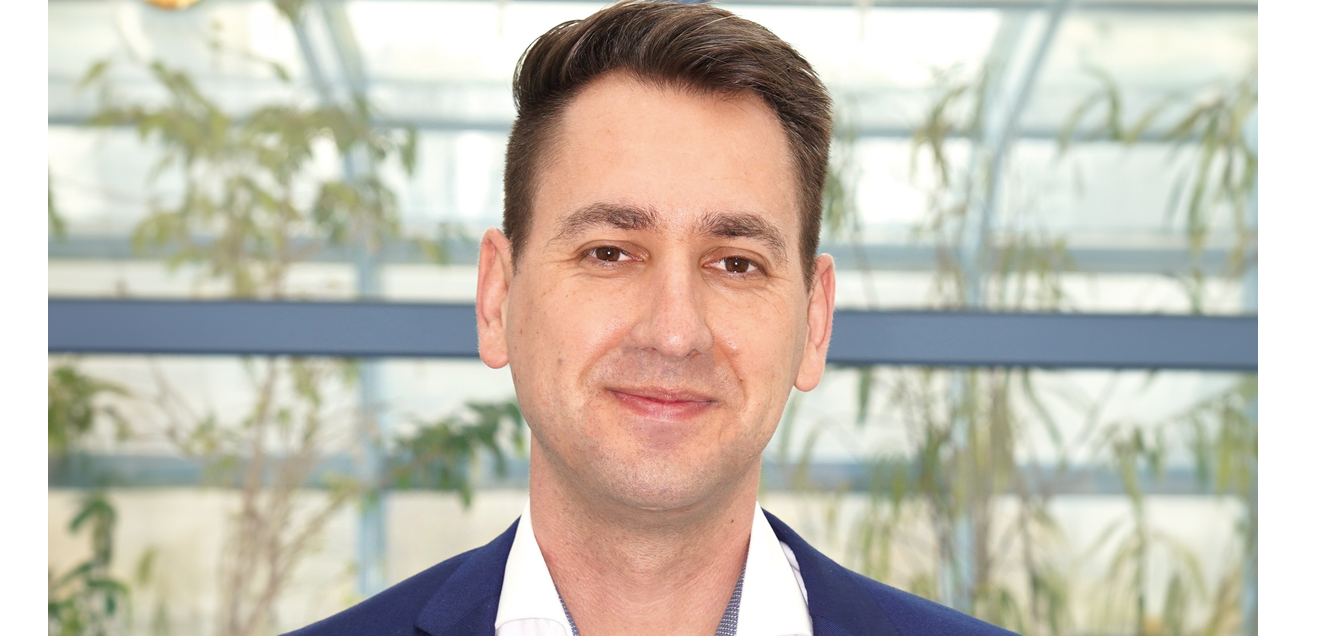
What technical challenges arise when integrating open ecosystems into existing industrial environments, i.e. brownfield applications, and how can these be overcome?
Julien Rausch: In brownfield systems, we often find closed systems with proprietary interfaces. As a communication tool for open, but also proprietary interfaces from different controller manufacturers, Procon-Connect is a key element that bridges and connects ecosystems - without additional programming effort, simple parameterization is enough. In combination with the u-OS Data Hub, even more is possible: Customers and integrators can easily integrate their IT and OT applications in the Data Hub to exchange data from their and Weidmüller's applications.
We face a different challenge when it comes to space and protection class. Space in the control cabinet of a brownfield system is usually a very rare commodity. The motto "never change a running system" often applies and you don't want to make any major changes to the existing system. It is therefore easier to install components directly where they are needed. However, IP67-compatible components are often significantly more expensive than their IP20 counterparts and there is less variety. Our FieldPower enclosures, which can also be used to install IP20 devices in the field, are a cost-effective alternative.
Brownfield facilities were often built at a time when digital communication standards or wireless networks were not yet available or widespread. This means that the necessary cabling to connect sensors or IoT devices, for example, is missing. This is where wireless sensors (such as u-sense vibration), which are powered by batteries and can transmit data wirelessly, solve the problem.
Another challenge is that production plants and machines are typically protected by strict firewalls and the opening of new ports is prohibited for security reasons. However, read access to data, for example with the aim of condition monitoring, requires communication from the plant to external systems. This can be achieved, for example, by installing additional devices such as gateways, which are connected to the external systems via mobile radio. The keyword here is bypassing.
What are the main advantages of using container-based architectures (such as Docker) in automation projects and what are the hardware requirements?

Martin Flöer: The advantages of containers are manifold. They can be integrated on devices from different manufacturers, as they function independently and are not dependent on other software. This means that existing programs can also be transferred to new architectures. Updates can also be carried out independently of other software components. Users can easily patch security updates and bug fixes. Speaking of patching, since a container provides an isolated environment, an update has no impact on the rest of the application.
With regard to the new legal guidelines such as NIS2, containers have further advantages: users can also use IT security tools in OT by using OT devices with container environments.
As OT CPU systems are becoming increasingly powerful and almost standardized, the use of containerized solutions is absolutely possible. We offer a scalable portfolio in terms of performance. Device classes such as edge devices, PLCs, routers and switches are increasingly converging, meaning that containers can be used flexibly in many places in the future. An important factor for the use of containers is the Linux operating system. This is the basis for our u-OS operating system, among others, so it offers an excellent environment for running and operating containers.
When it comes to IT security, companies must always ensure that only approved software is running on the devices. Accordingly, a company must secure its production with an IT security concept, as otherwise malicious code can easily be deployed.
How does the introduction of web-based technologies such as 'Procon-Web' improve the operation and maintenance of systems, especially with regard to remote diagnostics and services?
Julien Rausch: The advantages come into play on several levels. With web-based technologies in conjunction with VPN, technicians and operators can access the system remotely. This allows users to access control systems, machine or process data in real time, for example, and have problems identified (or even rectified) remotely. And without the need for additional software installation. This reduces downtimes and increases the efficiency of the system.
Web-based technologies are platform-independent. The systems can therefore be accessed using various end devices, for example tablets, smartphones or panels, as long as they have an HTML5-compatible browser.
Thanks to web-based solutions, user interfaces can be made more intuitive so that even less trained personnel can carry out maintenance and diagnostic tasks. Common operating concepts from the consumer sector, such as gesture control and touch operation, make the systems more accessible. This reduces the amount of training required and enables the systems to be operated more efficiently. Users can personalize the user interface of web-based systems, such as Procon-Web or our u-OS operating system, based on their role, the device and the task.
This means that a maintenance technician, for example, receives a different view or specific information than an operator or manager. This simplifies task processing and ensures more efficient and targeted use of the systems.
At Weidmüller, we offer the option of using web interfaces across the board. For customers, this starts with the HMI, created with Procon-Web, through the administration of our software products to the u-OS operating system.
Can you give an example of a successful implementation?
Martin Flöer: The project with the private brewery Strate from Detmold is a successful example of how existing automation in the brownfield was supplemented with industrial IoT functionalities. Here, we show how data acquisition, pre-processing, communication and analysis can be interlinked. The existing automation infrastructure was left completely untouched and a parallel line was set up.
This is an illustrative example of the bypassing mentioned above. An edge device with our open operating system u-OS collects data from the system via Procon-Connect. Additional data is also collected directly from the sensors via I/O modules. The sensors include both existing sensors and sensors that we have added, such as u-sense. Acquired data includes, for example, temperatures, filling levels or pressure states. These can be further pre-processed or made available to other systems via MQTT. For the greatest possible added value, we visualize this data locally in Procon-Web in a clear user interface, and an overview of the data is available remotely in easyConnect. This provides the brewery's employees with a constantly updated overview of all the data that is important for their work. This optimizes daily processes, saves time, lowers operating costs, reduces the likelihood of errors - and thus increases the profitability of the entire company.


You might also be interested in
Portal for data exchange in mechanical...
VDMA and Innovalia develop data rooms
VDMA and Innovalia are jointly developing a data room portal for mechanical and plant engineering. It is intended to facilitate the secure exchange of data and accelerate the use of data-based applications in industry.
 read more...
German Innovation Awards for Schaeffler's Industrial Metaverse
Schaeffler has been awarded the German Innovation Award 2026. The prize was awarded for an industrial metaverse approach that links real production processes with digital simulations and enables AI-supported manufacturing.
read more...Industry 5.0: How FOM Industrie and Lenze are shaping the future of aluminum processing together
In a world where efficiency, sustainability and digitalization are shaping industrial development, FOM Industrie and Lenze are setting standards. Their partnership shows how technological excellence and shared visions can accelerate the evolution of...
read more...Dassault Systèmes takes over Ascon Qube technology
Dassault Systèmes is strengthening its strategy for virtual twins and integrating Ascon Qube technology into its Delmia portfolio. The acquisition is intended to provide companies with more flexible and AI-supported production control.
read more...SMEs drive key technologies forward more than corporations
The digital transformation of German industry is making tangible progress - but it is not onlylarge corporations that are focusing on future technologies such as artificial intelligence (AI), the Industrial Internet of Things (IIoT) and autonomous...
read more...Digital twins and AI in industrial use
Schaeffler and Nvidia launch technology partnership
Schaeffler is cooperating with Nvidia to optimize production processes in the global plant network with the help of digital twins and AI-based simulations. The Omniverse platform plays a central role in this.
read more...Secure data management in the cloud
Bachmann presents new functions of the platform-independent visualization solution 'atvise': Thanks to container operation and a consistent client concept, the solution can now also be used securely as a higher-level IoT (Internet of Things) service.
read more...Drive Portfolio Expanded
Keba is expanding its drive portfolio with the single-axis servo controllers of the KeDrive D5 series, which seamlessly integrate into the open automation platform 'Kemro X'.
read more...Dr. Marc Wucherer succeeds Christian Wendler
On 1 January 2025, Dr. Marc Wucherer will take over as CEO of Lenze from Christian Wendler, who is retiring at the end of the year.
read more...