
Simulation
What is behind 'Continuous Commissioning'
In order to be able to implement automation solutions in an ever shorter time, commissioning must move further forward in the development process. The continuous comparison of all disciplines and work steps through simulation can provide helpful services here.
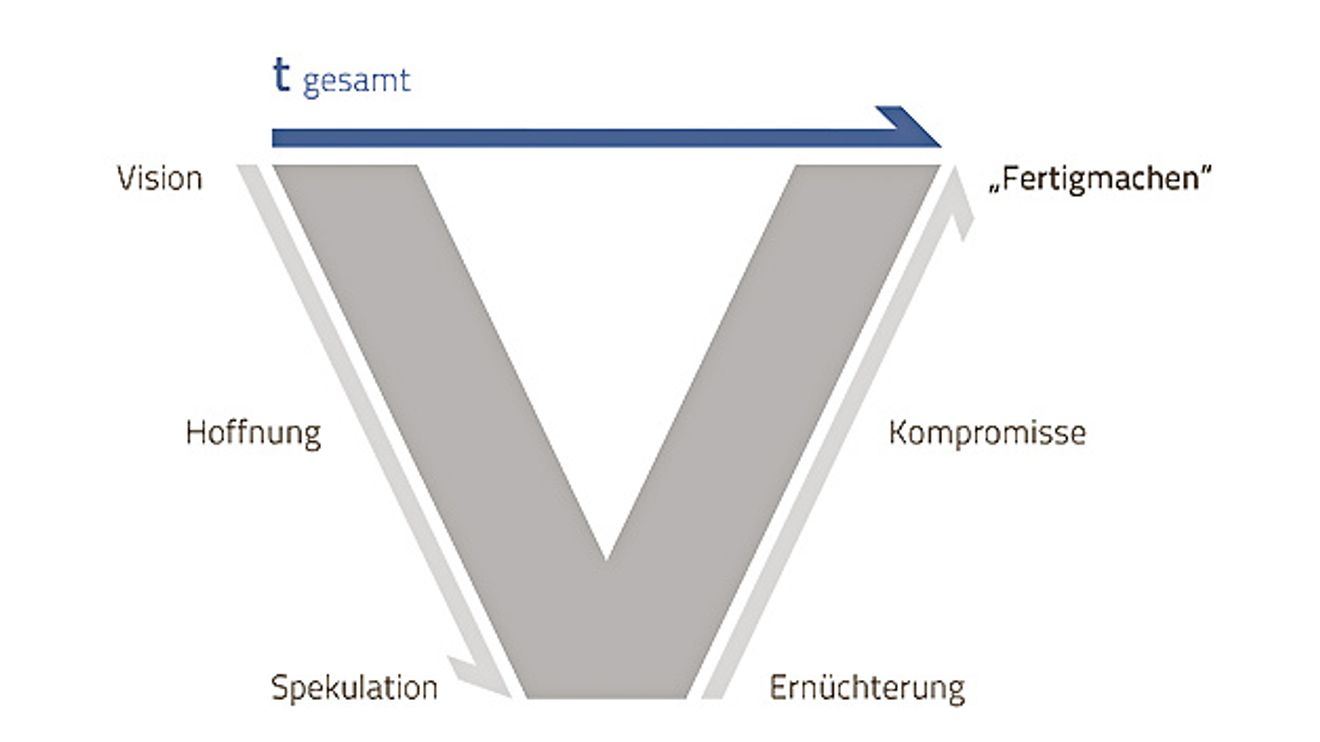
The so-called V-model(Figure 1), which combines the top-down principle in development with the bottom-up principle in commissioning, characterizes software development in many companies today. It defines the results to be produced in a project, the procedures and the responsibilities. In the form of an imaginary 'V', specifying and testing phases face each other, which ultimately serves to check their correct implementation against the given specifications. If discrepancies are found here, it is necessary to return to the checked phase on the left-hand side. The V-model as such is a development process model in which the development process is organized in individual phases. In addition to these development phases, the V-model defines the procedure for quality assurance.
So far, so good. The problem is that as the development processes for mechanics, electrics and electronics often take place separately from each other, they only cause a large number of errors when they come together during commissioning, which are usually the result of insufficiently tested results from the specialist departments - usually resulting in cost-intensive change loops.
Eliminating these errors is the aim of the holistic 'Continuous Commissioning' approach, which enables a continuous comparison of all disciplines and work steps through simulation - from the initial idea through to production. The simulation forms a cross-divisional platform on which the current development status is verified at all times and checked for feasibility with other areas. This is in contrast to the classic process solution, where virtual commissioning only takes place - if at all - once the mechanical layout or drive concept has already been finalized, for example.
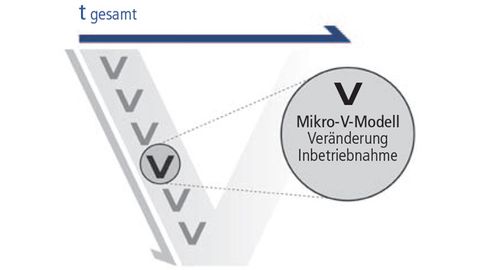
Figure 2: With the help of micro V-models, the V-model is further subdivided into many smaller and therefore clearer processes.
© Machine engineeringWith the new approach, on the other hand, the mechanical, electrical and software departments use the same models at the same time, which they each work on in their native development environment, develop together and immediately test in interaction using simulation. As a result, the current development status can be viewed in an integrated manner from the earliest phases, which in turn saves development time. Thanks to a permanent comparison of the project, the achievability of the goals ultimately becomes transparent for everyone involved. The decisive factor in this context is that the PDM ensures consistent development statuses that can be reproduced at any time. Ultimately, this continuous commissioning significantly reduces the effort required compared to the usual final commissioning - both in terms of time and costs.
Figuratively speaking, continuous commissioning breaks up the classic V-model with numerous micro V-models. This creates a collection of several V-models that are independent of each other and can be processed in parallel by an organization. In this way, the sequential procedure according to the V-model for machine development is split into a swarm of maximum concurrent micro V-model processes(Figure 2). After each iteration, there is a consistent development status and only this is saved in the PDM system. In this way, important intermediate statuses can always be consistently read from the archive and used for subsequent projects.
The social component
It should be noted that continuous commissioning also changes the social component in engineering. This means that the development department - previously mostly responsible for the mechanical design of systems - must now support the entire development process. Such a change has an impact on the hierarchy in the company and is reflected in the competencies of those responsible. Or to put it another way: engineering disciplines are merging and development engineers are ideally transforming into interdisciplinary mechatronics developers.
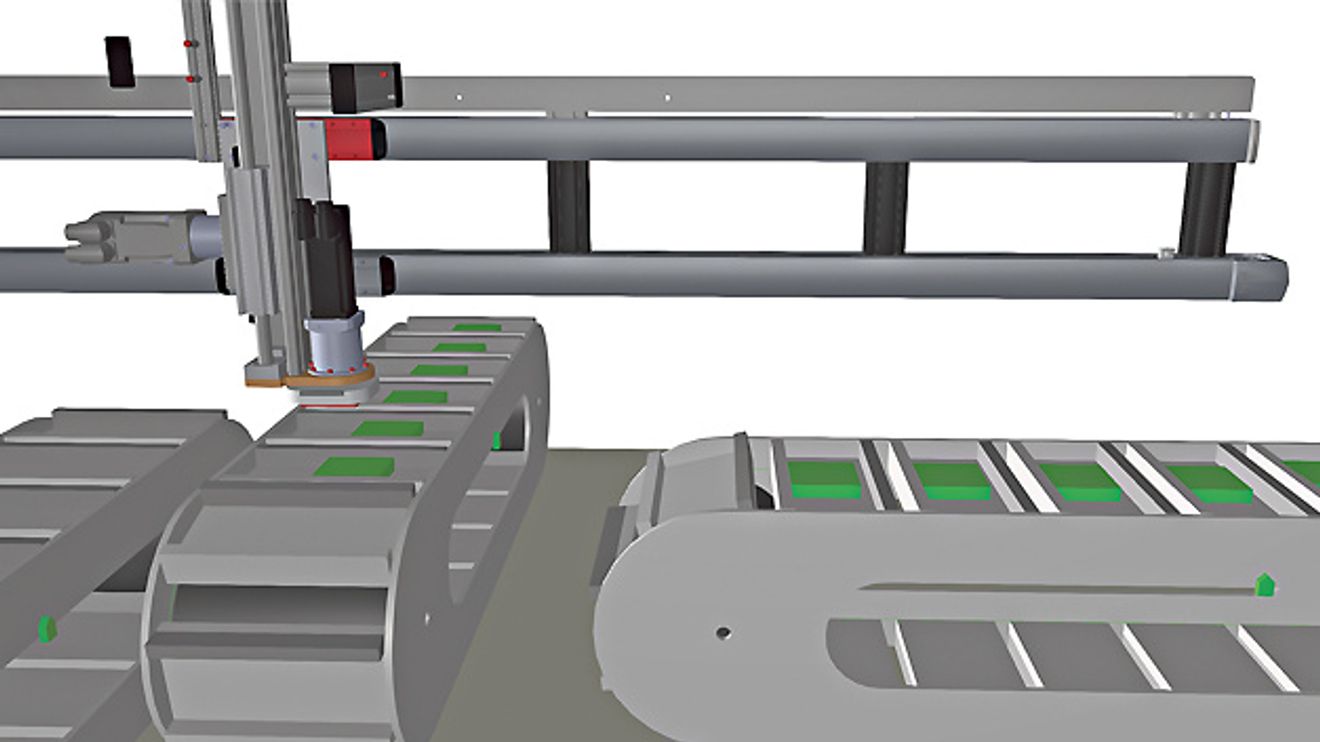
Figure 3: The toploader from Schneider Electric combines various compartment chains for the material flow.
© Machine engineeringIn addition to the social component, continuous commissioning requires an 'upgrade' of the classic, purely discipline-based tools. If you take a 3D CAD system such as SolidWorks as a basis, for example, the data is currently mainly used to generate 2D production drawings and parts lists. For continuous commissioning, this means that a mechatronic assembly contains the kinematics, drive, sensors, I/O interface, motion curves and PLC logic in addition to the 3D data. These system worlds can be created with the 3D simulation software industrialPhysics, for example.
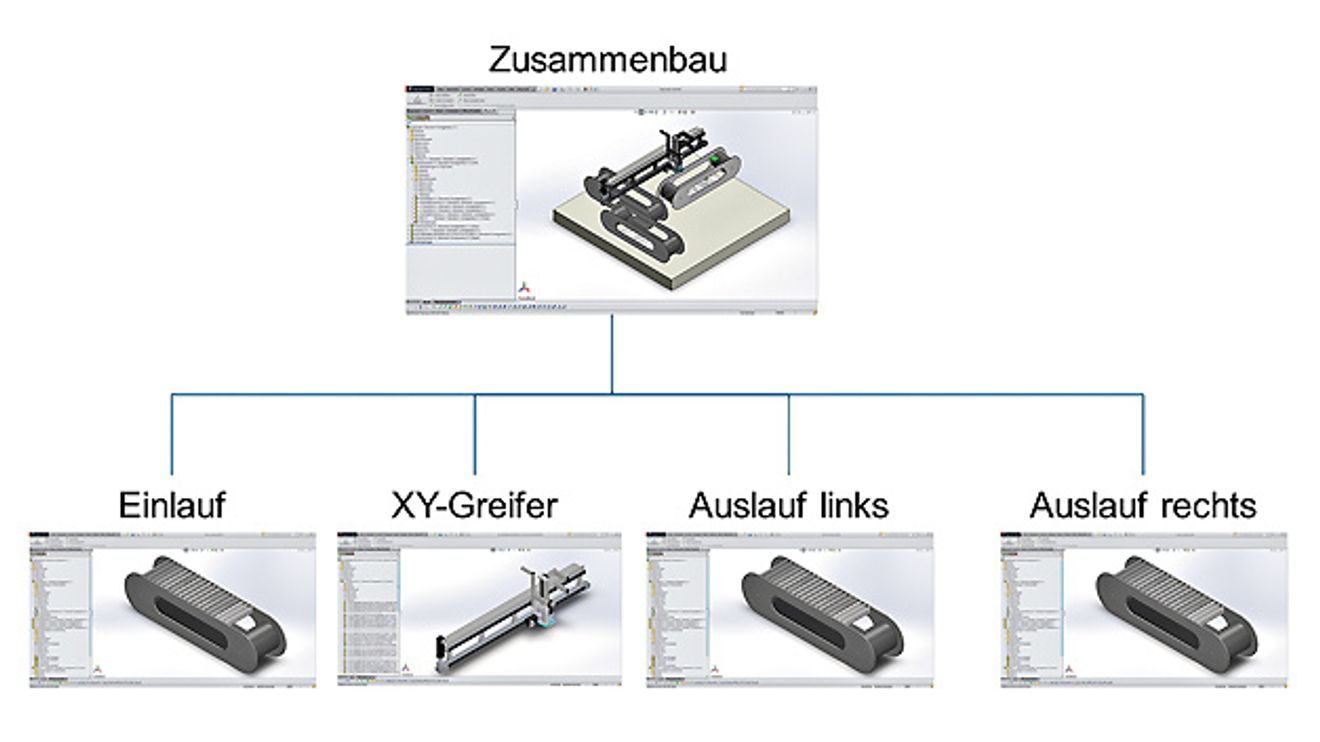
Figure 4: By assembling the intelligent components in the 3D CAD system, individual components become a whole.
© Machine engineeringHow does this work in practice? In other words, how can intelligent components be parameterized and merged in the CAD system? This is shown in the following example of a so-called toploader(Figure 3) from Schneider Electric. The toploader is a simple machine model that is used to learn motion control with the Pacdrive control and motion control platform. It uses an X-Y linear unit with a suction gripper to transfer products from one fan chain to another. As a result of the holistic engineering approach, the fan chain is not only given a three-dimensional design, but also a drive model with modulo function. In terms of drive technology, this means the following: The position of the axis is reset to the initial value once the modulo length has been exceeded. In the example 'Rotary axis, modulo length 0°... 360°' this would mean: The axis position here starts again at zero when 359° is exceeded - i.e. position 0°=360°. The same applies to the transfer axis with gripper. Assembling the intelligent components in the 3D CAD system results in the final assembly of the toploader, which now contains all the necessary information(Fig. 4).
This step in end-to-end engineering requires the integration of the simulation platform used with the CAD software. Only then can the mechatronics information stored in the CAD model be combined with the geometry information and output an up-to-date simulation model at the touch of a button. This is precisely where the advantage of the approach described above comes into play, namely that numerous engineering tasks can be brought forward. These include the design of machines, including dynamic motion and drive kinematics, through to virtual commissioning with the real control system.
With the aim of enabling this integration, a prototype was created as part of the GrIP research project (geometry-based, interactive programming of motion controls), which consists of SolidWorks for the mechanical design, the IndustrialPhysics simulation for simulating the process and the cam disk editor and drive design tool MotionBuilder from Schneider Electric. During the two-year project, the companies Somic Verpackungsmaschinen, Uhlmann Pac-Systeme, Schneider Electric and the Fraunhofer project group "Resource-efficient mechatronic processing machines" worked together with Machineering to provide better support for the software development process in the early development phases.
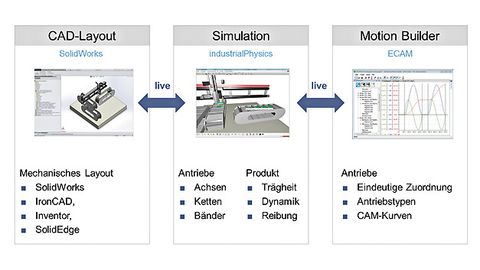
Figure 5: The bidirectional data exchange enables the CAD layouts and the system to be simulated to be adapted quickly.
© Machine engineeringSpecifically, the bidirectional derivation of the motion control from the CAD layout was developed as part of the joint project. Roundtrip engineering was also improved with the feedback of changes from commissioning into the system layouts. As a result, motion structures can be developed interactively together with the CAD layout(Fig. 5). This means that curves that cannot be implemented in terms of drive technology can immediately trigger a change in the machine layout. This reduces the effort required to process changes to a minimum.
Based on the new process structure of Continuous Commissioning with the integrated micro V-models, simulation takes on a completely new role in system development, because it does not 'degenerate' - as is often the case today - into a checking tool in development. Rather, it makes the leap to a medium that brings together the different components of a machine in an 'articulable' digital prototype.
But what is the real benefit to the user of being able to program all control systems in advance and test them in virtual operation? The company AEM August Elektrotechnik, which has been creating customer-specific complete solutions for mechanical and plant engineering in a wide range of industries for over 30 years, has already gained initial experience with the 3D simulation described above. In a specific project, the aim was to find a solution for the changed requirements for automation solutions and their implementation. The main aim was to shorten project implementation times and to create a sales-supporting and confidence-building tool. The aim was to optimize the development and implementation processes and increase transparency in development.
The result after six months of using IndustrialPhysics: with the help of the simulation, AEM had a great deal of sales support from the plant model. Sequence and cycle time problems could be identified and rectified immediately. The live project planning of the software on the simulation model ultimately accelerated the virtual commissioning at the desk by 75% compared to classic commissioning. AEM also achieved greater customer loyalty through sales support at the end customer (WYSIWYG). The reduction in software development time is currently around 20%, while the reduction in on-site commissioning time is currently around 25 to 35%.
The bottom line is this: The vision of modern engineering is the permanent synchronization and coordination of changes - interdisciplinary, live and together. Immediate feedback is always guaranteed via tests in a simulation model that realistically depicts the behavior of the system - without the need for time-consuming saving, reformatting and loading of data models. This means that simulation will take on a completely new role in system development in the future, one that goes far beyond a mere verification function.
Author:
Dr. Georg Wünsch is the founder of Machineering, a spin-off of the Technical University of Munich.


You might also be interested in
Visualization via app
With the industrialPhysics app from Machineering, which is available via iTunes, simulation models created on the desktop can also be transferred to handheld devices.
 read more...
CAD software: Models available remotely via browser
With the release of IndustrialPhysics 3.0, the machine engineering team has integrated new features into the software. For example, synchronized mechatronic engineering is now possible via the so-called CAD offline buffer with workflow control.
read more...Visualization via app
With the "industrialPhysics App" from Machineering, which is available via iTunes, simulation models created on the desktop can also be transferred to handheld devices.
read more...Virtual commissioning go!
Machineering will be presenting numerous new features of the 'IndustrialPhysics' simulation software with Release 2.2 at the trade fair - and is accommodating users with different licensing models.
read more...Hardware for the digital twin
Everyone is talking about the digital twin, but many companies still find it difficult to implement. Machineering wants to support users with two new hardware products.
read more...A digital image
The digital twin accompanies machines and systems throughout their life - from the initial idea to ongoing operation and a look into the future. The aim is to avoid errors, optimize systems and prevent failures.
read more...Arriving in reality
The automation industry has recognized the potential of virtual and augmented reality - as numerous showcases at SPS IPC Drives 2016 made clear.
read more...Virtual versus augmented
At Machineering, trade fair visitors can test both virtual reality and augmented reality scenarios live - with the Hololens, Oculus Rift and HTC Vive glasses. Dr. Georg Wünsch, founder of Machineering, on the potential of the new HMI possibilities.
read more...Siemens makes 'Sinumerik One' AI-capable
Siemens has unveiled a new generation of hardware for Sinumerik One. The CNC controller offers greater computing power, a 64-bit architecture, AI support, and meets the requirements of the EU Cyber Resilience Act.
read more...