
checked up on! - with Dieter Hess
The new payment model
Until now, Codesys has sold its Soft PLC with a device-based license model. Now the company is switching to an application-based payment model. Managing Director Dieter Hess explains the background to the license changeover.
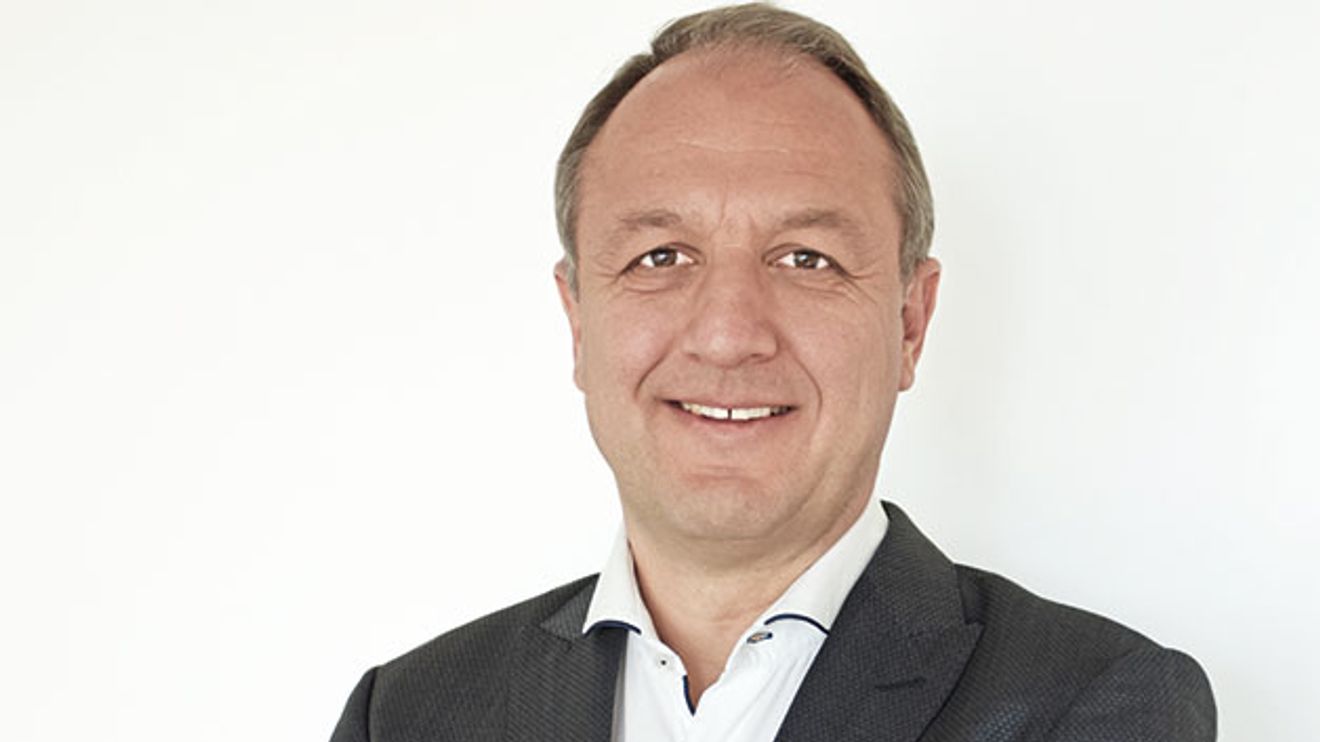
Mr Hess, you have been selling your Codesys Soft PLC with a device-based license up to now. Now you are switching to application-based licensing. What is the new payment model like?
The new payment model enables licensing without any dependency on the hardware. The application is divided into one of eight performance classes based on various criteria such as the number of I/Os, number of fieldbus connections, code size and the availability of functions such as multi-core support. This determines the price. The lowest category is not even half as expensive as the cheapest, productively usable license for the Raspberry Pi to date, Codesys Control Raspberry PI MC. The most powerful category is not even 10% more expensive than the most expensive license to date for our Windows PLC with hard real-time, Codesys Control RTE. Then there are additional functions such as visualization, OPC UA or motion control, depending on the degree of use, i.e. the number of data points used.
For which customer clientele will the model represent a "hidden" price increase and which customers are more likely to benefit from the new model?
Customers who have a small or medium-sized application running on an industrial PC may be able to expect cheaper licenses. Customers who had a very large application on a small ARM device could see a price increase. However, very complex applications also have many I/Os and/or drives. The price of a SoftPLC is not normally a significant factor here. In the run-up to the decision, we carried out a random test with some of our end users and the result was that we recorded significant price reductions or unchanged prices much more often than price increases.
Are you switching to a new payment model that is fairer for the user, but where you are accepting a price reduction, i.e. a drop in sales?
It is difficult for us to estimate the impact on our turnover. We believe that a short-term decline in sales in this area is certainly possible. In the long term, we can cover a broader market of applications and expect a significant increase in unit sales and, of course, an increase in turnover.
The previous model - payment per device - seems to have a more transparent payment mode than billing by application size. Isn't the new model very confusing to handle?
The previous model was clear, but often unfair. Users in mechanical and plant engineering generally know their application. The Codesys Development System provides all the data needed to select the right license. This means that you only ever have to pay the price difference to the higher license. So it makes no difference to the price whether you buy a smaller license first and then upgrade later, or whether you buy the larger license immediately.
Why is the license changeover happening now?
On the one hand, CPUs are getting faster and faster and all licenses will eventually slip into the highest and therefore most expensive category, even though the application generally remains the same. On the other hand, there is a trend towards packing many virtual controllers onto a single, very powerful server. Of course, a license fee is also due for each virtual PLC. Without this license conversion, however, all licenses on such a platform would have to come from the most expensive category. The Codesys virtual controller will be launched exclusively with the new license model at the beginning of next year.


You might also be interested in
Flecs and Wibu-Systems cooperate
Wibu-Systems and Flecs Technologies have agreed to work together. Together, they want to simplify the procurement and purchasing process for industrial apps and enable simple and secure licensing of apps.
 read more...
Revolution of the business model
Linux-based automation systems, including PLCs, industrial PCs and IoT devices, are currently leading to the consolidation and opening up of systems. However, opening up only on a device basis is only half the battle.
read more...followed up! - with Dr. Gunther Kegel
"Recognizably alien to the industry"
More and more regulations and bureaucracy are being imposed on companies. In an interview, ZVEI President Dr. Gunther Kegel criticizes politicians and calls for consistent action.
read more...Interview with Frank Stührenberg
A question of balance
In this interview, Frank Stührenberg, CEO of Phoenix Contact, talks about the future of energy supply, value-oriented action, competition from China and what excuses he will not accept when it comes to the further development of his company.
read more...Codesys for Edge & Cloud Control
Virtual safety control - no illusion
Codesys advertises the fact that its SoftPLCs can also be installed as virtual controllers on any platform with a container or hypervisor. Domenik Vögel explains why virtualization does not stop at safety applications.
read more...The virtual safety controller
In a two-part series of articles, we shed light on the PLC's path to virtual control. In this second part of the article series, the focus is on functionally safe controllers - i.e. safety controllers. Can they also be virtualized?
read more...25 years of Computer&Automation - The e-paper
For 25 years, Computer&Automation has accompanied the growing influence of IT in automation technology. Ultimately, IT and automation can no longer be clearly separated. In this anniversary issue, you can read about the importance that...
read more...Manage and secure assets
In today's fast-paced industrial environment, it is essential that production processes run smoothly and efficiently. However, one critical aspect that is often overlooked is the importance of PLC backup and restore procedures.
read more...Update brings support for TIA V19
Delta Logic has updated the 'Accon OPC UA Server' software to version 1.4.0.0. The new features include support for TIA Portal projects of version V19 and for the latest firmware for CPUs of the Siemens S7-1200 and S7-1500 controllers.
read more...