
Artificial intelligence
AI - in the cloud or in the controller?
The buzzword 'artificial intelligence' is currently omnipresent. The use of AI in production is also intended to help eliminate bottlenecks and increase overall plant efficiency. But where are the mechanisms behind this best placed?
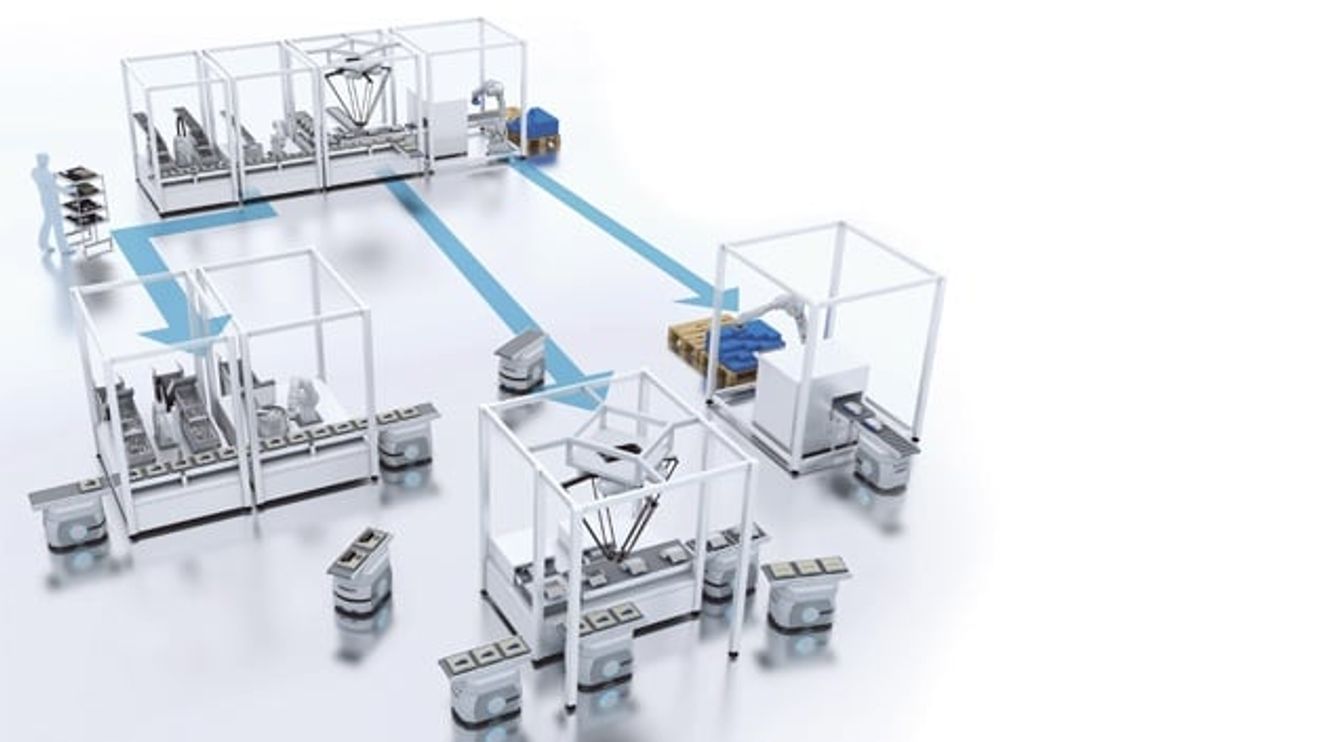
When we talk about AI, it's worth taking a closer look: What kind of intelligence are we talking about? What tasks should it be used for? And almost more importantly, what are the prerequisites for its use, particularly with regard to the cost-benefit analysis? To get an overview, it is helpful to first differentiate between 'strong' and 'weak' AI. The former is about replicating human abilities such as linguistic communication as accurately as possible - think of the famous Turing test: the human asks, the machine answers. In contrast, 'weak' AI essentially aims to solve specific tasks and problems. In recent years, the term 'cognitive' (cognitive computing, cognitive manufacturing, etc.) has become established for this, as the aim is to replicate and surpass the analytical and problem-solving abilities of humans.
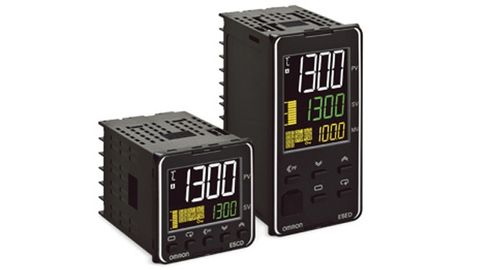
AI is not fundamentally new at Omron: a self-learning (AI) system is used in the E5_D (pictured) and NX-TC controller series, for example, to enable control quality with unprecedented precision.
© OmronOne example of such an ability is the recognition of complex patterns and the associated assessment of right or wrong or good or bad. Adaptive algorithms of this kind have been used to defeat the best human players in chess (since around 2005) and last year also in the Asian board game Go, which was long considered too difficult for computers.
Such successes are based, among other things, on the ever-increasing computing power of computers, which allows ever faster analysis of more and more states and patterns. With the increasing 'sensorization' of industry as a result of networking and digitalization, more and more data is also available on the production side, meaning that the prerequisites for optimizing production processes are in principle in place. Nevertheless, there is still a considerable gap between desire and reality in the application of AI. Why is this the case and how can it be overcome?
The challenge with the cloud
Many of the solutions available on the market, which are often cloud-based, place considerable demands on IT and infrastructure, particularly in the area of security. In addition, the AI system is given a huge amount of data that it cannot do anything with at first. Before machine learning can begin, the mass of data - which has little consistency in terms of formats, time indices, etc. - must be structured, sorted and operationalized by humans. This immense preparatory effort drains the promised added value of AI, because only when it can be applied can it be seen whether and, if so, which optimizations are ultimately possible and promising.
The starting position is somewhat better with edge computing, as factory areas or production lines are analyzed individually. Although the process is more selective and therefore more targeted, the computing power is limited and the data used is still unstructured, meaning that real-time optimization is still a long way off. Or to put it another way: with an edge controller, the machine/station is usually the smallest instance. An AI controller, on the other hand, is based on the approach of using the sensors and actuators in the machine as the smallest instance of the data. This means that the term real-time will very quickly move into the realm of the machine cycle. An edge solution that draws aggregated data from the machine control system cannot achieve this in terms of the system itself. Real-time can generally take place at 10-second intervals, which is also valid for visualization and process monitoring at factory level - but not for machine-oriented AI.
'Black box' versus 'white box'
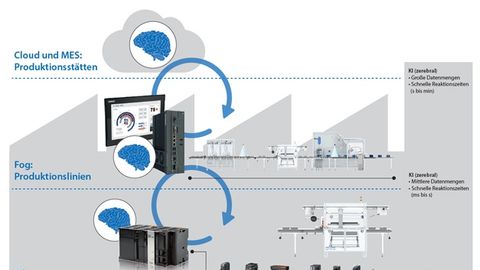
By analyzing and using combined data, the AI controller can quickly predict possible machine faults and prevent system downtimes and a deterioration in product quality.
© OmronIntelligence must therefore be brought closer to the process in order to be able to react more quickly and not be overloaded with disorganized data. The difficulty of implementing cognitive manufacturing in production companies is not least due to a special feature of mechanical and plant engineering: The machines used are usually not pure series models, but generally one-offs. This means that data and results obtained on one machine cannot simply be transferred to other designs. In addition, many machines are too complex to be fully described mathematically (as a 'white box') or to create a digital twin at a reasonable cost in terms of time and money. These are so-called 'black boxes' whose operating states and optimum parameters cannot be calculated in advance, as the available data is underdetermined. In practice, extensive tests and a certain degree of oversizing are therefore usually used to ensure regular operation.
In contrast to the usual top-down approaches, which are too broadband for most purposes, Omron is relying on a new concept: if it is possible to integrate the adaptive algorithms directly into the machine control system, data generation and use are closely interlinked and thus many times more efficient. Instead of shooting sparrows with cannons, the new AI controller from Omron is more akin to what is associated with intelligence: Recognizing patterns in a complex set of data and using them to decide how normal operation differs from abnormal operation. Once these patterns are recognized, they are not only used for predictive maintenance to avoid machine downtime, but also provide the basis for autonomous readjustment of the machine in real time.
The self-learning algorithms integrated into the machine controller start where producers are most in need: in practice, they 'struggle' with OEE values of between 50 and 75%; very well-optimized lines achieve up to 90% OEE. Processes that cause failures are particularly critical because effects overlap and cannot be detected by the usual limit values - for example separation flaps/systems, cylinders, interlinked kinematics, dosing units, etc. Once such bottlenecks have been systematically analyzed and eliminated, nothing stands in the way of holistic optimization of the entire production process - including edge and cloud computing in the sense of an intelligence hierarchy that works from the bottom up.
Targeted optimization of production with an AI controller can typically bring an improvement in the 1 to 2-digit percentage range in terms of OEE. If you bear in mind that an increase of just a few percentage points often equates to significant efficiency gains and cost reductions, the enormous potential of AI in automation or "on the machine for the machine" becomes clear.
From a technical perspective, the AI in Omron's machine controller runs as an additional task on the same platform, which already combines the PLC functionality, an SQL server, motion control, image processing and safety on one system. All that needs to be done is to select sufficient system performance from the scalable Sysmac platform. In detail, the concept provides for several possible uses: Firstly, there will be predefined functions with which traditional users of PLCs or machine control systems can integrate AI functionality in the same way as they are used to with other functions. If a more finely tuned function or performance is required, a causal model can also be programmed to run in the AI engine. Finally, for very demanding applications, it is planned to offer the integration of data analysts as a service in order to get the most out of the system. Omron's AI controller is currently in the test phase with several pilot customers.
Author:
Lucian Dold is General Manager Product & Solution Marketing EMEA at Omron Europe.


You might also be interested in
Artificial intelligence in production
The enormous potential of artificial intelligence technologies was also clearly evident at Hannover Messe 2018. But how far have companies already come? Computer&AUTOMATION asked around.
 read more...
Artificial intelligence "still in its infancy"
Although artificial intelligence is one of the key technologies of the coming years, it is still in its infancy in German industry. This is the conclusion reached by the VDI. The association does not see the technology as a job destroyer.
read more...Quo vadis image processing?
Innovations in the fields of artificial intelligence and embedded vision as well as special processors and development environments for image processing open up a broader spectrum for the technology. An overview.
read more...Autonomous thanks to artificial intelligence
Machine vision for reliable quality assurance via plug & play and without a great deal of specialist knowledge - conventional image processing systems are generally a long way from this ideal. A German-Israeli start-up wants to change this.
read more...A direct comparison of solutions
The topic of machine learning raises a number of questions: Which data should be analyzed using which methods? What role does the user play in the data analysis process? And what about the real-time capability, explainability and reliability of the...
read more...The benefits of artificial intelligence for sensor technology
With the technologies and processes of deep learning, industrial sensor technology is on the verge of a far-reaching leap in functionality. Image-based sensors in particular are a field with great potential.
read more...Which gripper for which application?
Advances in the field of end-of-arm tooling (EoAT) make it possible: grippers and sensors are becoming increasingly intelligent and easier to operate. This expands the range of applications for collaborative robots and quickly pays for itself.
read more...Artificial intelligence requires computing power
The integration of AI in industrial applications is increasing the need for computing solutions that can cope with the complexity of the tasks involved. In addition to the CPU, processors specialized in AI algorithms and large amounts of data are...
read more...More usability through AI?
Flexible and cost-transparent booking of temporarily required resources - a promise that cloud providers often fail to keep: Although the offerings are comprehensive and powerful, they are just as confusing and lack transparency in terms of price. A...
read more...