
The right CoM standard
The decisive factor is the performance class
It is not easy for developers to correctly evaluate the different form factors of the standardization bodies. Depending on the performance class, only a single standard is usually recommended for new system designs. However, there are also exceptions.
Looking back over the last two decades, there was a colorful portfolio of solution options in the early days of Computer-on-Modules (CoMs). Many manufacturers initially tried to establish their concept on the market and stand out by differentiating the form factor. However, it was difficult to go it alone in what was still a young market with many small players. Instead, customers demanded uniform standards in order to achieve greater design reliability and enable second sources. For this reason, smaller alliances and consortia were initially formed for individual form factors such as "DIMM-PC" or "ETX". However, in order to ultimately achieve full acceptance among users, the efforts resulted in independent standards. Today, these are hosted by the standardization bodies PCI Computer Manufacturers Group (PICMG) and Standardization Group for Embedded Technologies (SGET). As a result, the selection of suitable standards has become much easier.
Spoilt for choice
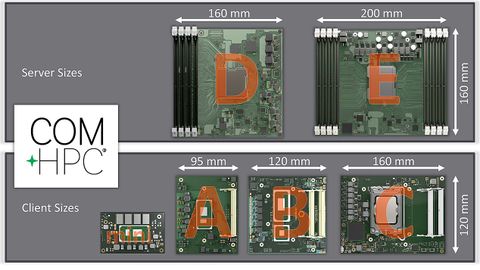
Nevertheless, due to technical developments, there is still a colorful variety of form factor standards today. It ranges from "Qseven" and "µQseven" as well as "SMARC" to "COM Express Basic, Compact and Mini according to Type 6" and "COM-HPC in Mini, Size A, B and C" - if you only consider the client systems with integrated graphics support. In addition, there are "COM Express in Type 7" and "COM-HPC in Size D and E" as headless systems for embedded and edge server designs.
Even today, developers are therefore faced with a variety of options if they want to use an application-ready pluggable Computer-on-Module for their systems. Some of these are also known as server-on-modules and client-on-modules, and in the Arm processor world they are often referred to as system-on-modules (SoM).
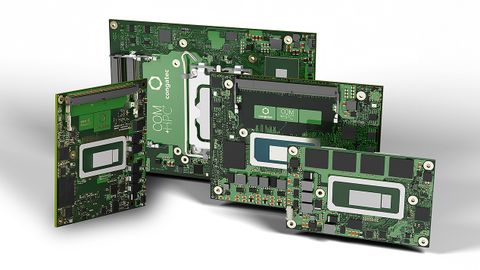
Figure 2: Congatec will make the 13th generation Intel Core processors available on COM-HPC Size A&C, COM-HPC Mini and COM Express Compact.
© CongatecHowever, all these terms stand for the same principle: the computing core comes as a bootable component with full software support for all interfaces specified in the standard. Developers can use the appropriate evaluation boards to implement their application immediately, while developing the dedicated carrier board including system integration in parallel. Compared to full-custom design, this is easier. This is because the design guides of the standards provide many valuable suggestions, and a rich ecosystem of IP and Commercial Off-The-Shelf (COTS) components is also available.
Nevertheless, due to technical developments, there is still a colorful variety of form factor standards today. It ranges from "Qseven" and "µQseven" as well as "SMARC" to "COM Express Basic, Compact and Mini according to Type 6" and "COM-HPC in Mini, Size A, B and C" - if you only consider the client systems with integrated graphics support. In addition, there are "COM Express in Type 7" and "COM-HPC in Size D and E" as headless systems for embedded and edge server designs.
Even today, developers are therefore faced with a variety of options when they want to use an application-ready plug-in Computer-on-Module for their systems. Some of them are also called server-on-modules and client-on-modules, and in the Arm processor world they are often referred to as system-on-modules (SoM). However, all these terms stand for the same principle: the computing core comes as a bootable component with full software support for all interfaces specified in the standard. Developers can use the appropriate evaluation boards to implement their application immediately, while developing the dedicated carrier board including system integration in parallel. Compared to full-custom design, this is easier. This is because the design guides of the standards provide many valuable suggestions, and a rich ecosystem of IP and Commercial Off-The-Shelf (COTS) components is also available.
COM-HPC dominates the high-performance class
However, the agony of choice is limited, as a very broad ecosystem has been specified with the new PICMG standard COM-HPC. It will completely dominate the next generation of high-performance embedded and edge computing.
New high-end designs of any kind should therefore rely on COM-HPC, regardless of whether they are high-performance edge server or edge client applications. As the predecessor standard, COM Express is only recommended for existing designs, as this saves costs that do not need to be invested if the higher performance is not required. Otherwise, however, COM-HPC Mini has recently become a very efficient migration path for COM Express Compact designs, which was not previously available.
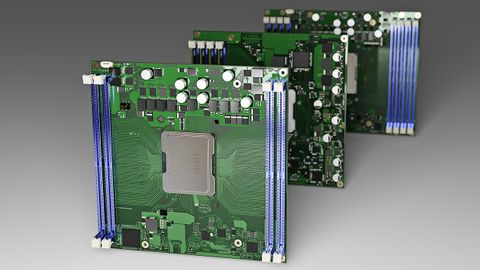
Figure 4: The COM-HPC Size D Server-on-Modules from Congatec with Intel Xeon D 2700 processors offer edge server performance with up to 20 cores and are aimed at workload-consolidated mixed-critical applications
© CongatecAt 95 mm x 120 mm (11,400 mm2), COM-HPC Size A, the smallest footprint of the COM-HPC standard to date, was still almost 32 percent larger than COM Express Compact, which measures 95 mm x 95 mm (9,025 mm²). In terms of the width of the module, this is 25 mm, which is too much to migrate existing COM Express designs to COM-HPC Client in terms of footprint alone. As COM Express Compact is the most widely used COM Express form factor, and generally only the high-end still uses the larger COM Express Basic form factor, many developers were faced with major challenges - simply in terms of dimensioning the system design. But smaller is always possible. For this reason, COM-HPC Mini with its 95 mm x 60 mm is a real liberation, especially for the many system designs in a particularly compact design, which opens up completely new perspectives.
SMARC is predestined for low power and low cost
However, the question arises as to whether everything can really be covered with COM-HPC. In theory, yes. But not in fact, because in addition to the PICMG standard, there are the SGET standards, which focus primarily on low-power processing. Among the SGET standards, the SMARC standard is often given priority over Qseven because the connector is newer, the number of pins is larger and the form factor is smaller. Designs with the Edge Connector - regardless of whether Qseven or SMARC - are more cost-effective than those of the PICMG standard. It is therefore to be expected that small-form-factor designs with low-power processors will favor this standard. COM-HPC Mini will therefore not really be able to fully penetrate this market segment. Nevertheless, any application that requires high performance in a small form factor is better off with COM-HPC Mini.
This makes it much easier to decide on the right form factor. Only between SMARC and COM-HPC Mini is the choice somewhat more difficult. However, if the trend of the target device design is either towards low power and low cost instead of compact high performance, the design decision is easy even here. In any case, it is certain that the embedded community will continue to fully support all available standards. New designs are also best served with COM-HPC or SMARC.
The author

Christian Eder is Director Marketing at Congatec. With his great commitment to the SGET and PICMG committees, he is driving forward the standardization of computer modules. He has shaped decades of the embedded computing industry and was involved in the implementation of COM Express, Qseven and SMARC, among others. He is currently Chairman for COM-HPC at PICMG and second Chairman of SGET.


You might also be interested in
SMARC modules with up to eight cores
Congatec is launching robust SMARC modules based on the Intel Atom x7000RE processor series (codenamed Amston Lake) and Intel Core i3 processor, which have been specially developed for industrial requirements.
 read more...
Next-generation AI computing for the edge
Congatec introduces COM Express Compact modules based on Intel Core Ultra processors. The new modules combine heterogeneous computing units such as CPU, GPU and NPU and are therefore particularly suitable for executing demanding AI workloads at the...
read more...New man in the management team
Congatec, a provider of embedded and edge computing technology, has appointed Dominik Reßing as its new CEO.
read more...Choose your cover photo favorite of the year 2022
Which cover picture did you like best this year? Take part in a short survey and optionally in the prize draw for great prizes.
read more...The top articles in October 2022
The top articles in October are outside the norm, showing the advantages of scalability, intelligent robots and the role of AI in control. In addition, the top article from September remains a perennial favorite. Read for yourself.
read more...Functionally secure with x86 multicore
Power-hungry sensor technology in applications with functional safety (FuSi) means that embedded computing platforms must also increase their performance - multicore processors are therefore increasingly coming into focus.
read more...Five new COM-HPC Server Size D modules
Congatec is expanding its portfolio with five new COM-HPC Server Size D modules with Intel Xeon D-2700 processors.
read more...Congatec tackles the safety market
At embedded world, Congatec announced that it was investing heavily in functional safety. The motivation behind this is that functionally secure embedded computing platforms are needed in many new applications.
read more...TSN-synchronized real-time via 5G
Congatec launches Computer-on-Modules for 5G-connected smart factories and industrial automation.
read more...