
Technology & Finance
Digital and sustainable - rethinking infrastructure 4.0
The digitalization and decarbonization of our economy presents us with major challenges. The consequence is that infrastructure needs to be rethought. A plea for a redefinition of the term 'infrastructure'.

In the space of two years, we as a modern industrial society have had to adapt to two unforeseeable events: a pandemic and the war in Ukraine.
With the Covid-19 pandemic, significant parts of our private and professional lives had to be converted to digital processes and platforms. Both nationally and internationally, this has been surprisingly successful. Working from home and homeschooling became buzzwords. It became clear that data highways suddenly became more important than traditional highways, bridges and airports. The investments made in our digital infrastructure in recent years and decades, such as broadband fiber optic networks and mobile phone masts, have more than paid off during the pandemic, enabling economic and social life to be maintained through the shift to the digital sector.
The changes in the way we work and the use of digital technology have also shown us that we as a society are capable of responding consistently to disruptive events in the short term and, above all, sustainably. It suddenly became clear that the daily commute to the workplace and many business trips are not absolutely necessary, as video conferencing and modern cloud communication software make it possible to work seamlessly regardless of where you work. For the majority of office workers, working from home has become an integral part of their lives, creating a more stress-free work-life balance in harmony with family life. In its latest study "Homeoffice Experience 2.0", the Stuttgart-based Fraunhofer Institute for Industrial Engineering IAO concludes that the productivity of the employees surveyed has continued to increase both when working from home and in the office.
Political framework conditions and the "All Electric Society"
In its government program, the traffic light coalition has pledged to implement an "all-electric society" for Germany. There is no alternative to the expansion of renewable energies if climate neutrality is to be achieved. The ZVEI estimates that 90% of future energy requirements in Germany can be covered by wind, water, sun, biomass and hydrogen and that primary energy requirements can be reduced by 40% by 2045.
In the past, however, many mistakes were made in the expansion of renewable energies. Funding was unilaterally geared towards the generation of renewable energies. As a result, the expansion of wind and solar power plants was uncontrolled and led to intelligent smart grids coupled with storage systems without foresighted system integration. A striking example of this is the "dumping" of expensively produced wind and solar power abroad at discount prices on public holidays, as there is no power available from industry in Germany on these days.
Creating intelligent infrastructures
Politicians have recognized that it will not work without extensive investment in digital and renewable energy infrastructure. With the 750 billion euro "Next Generation" fund, a new financing facility is now available to EU countries to support the transition to a "climate-neutral, more digital and more resilient Europe". US President Biden even wants to revamp the ailing infrastructure in the US with a two trillion dollar investment program. The focus is not only on the renovation of roads and bridges, but also on the transformation of the USA towards a sustainable economy and the massive expansion of renewable energies. During the "Zeitenwende" debate in the German Bundestag, German Finance Minister Christian Lindner even used the term "freedom dividend" in connection with the necessary investments in an energy economy away from fossil fuels.
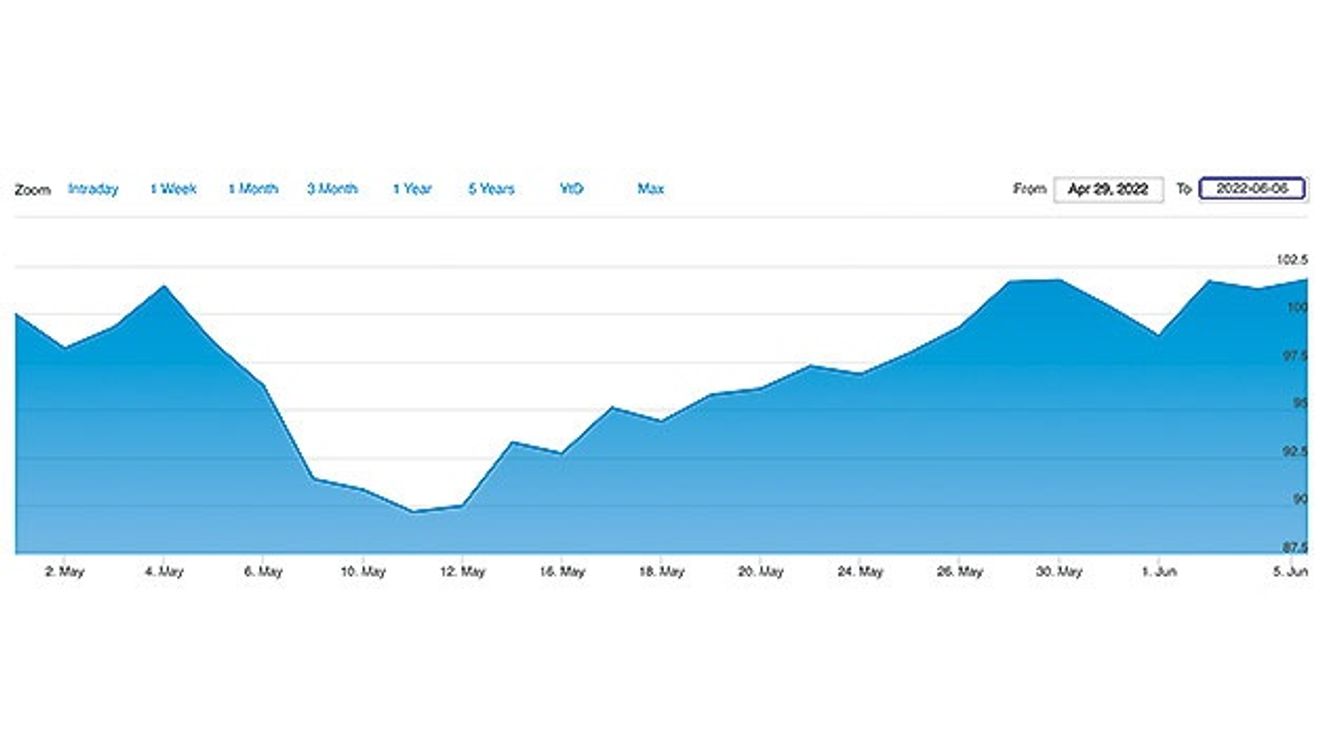
With the Solactive Digital Infrastructure and Renewable Index (ISIN: DE000VV1HD38) from Vontobel, investors can invest in the 20 most important shares of leading companies in the digital infrastructure and renewable energy infrastructure sector via an index certificate. The index covers the entire value chain with companies from the sectors of renewable energy producers, smart grid operators, electric charging infrastructure, digital infrastructure equipment, mobile phone tower operators, data center operators and digital broadband network providers.
© Solactive/Thomas RappoldOver the past ten years, global demand for electrical energy has risen by 33%, and this demand is expected to increase by more than 50% by 2050. Digitalization - and the electrification of many industries - plays a crucial role in this, from data centers and renewable energy systems to consumer electronics and electric vehicles. The electrification of our lives makes decarbonization, i.e. the generation of electricity from CO2-free sources, all the more urgent. Smart grids are the key to a sustainable energy transition. However, what is still missing is intelligent grid control, a kind of operating system for green electricity and intelligent electricity storage systems.
The latest "Global Mobile Economy Report 2022" from the standardization authority GSMA concludes that no generation of mobile communications has been introduced as quickly as the new 5G mobile communications standard. According to the report, almost 200 5G mobile networks are in operation in 70 countries worldwide. The number of connections is expected to exceed the one billion mark by 2022. Network provider Cisco Systems predicts a 3.7-fold increase in internet traffic to 350 exabytes per month between 2017 and 2022. Note: One exabyte corresponds to one billion gigabytes. For 2023, Cisco expects 5.3 billion internet users, each using an average of 3.6 internet-enabled devices. These figures alone underline the need for a massive expansion of digital infrastructure.
Cloud computing has been responsible for the fact that the new digital forms of work have run almost smoothly in technical terms. More and more computing power and services are being offered on a scalable basis from the cloud. In future, the digital infrastructure will consist of an intelligent interplay of edge computing, 5G/6G, broadband communication and digital data centers in the cloud.
Infrastructure 4.0 from an investor's perspective

The author: Thomas Rappold is a technology investment expert, FinTech entrepreneur and international bestselling author.
© I&S Internet & SecurityInfrastructure in general is a growth market. The aggregate infrastructure investment requirement up to 2030 amounts to 49 trillion dollars. The high capital requirements make it clear that these sums cannot be met by governments alone. The financial industry, in the form of institutional and private investors, has a major role to play. In times of volatile stock markets and low interest rates, innovative infrastructure investments offer four key opportunities for private investors:
- Participating in the megatrends of digitalization and renewable energies
- Investing in sustainable forms of investment
- Combining the advantages of traditional infrastructure with opportunities in growth markets
- Benefit from stable cash flows and dividends.


You might also be interested in
Sustainability becomes a competitive factor
Whether customers or highly qualified specialists - a company's green credentials are playing an increasingly important role in the decision for or against a partnership. A plea as to why manufacturers should work together with technology providers...
 read more...
Digital security of the future
The digital transformation of industrial processes and critical infrastructures also increases their vulnerability: increasing networking encourages hackers to commit sabotage. Intelligent cybersecurity solutions are an inherent part of the security...
read more...Data economy powered by TSN, OPC UA and 5G
While the stock market rankings were dominated by oil companies ten years ago, companies in the digital industry are now setting the pace. But for data to flow and create added value, pipelines in the form of standardized communication protocols are...
read more...Society 5.0 - Defying demographics with technology
The biggest challenges are digitalization, decarbonization and demographics. While the former enjoys a great deal of media attention, demographic change is overshadowed, even though it is the key to a prosperous economic future.
read more...Edge computing - the new paradigm
Data-intensive applications such as autonomous driving and smart factories require a new decentralized approach. Edge computing brings processing intelligence to the source and is therefore the most important building block for an intelligent...
read more...Growth opportunities through openness to sources
Tech companies like Microsoft are leading the way: Open source software and the release of important algorithms and frameworks are intended to accelerate the pace of innovation and systematically expand their own ecosystems. An open source strategy...
read more...Programmed for crypto
Weak returns are driving private investors and companies alike. Alternatives are in demand. Cryptocurrency is the new asset class of the moment. What cryptocurrencies are there, what distinguishes them and what impact will the alternative currency...
read more...Can AI boost the used machinery market?
The areas of application for AI are diverse. Artificial intelligence can even contribute to the development of new business models and the transformation of existing markets. The first areas of application are also emerging in the used machinery...
read more...Digital contract management as the key to success
Contracts contain numerous obligations that companies must fulfill in order to avoid legal, economic and reputational risks. The obligations often go beyond the agreed services - compliance requirements in particular must be observed.
read more...