
Supply chain
Improvement in supply bottlenecks in sight
The coronavirus pandemic caused severe disruption to global supply chains. Many companies found themselves in the unpleasant position of not being able to process full order books. In this respect at least, there is now light at the end of the tunnel.
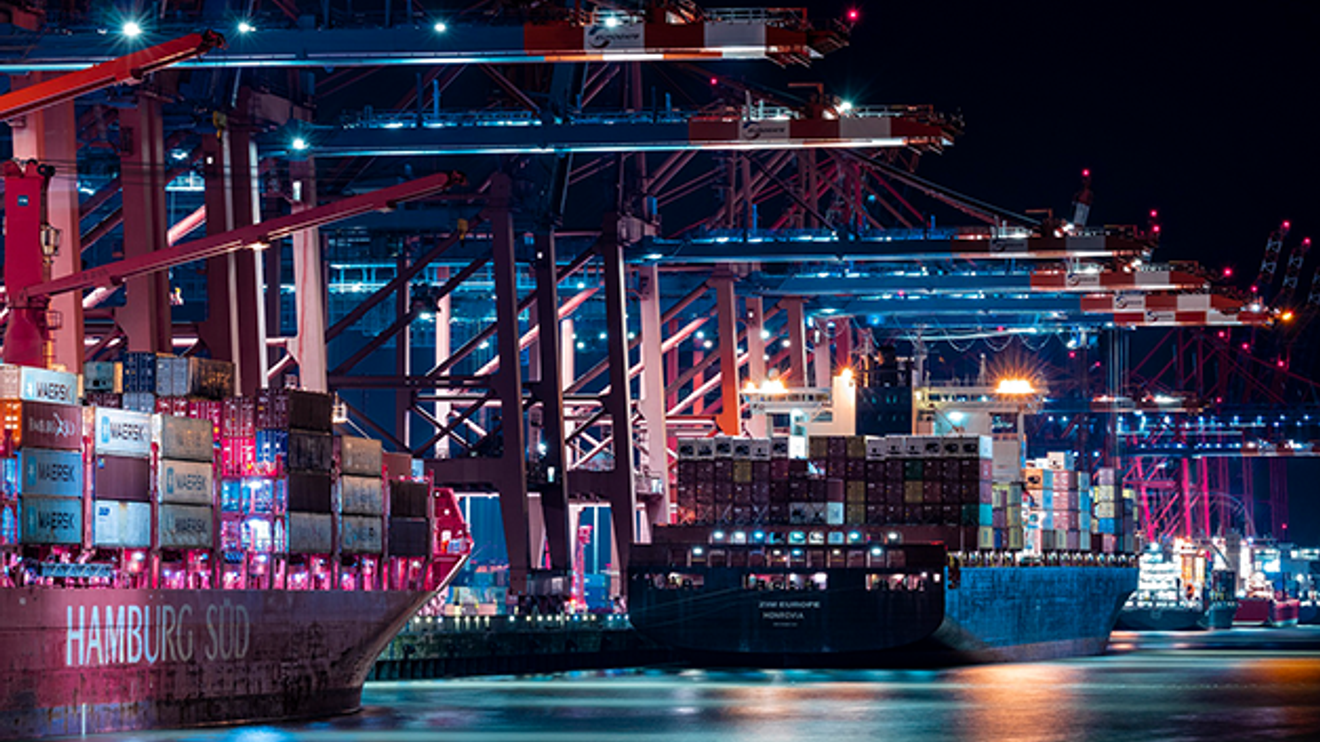
By the end of the year, the shortage of materials had eased, at least in parts of German industry. In the new year, car manufacturers and other companies plagued by chronic supply problems are also hoping for an improvement in the situation. The situation currently varies greatly depending on the industry sector, as reported by individual companies and the Bavarian Industry Association - many large industrial companies are based in Bavaria.
"Compared to spring, the situation has improved significantly," reports a spokesperson from Bosch Siemens Hausgeräte (BSH). "We can produce the majority of our appliances as normal and deliver them to retailers, including our dishwashers, which were particularly hard hit by the supply problems."
Small appliances such as kitchen appliances, fully automatic coffee machines and vacuum cleaners are therefore in very good supply, as are large freestanding appliances such as tumble dryers. "For a few series and products, specific electronic components are still in short supply and delivery times are still a little longer," says the BSH spokesperson. "Overall, however, the supply situation for electronic components and chips has eased and we expect a further recovery in the coming year."
Easing due to cooling global economy
In the past two years, the shortage of electronic components has been one of the main reasons for faltering production in the industry. The most important German manufacturer of semiconductors and chips is Infineon. According to the Munich-based company, the slowdown in the global economy has also contributed to the improvement in the situation. "The demand for electronic products in the consumer sector has been weaker recently, which is partly leading to an easing of the supply situation," says an Infineon spokesperson. He cites smartphones and computers as examples.
Figures for December are not yet available, but according to the Munich Ifo Institute, 59.3% of companies surveyed monthly reported material shortages in November; still a large number, but the lowest figure since April 2021.
However, there are still major supply problems for some chips. According to Infineon, the supply situation for microcontrollers has been particularly tense recently. These are chips with their own processor that are used in cars, for example, to control many vehicle functions. "Capacities are still tight, but we expect the situation to ease increasingly over the course of 2023," says the spokesperson.
Rising demand for power semiconductors
Infineon continues to expect strong growth in demand for power semiconductors. These are electronic elements that can be used to control high electrical voltages and currents and are used in electric motors or wind turbine generators, for example.
Both microcontrollers and power semiconductors are important for car manufacturers. According to the Munich-based Ifo Institute, the automotive industry suffered the most from supply bottlenecks of all industrial sectors in November. Accordingly, Audi in Ingolstadt is not talking about an easing of the situation, but about a "structural undersupply of semiconductors".
Many factors to consider
This is not the only ongoing problem: "In addition to the general supply shortage, additional circumstances such as the war in Ukraine, the energy crisis or measures in the context of the coronavirus pandemic are making it difficult to maintain smooth global supply chains," says a spokeswoman - and emphasizes that despite the challenges, Audi has come through the semiconductor crisis well so far. "We are producing whenever we can."
The VW subsidiary also assumes that the supply situation for semiconductors will ease in 2023, but not completely. Audi continues to expect "individual bottlenecks in automotive-specific semiconductor technologies".
Cancellation of orders
The shortage of materials and preliminary products has eased somewhat recently, but remains a major problem for companies, summarizes Bertram Brossardt, Managing Director of the Bavarian Industry Association (vbw). "It is positive that the supply bottlenecks are currently easing slightly. But in part, this is simply a consequence of the slowing global economy." Accordingly, many companies are reporting that orders are being postponed, reduced or completely canceled. "In addition to the supply problem caused by bottlenecks, there is also a demand problem."
Apart from this, uncertainties remain, especially the situation in China. The draconian coronavirus restrictions there were a major cause of the global supply problems. Economists and managers are now pondering what impact the Chinese leadership's turnaround on coronavirus will have on the global economy. Following the end of the rigid isolation of people infected with coronavirus, the virus is spreading so rapidly in China that half of the workforce in some companies had already called in sick before Christmas and delivery services had ceased operations.


You might also be interested in
Transparency in supply chains
Three out of four manufacturers in Germany are confronted with disruptions to their supply chains several times a year. A recent survey by Kinaxis, a provider of supply chain management, shows that many still find it difficult to react quickly...
 read more...
What German companies can expect
The German Supply Chain Act comes into force at the beginning of the year. Business complains about the high costs involved, while non-governmental organizations consider the law to be too lax.
read more...When will container traffic ease?
In March, the giant freighter 'Ever Given' blocked the Suez Canal for days - and hundreds of ships had to wait until they could pass again. The problem has long since been resolved. But recipients in this country still have to wait for ordered goods.
read more...More hacker attacks on supply chains expected
Industry and trade around the world have been suffering from supply problems for months. Criminal cyber gangs could make the situation even worse, according to Germany's largest insurer. Ransomware attacks can now be ordered via a hotline.
read more...Companies are held accountable
From 2023, companies are to be held liable for violations of human rights and environmental standards by suppliers if due diligence obligations are neglected. It is about exploitation and child labor in global supply chains.
read more...Supply chain remains the industry's problem child
As the "Performance Drivers 2024" study shows, more than two thirds of companies in the DACH region are complaining about bottlenecks with their suppliers. Other burdens include quality problems at suppliers and a sharp rise in transportation costs....
read more...New member of the Group Management Board
Dr. Helena Garriga has been a member of the Körber Group Executive Board since September 1, 2024. She is responsible for the Business Area Supply Chain.
read more...Business organizations call for a new start
Although the EU Supply Chain Directive pursues a correct and important goal, it is simply not feasible in practice for European companies. Eight business organizations, including VDMA and ZVEI, are calling for a new draft.
read more...One year of the Supply Chain Act
Since the beginning of the year, German companies have been required by law to take responsibility for child and forced labor in the supply chain of their products. The responsible federal office has drawn a positive balance - the economy is less...
read more...