
Supply Chain Act - Update
Companies are held accountable
From 2023, companies are to be held liable for violations of human rights and environmental standards by suppliers if due diligence obligations are neglected. It is about exploitation and child labor in global supply chains.
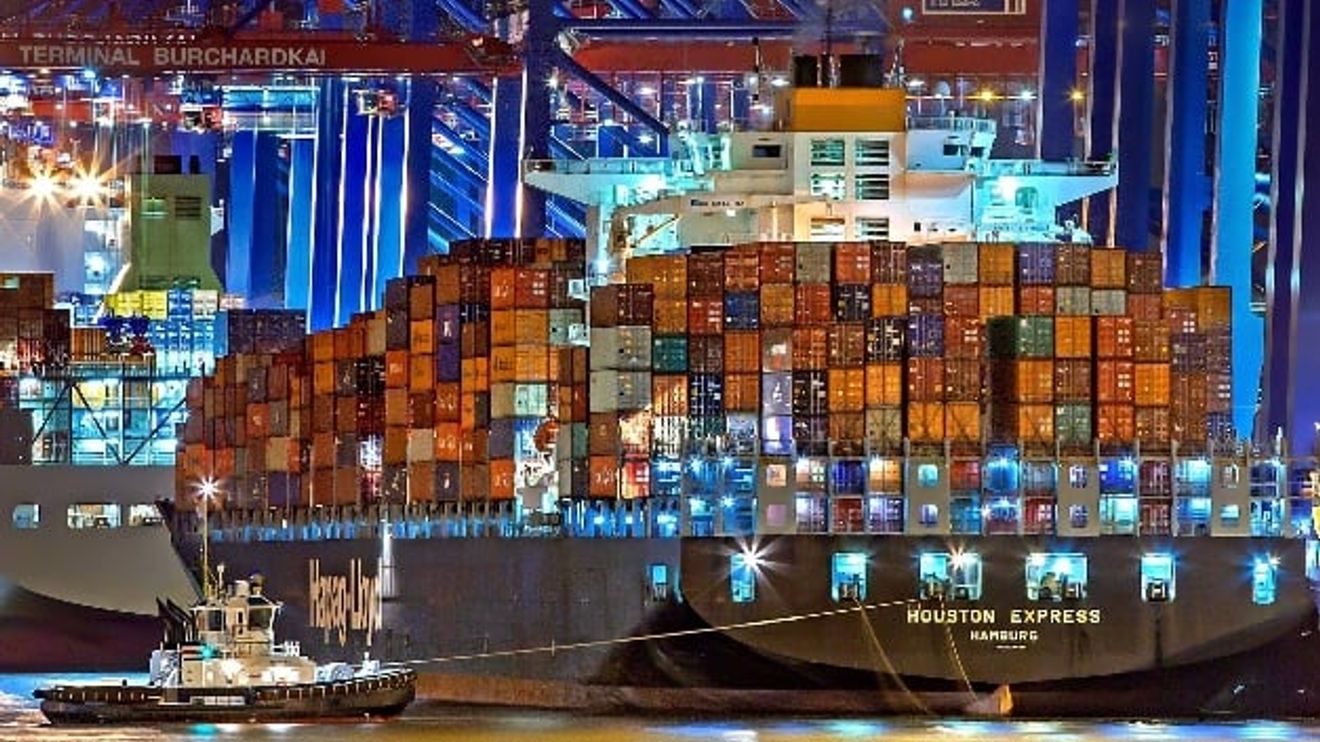
Fines and legal action for aid organizations: The German government wants to use a law to force larger German companies worldwide to comply with human rights and environmental standards in their supply chains from 2023. At a joint press conference on Friday with Development Minister Gerd Müller (CSU) and Economics Minister Peter Altmaier (CDU), Labor Minister Hubertus Heil (SPD) spoke of a "historic breakthrough". A draft bill by the ministries is to be approved by the cabinet in mid-March and adopted before the end of this legislative period.
Compliance with human rights - companies have a duty
The companies should therefore keep an eye on their entire supply chain, but be responsible in stages. If a company becomes aware of an irregularity in the supply chain, it should be obliged to take remedial action. An authority will monitor this. In addition, non-governmental organizations and trade unions are to be given the opportunity in future to represent affected parties in German courts if there are violations of standards in supply chains and the affected party agrees. This is new: previously, injured parties were able to sue themselves, but in practice this failed due to living conditions.
Heil spoke of tough negotiations. "It's about respecting human rights in global supply chains and therefore decent work." The law is a signal to those companies that have previously weighed up human rights against their economic interests.
"There is no law in the world or in Europe that is as ambitious as the German Supply Chain Act," said Heil. The responsible authorities would be given a robust "mandate" and could carry out on-site inspections and impose fines and penalties. "We are not talking about parking tickets here, but about what is appropriate," he said. Companies that are fined heavily could be excluded from public tenders for up to three years. "The Supply Chain Act is a law with teeth."
Development Minister Müller, who like Heil is one of the driving forces behind the project, expects it to have an impact beyond Germany. This could also result in starvation wages being paid in some countries. "So one euro or one dollar a day for twelve hours is certainly too little. This is the continuation of the colonial era in other circumstances. I have looked into this," said Development Minister Gerd Müller (CSU). He added that discussions were needed on the connection between production conditions and the price level in Germany. "What is humane? And that's why I say there will be a big debate: Going beyond the implementation of the legal text to make the issue of globalization fair."
No civil liability for companies
Altmaier had warned of additional burdens for the German economy. He now spoke of a sensible compromise. There would be no civil liability for companies. Business associations had feared this and warned of competitive disadvantages on international markets. "Of course, as Minister of Economic Affairs, it is also important to me that the German economy is stronger and not weaker in the end," said Altmaier. German companies must also be prevented from withdrawing from production in some countries because they fear sanctions. One specific example cited by the ministers was child labor in Indian quarries where gravestones are produced.
To enable German companies to adapt to the new requirements, the law will apply from January 1, 2023 for companies with more than 3,000 employees - and from the beginning of 2024 for companies with more than 1,000 employees. Altmaier emphasized that medium-sized companies would not fall under the scope of the law.
"Important accents in the fight against human rights violations"
At first glance, the government's internal agreement on the supply chain law is a clear step forward compared to the previous, unworldly ideas from the Ministry of Labor and Development, explained Oliver Zander, Managing Director of Gesamtmetall. "However, this has absolutely reached the limit of what is feasible for companies, and perhaps even exceeded it in some cases." Altmaier had "successfully defended himself against the worst and most senseless ideas and demonstrated assertiveness". It is important that liability rules were prevented and that companies are only directly responsible for the first link in their supply chain.
The Federation of German Industries (BDI) now saw many companies facing major challenges. Respect for human rights is "self-evident", but binding due diligence obligations clearly go beyond existing reporting obligations. "By dispensing with civil liability beyond the existing liability rules, the German government is avoiding a design flaw and still setting an important course in the fight against human rights violations," said BDI President Siegfried Russwurm.
Employers' President Rainer Dulger explained that a law to regulate human rights responsibility was superfluous because German companies were already ensuring higher standards abroad. The law must now be practicable and implementable in daily practice. "We therefore expect due diligence requirements to be limited to human rights issues and directly verifiable suppliers," said Dulger.
The Managing Director of the German Textile and Fashion Industry Association, Uwe Mazura, announced that the deliberations in the Bundestag would be followed very closely and critically. "It is remarkable how much capacity the federal government has for a new law, while our companies have been waiting for months for corona aid and their valuable fashion cannot be sold in the closed stores," he said. In contrast, environmental associations spoke in a joint statement of a "minimal consensus" that would change little for German companies.


You might also be interested in
Takeover of high-tech companies
Government wants to take a closer look
High-tech companies from Germany are popular, especially with investors from China. The German government therefore wants to take a closer look at takeovers. Criticism comes from the BDI.
 read more...
Return to growth expected in 2021
The shrinking automotive market and the global downturn caused by the coronavirus pandemic have also had an impact on the Kistler Group, which generates over 70% of its revenue from automotive manufacturers and suppliers, who have been particularly...
read more..."Noticeably more bureaucracy and burden"
The coalition has reached a compromise on the Supply Chain Act. The VDMA sees this as an additional bureaucratic burden for companies.
read more...Warning against the compartmentalization of global supply chains
Germany's prosperity is crucially dependent on the international division of labor. The VDMA warns that isolating global supply chains in the wake of the coronavirus crisis will harm everyone.
read more...Relaxation along the supply chain
The situation for German mechanical engineering companies in China is normalizing. One in four companies now sees the impact of the coronavirus pandemic as minimal. This was the result of a VDMA flash survey of local member companies.
read more...Companies report supply chain disruptions
The VDMA used the spread of the coronavirus as an opportunity to conduct a flash survey. According to the survey, 60% of companies are experiencing initial supply chain disruptions. Production capacities are also being adjusted.
read more...The e-paper of issue 05/2024
Strategies for the future are one of the topics covered in the current issue of Computer&Automation. Read about the reforms that associations are demanding from politicians, the opportunities offered by technologies such as ChatGPT and SPE and...
read more...Associations at the Hannover Messe 2024
Politicians are called upon
At their joint press conference at the Hannover Messe, the three major associations BDI, ZVEI and VDMA called on politicians in Berlin and Brussels to implement "courageous reforms" in order to strengthen Germany and Europe as an industrial location.
read more...BDI President Russwurm warns against the AfD
BDI President Siegfried Russwurm warns against the AfD. As an exporting country, Germany benefits more than almost any other from openness to the world, international cooperation and trade and European unification, said Russwurm in Berlin on Tuesday.
read more...