

Raw materials in the landfill
Highest level of electronic waste expected
Broken and unused electrical appliances are a thorn in the side of environmentalists. In light of International WEEE Day, they are calling on consumers to repair or recycle appliances.
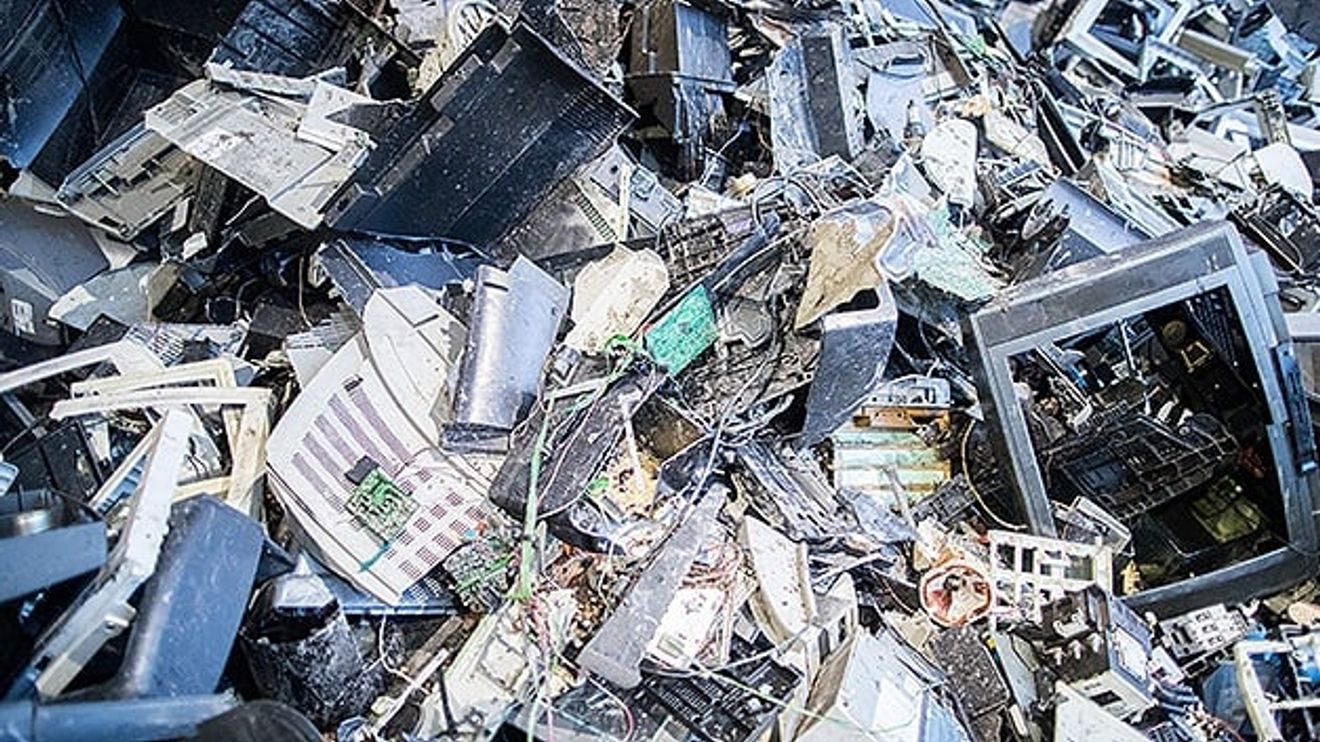
In view of the ever-increasing number of broken and unused electrical appliances, environmentalists are appealing to consumers. They should have discarded electrical appliances repaired or recycled, they said on International E-Waste Day on October 14. According to estimates, the amount of e-waste generated each year will reach a new high of 57.4 million tons in 2021. According to environmental experts from the Brussels WEEE Forum, the mass of discarded fridges, monitors and cell phones will even exceed the weight of the Great Wall of China. WEEE stands for 'Waste of Electrical and Electronic Equipment'.
Despite all efforts to reduce e-waste, the mountain continues to grow: according to the 'Global E-Waste Monitor 2020' co-authored by the United Nations University, 53.6 million tons of e-waste were generated in 2019, which represents a growth of 21% within five years. And a trend reversal is not in sight: if the trend continues, 74 million tons can be expected by 2030.
Precious raw materials in the landfill
However, the problem is not just the volume, but also how it is handled. According to calculations by UN experts, only 17.4% of the e-waste produced in 2019 was collected and recycled. Many precious raw materials - including gold and silver - were instead incinerated or ended up in landfill sites. Hazardous substances such as mercury pose a risk to people and the environment.
There is also another environmental aspect: "As long as citizens do not return, sell or donate their used, broken equipment, we will have to continue to mine completely new materials that cause major environmental damage," said Pascal Leroy, Director of the WEEE Forum and the organizer of the 'International E-Waste Day'.
It is true that the EU addressed this problem early on with measures and directives aimed at ensuring the proper disposal of old electrical appliances and obliging appliance manufacturers to take responsibility for the collection, sorting and recycling of their products. Nevertheless, according to a study by the United Nations Training and Research Institute, some EU member states are lagging far behind their own targets when it comes to reducing e-waste.
This is another reason why this year's 'International E-Waste Day' will focus on end users and "on the responsibility we all have as citizens to shape a circular economy", said Leroy.


You might also be interested in
First recyclable plastic bicycle frame
Igus continues to expand its bicycle component business and launches the first injection-molded bicycle frame made of composite material for advanced bikes.
 read more...
Award for climate-friendly innovation
Continental has awarded the Climate Solutions Prize to a sustainable solution for the first time: Biotic, a biotech start-up specializing in biological plastic alternatives, came out on top in the 'Pioneering Sustainable Material' technology...
read more...Detailed planning with real-time tool
The real-time planning module Felios-Liveplanner from Inform makes it possible to combine short-term manual rescheduling on the store floor with global production planning.
read more...AS-Interface for drive and conveyor technology
ASi-3 for collecting individual binary signals, ASi-5 for complex tasks where high transmission speeds and large data bandwidths as well as efficient addressing of participants are important - a 'dream team' especially for intralogistics systems.
read more...Interview with Maria Dobritzsch, Lapp
Green copper
Lapp aims to reduce the carbon footprint of its products by 20 percent by 2025, based on the 2020/2021 financial year. Maria Dobritzsch, responsible for sustainability at Lapp, explains the role of copper as a raw material in this.
read more...Raw materials lying dormant in the drawer
According to Bitkom, around 210 million old cell phones were stored in German households last year. This means that 87% of people had at least one discarded cell phone. This figure has more than doubled since 2015.
read more...Plan production changes with foresight
Contact Software launches a new version of the open low-code platform Elements.
read more...Apps as microservices
Msg Plaut is now presenting an IT marketplace called Smart Factory Platform. Companies will be able to use it to purchase agile individual solutions and thus keep their production processes up to date.
read more...German companies often lose out
Warehouses cost money. For this reason, manufacturers have started to shift warehousing to the transportation chain. However, this only works as long as the required parts are available and deliveries arrive on time. This is exactly what is...
read more...