

Global patent balance sheet
Mechanical engineering in a strong position
One third of national patent applications in Germany can be attributed to the technology field of mechanical and plant engineering. In hardly any other country is this proportion as high as in Germany.
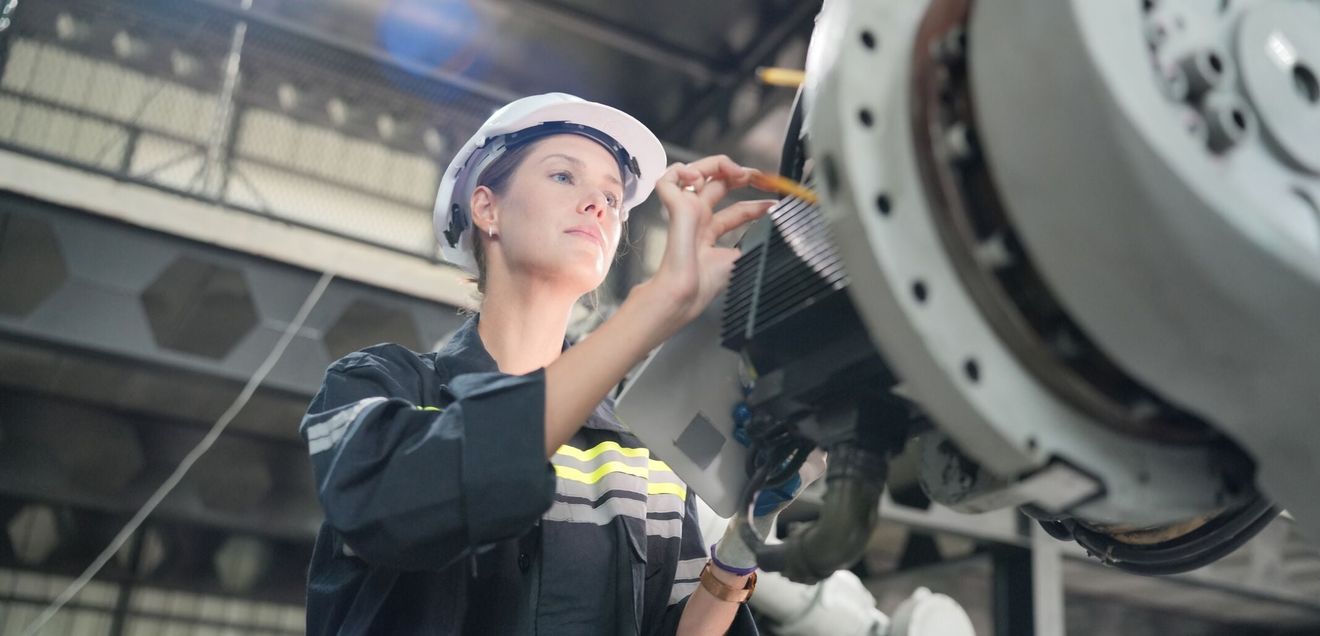
Mechanical and plant engineering is a key pillar of the German innovation system and accounts for a large proportion of technological output, documented in patents. Overall, around a third of all patents in Germany in 2021 were assigned to the technology field of mechanical and plant engineering. Worldwide, around 70,000 transnational patents are registered annually by entrepreneurs and inventors in the technology field of mechanical and plant engineering. With around 10,000 patents, around 15% of these patents are registered by companies and inventors from Germany. In some areas, such as machine elements or machine tools, Germany's global share is even higher. These are the key findings of a new short study by the IMPULS Foundation of the VDMA, which was compiled by the Fraunhofer Institute for Systems and Innovation Research ISI. (The data series covers the years 2005 to 2021, which are the most recent, fully available years due to the worldwide availability of data and publication deadlines for patents).
Key role in the mechanical engineering ecosystem
For the first time, the study examines not only the technological but also the industry-related perspective of patent applications, i.e. the inventiveness of mechanical engineering companies in an international comparison. According to the study, these companies not only apply for patents in mechanical engineering technologies, but also in other technology areas - a total of 15,000 worldwide in 2021. Here, companies from Germany account for around a third (around 5,000) of applications. "No other country achieves this figure, which underlines the key role of our companies in the global mechanical engineering ecosystem," says Hartmut Rauen, Deputy Managing Director of the VDMA. "Our performance is all the more remarkable in light of the fact that mechanical and plant engineering companies receive hardly any government research funding, recently only around 200 million euros per year."
Dynamic development at key competitors
However, competition on international technology markets has increased significantly. Mechanical engineering patent applications from China in particular have more than doubled since the middle of the last decade (up 138%). Korea's patent applications have also risen by a good quarter since 2015 (up 26%). Meanwhile, patent applications from Germany have declined (-12%), as have those from Japan (-6%) and the USA (-14%).
Increased digitalization opens up new opportunities
The short impulse study shows how patent development in Germany can be given new momentum. "Seizing the opportunities offered by digitalization and developing new business models is a key element in maintaining and expanding the competitiveness of the German mechanical engineering industry," says study director Dr. Rainer Frietsch from Fraunhofer ISI. For example, with an even stronger focus on technologies in the field of Industry 4.0 and computer-implemented inventions. This can be achieved through both in-house research activities and targeted collaborations. Small and medium-sized enterprises should also be more strongly encouraged and enabled to apply for patents for their technologies. "Once a technology has been copied, it is certainly gone if it has not been registered for a patent. Patents stand out as particularly strong among all protection instruments," emphasizes Dr. Frietsch.
More "Research for Industry" as a maxim for the new federal government
Patents are the result of research efforts. They are an important factor in securing the international competitiveness of an economy and safeguarding export markets. "More 'research for industry' must therefore become the maxim of the new federal government," adds Hartmut Rauen. "The levers are clear: further expansion and optimization of the research allowance as well as the strengthening of joint industrial research and production technologies, which are the link between research, innovation and patents," emphasizes the Deputy Managing Director of the VDMA.


You might also be interested in
Early Access Program for AI Features
PTC has launched an early-access program with Onshape Labs for AI features on the Onshape cloud-based CAD platform. Users will receive early access to new tools for product development.
 read more...
EDAG and Framence Partner Up
EDAG Production Solutions and Framence have entered into a strategic partnership. Together, the companies are developing solutions for digital twins, engineering, and the digitization of industrial production environments.
read more...Nagarro and Addverb Technologies cooperate
Nagarro, a digital engineering company headquartered in Munich, and Addverb, a provider of robotics and warehouse automation solutions, have signed a Memorandum of Understanding. The aim of the partnership is to jointly provide advanced robotic...
read more...Fraunhofer at the Hannover Messe 2026
Data, AI and material innovations for the industry of tomorrow
Under the motto "Innovations for our Future", nine Fraunhofer Institutes and Groups and the Research Fab Microelectronics Germany (FMD) will be presenting concrete solutions for a resilient, digitally networked industry at Hannover Messe 2026.
read more...Leo AI and Core Technology integrate AI analysis into CAD engineering
The AI platform Leo AI and the software provider Core Technologie are cooperating to automatically evaluate CAD data using artificial intelligence. The integration of the SDK 3D_Kernel_IO enables AI-supported analyses of technical data from over 40...
read more...Joint business group founded
Siemens and Accenture announced the establishment of the Accenture Siemens Business Group at the Hannover Messe. The aim is to support companies in the digitalization and optimization of their engineering and manufacturing processes.
read more...Capture drawing information with AI
Version 11.8 of 'Simus classmate', a digitization solution for manufacturers and suppliers in mechanical and plant engineering from Simus Systems, integrates drawing information with 3D models using artificial intelligence (AI) and transports it to...
read more...IDTA and Federtec announce partnership
IDTA and Federtec are pooling their expertise to promote the standardization and use of digital twins in the industry globally.
read more...The e-paper of issue 10/2024 + Taktgeber 2024
Computer&Automation 10/24 highlights topics relating to machine vision, the crowdstrike incident, the known-unknown matrix, the importance of PLC backup and restore procedures and much more. The Robotics & Automation Taktgeber 2024 completes...
read more...