

VDE
Growing pressure on the European energy grid
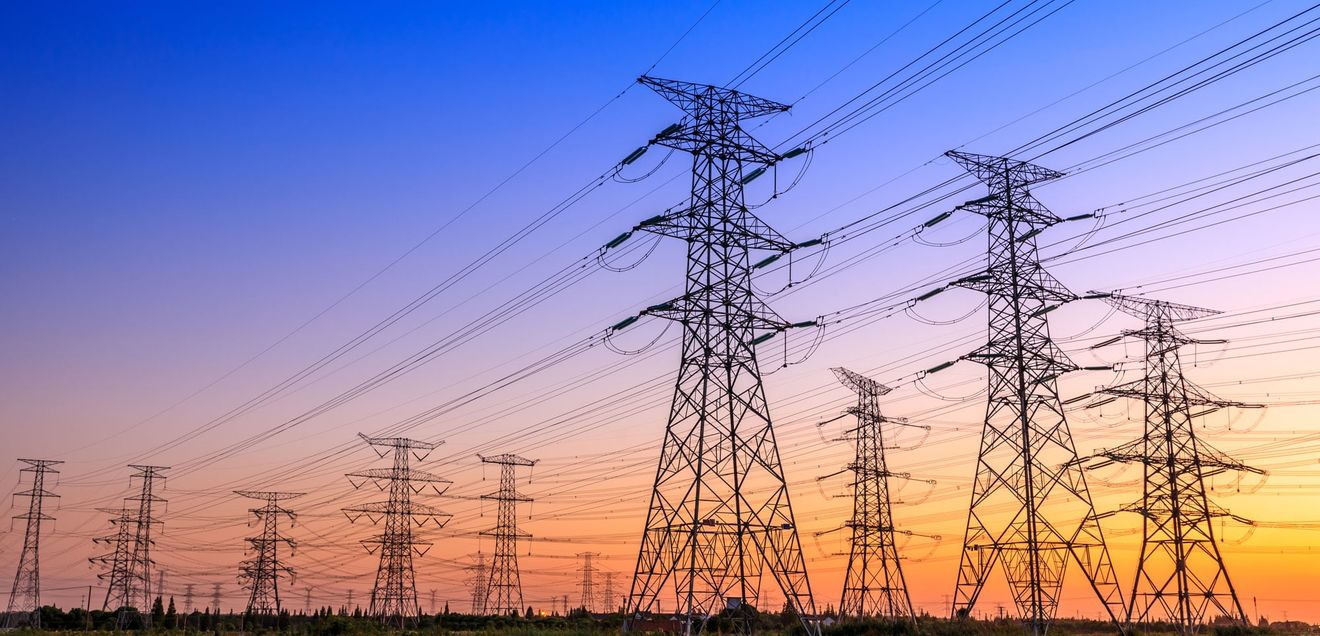
As the share of renewable energies increases, the pressure on the European electricity system is growing. For the German Electrical, Electronic & Information Technologies Association (VDE), this is the right time to bring technical clarity to a heated debate and to identify the most important aspects of a reliable energy supply.
The European interconnected grid stretches from Portugal to Turkey - around 6,000 large power plants and hundreds of thousands of wind and photovoltaic systems feed in electricity. Germany is at the center of this system and is closely connected to the grids of its neighbors. Redundancies secure the supply, which continues to function even if individual lines or power plants fail. However, the reliability of this electricity grid is based on a delicate balance: the electrical power fed into the grid must exactly match the power drawn from it. However, the more wind and solar power plants supply electricity and the fewer conventional power plants with rotating masses remain on the grid, the more vulnerable the entire structure becomes.
"The restructuring of the energy system poses fundamental challenges for grid stability," says Dr. Ralf Petri, Managing Director of the VDE Energy Technology Society (VDE ETG). Frequency fluctuations, which used to be dampened by the inertia of conventional power plants, now have a more direct effect - and jeopardize the synchronicity of the interconnected grid. "The complex interplay of power electronics, long transmission paths and decentralized feed-in requires new technical answers," Petri demands. The VDE Network Technology/Network Operation Forum (VDE FNN) and the VDE standardization organization DKE are involved in the Federal Ministry for Economic Affairs and Energy's System Stability Roadmap together with the VDE ETG, state actors, grid operators, associations, science and industry. This initiative, which was launched at the end of 2023, aims to introduce and implement all necessary measures by the end of 2035 to ensure that a grid with 100% renewable energy can be operated safely.
Fluctuations and instabilities
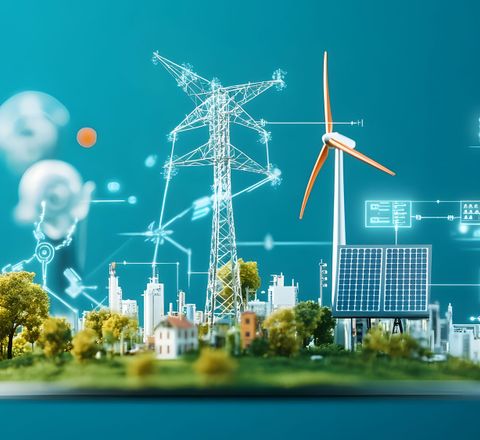
The larger the grid, the longer it takes for fluctuations to even out - this favors power fluctuations between regions. These are particularly pronounced between northern and southern Europe or between Poland and the Iberian Peninsula. If the oscillation becomes too strong, there is a risk of overloads and, in extreme cases, automatic shutdowns. These complex interactions become more important the more converters and fewer rotating masses there are in the grid.
Wind turbines, photovoltaic systems, battery storage and high-voltage direct current transmissions (HVDC) do not feed electricity directly into the grid, but via so-called converters. These electronic converters operate at high switching frequencies in order to transform the required power. In addition to the normal grid frequency of 50 Hertz, additional oscillations occur. If many of these so-called harmonics overlap in the grid, grid voltage quality limits can be violated. Such effects have been observed, for example, during the operation of wind farms. They can overload or even damage lines and other equipment - in a critical case, this leads to an automatic shutdown. Whether the faults occur or are intercepted depends largely on how the control technology used in the converters works. To date, there are no proven countermeasures for this new type of instability.
Resilient digitalized network control centers required
Mastering these complex technical challenges requires a decisive leap forward in the development of grid monitoring and control. Reliable coordination of decentralized feed-in sources and new consumers such as heat pumps, electric vehicles or electrolysers requires resilient digitalized grid control centers. Both robust cyber security and communication that takes over in the event of a failure of the central energy supply (blackout-proof) are key prerequisites for resilient overall grid operation. "Blackout-proof" means that the communication systems continue to function even in the event of a complete power failure - backed up by backup batteries or emergency power systems that ensure operation even without an external power supply.
Dr. Damian Dudek from the VDE Information Technology Society (VDE ITG) adds: "Without robust information and control technology, it is not possible to process real-time data in the electrical energy grid or implement effective, suitable measures in the event of a fault."
One thing is certain: The challenges of the energy transition require a coordinated approach from the energy technology and information technology sides. The further technical development of converters, increased European cooperation in grid planning and investment in digital infrastructure form the triad for stable energy systems of the future.


You might also be interested in
The wheel of fortune spins again
The automation industry is counting down the days until the SPS - and we make sure that every visit is twice as worthwhile. Stop by the Pelemedia stand and spin the wheel of fortune: every spin wins and guarantees you an attractive prize.
 read more...
Compact low-power power supply units
Lütze is expanding the 24 V power supply family 'Lepor' with three compact 1-phase low power switching power supplies with output powers of 20 W, 60 W and 100 W.
read more...With IO-Link interface and integrated display
Puls presents the new 480 W DIN rail power supply 'CP20.248-IOL' with IO-Link interface and integrated display for a reliable 24 V power supply.
read more...VDE Association for Electrical, Electronic...
Christoph Kutter is the new President of the VDE
Change at the top of one of Europe's largest technology organizations: Prof. Dr. Christoph Kutter replaces the previous VDE President Alf Hendryk Wulf as VDE President. His presidency will focus on young people and the microelectronics of the future.
read more...Europe must strengthen microelectronics
Europe is at risk of falling behind in the field of microelectronics, warns the VDE in its new position paper 'Hidden Electronics IV'. While the USA and Asia are investing massively, Europe is still busy catching up.
read more...Collaboration on Open Energy Standards
Weidmüller Joins the EEBus Initiative
Weidmüller has joined the EEBus Initiative. Together, they aim to further promote the international EEBus communication standard for smart grids and intelligent energy management.
read more...AI Platform Aims to Enable Energy Sharing in Industry
As part of the EU project FlexBit, Fraunhofer IFF is developing an AI-powered platform to optimize energy storage systems and manage industrial energy-sharing systems. The concept is being tested in an Industrial Energy Community in Magdeburg and is...
read more...EMC and radio testing in Germany and worldwide
In a world filled with smartphones, connected cars, medical devices and smart appliances, supporting optimal electromagnetic compatibility (EMC) and wireless performance to minimize interference between electronic products is critical.
read more...Marco Geiser becomes new Vice President Secure Power DACH
Marco Geiser has held the position of Vice President of Secure Power DACH since April 1, 2026. In this role, he will strategically develop the Secure Power business in Germany, Austria and Switzerland, strengthen it operationally and focus it on...
read more...