

World Congestion Day
People living beyond their means from Wednesday
People are overexploiting nature. From the beginning of August, they are living on credit. Some things could be changed quite easily, say environmental and climate activists.
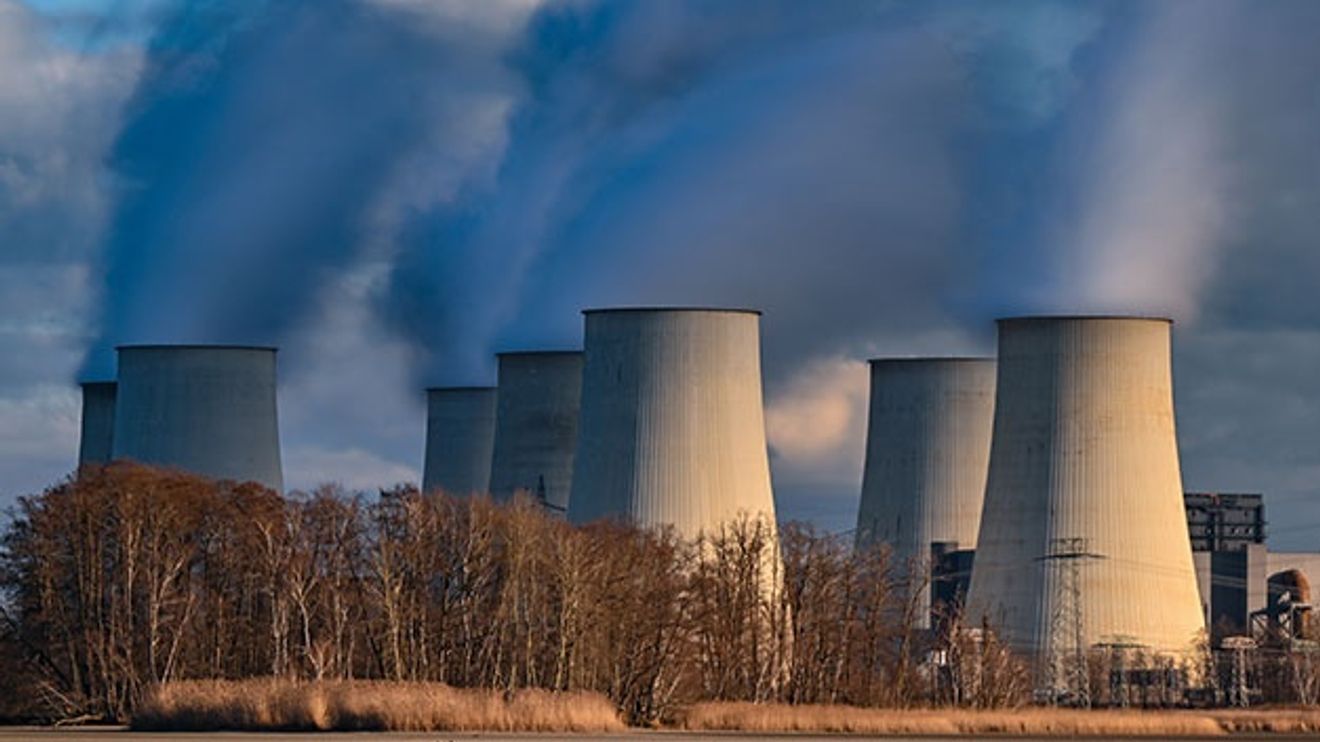
Geneva (dpa) - Humans have used up the Earth's ecological resources that are actually available for the entire year this Wednesday. According to calculations by the American environmental organization Global Footprint Network, August 2 is Earth Overshoot Day this year. If everyone lived as lavishly as people in Germany, the day would already have been on May 4.
At first glance, it looks like progress, because last year's Earth Overshoot Day was July 28. It looks as if people used fewer resources in 2023 than in 2022, but appearances are deceptive, says Amanda Diep, spokesperson for Global Footprint Network. In fact, all data is updated every year, even in the past, using the latest data collections and methods in order to be able to draw comparisons. According to this, the Earth Overshoot Day in 2022 was not on July 28, but rather on August 1.
"The trend is flat," said Diep, and has been for around ten years. In 2023, only one day was gained. "It's difficult to say how much of this is due to a decline in economic activity (due to coronavirus) or decarbonization efforts." Decarbonization means switching from fossil fuels to carbon-free and renewable energy sources.
On the one hand, the organization calculates what nature can produce and absorb per year without losses. This includes raw materials, drinking water and food as well as man-made waste andCO2 emissions. It compares this with what people consume with their way of life and economy. In this way, it determines the day on which all the resources of the year are used up. A large part of this is due to greenhouse gas emissions.
Halving food waste equals 13 days gained
In order to live in balance with nature and reduce greenhouse gases as recommended by the Intergovernmental Panel on Climate Change (IPCC), the Earth Overshoot Day would have to be moved back by 19 days every year for the next seven years, said Diep. According to Diep, if food waste could be halved worldwide, 13 days would already be gained.
"For more than 50 years, the earth's natural resources have been overexploited every year without interruption," said Christoph Bals, Political Director of the environment and development organization Germanwatch. Depending on the route, rail travel can be up to 28 times more climate-friendly than flying, said Jacob Rohm, climate-friendly mobility officer at Germanwatch. "Removing the unfair tax exemptions for air traffic would already save four billion euros a year for the federal budget. This could be used to massively expand the rail network and services in Europe."
Only 6% of countries operate in an ecologically sustainable manner
A study by Ohio State University shows that only six percent of 178 countries operate in an ecologically sustainable manner by providing their citizens with an adequate supply of food, energy and water without exceeding natural capacities. The researchers looked at water consumption andCO2 absorption, for example in forests. The study revealed that many countries emit far more carbon than their ecosystems can cope with. Nevertheless, the researchers see potential to combat environmental risks through renewable energies, plant-based nutrition and a sustainable circular economy.


You might also be interested in
Regulated handover to the next generation
How can the generational conflict be overcome? Coach Prof. Dr. Alexander Koeberle-Schmid gives tips for a successful company handover.
 read more...
Compassionate corporate culture makes the difference
Topics such as dying, death and mourning are often seen as private matters that receive little attention in the professional environment. However, a new approach that integrates these aspects of life could give companies a competitive advantage.
read more...Step by step to an orderly succession
An orderly generational change is crucial for the long-term success of a family business. But how do you go about it? Coach Köberle-Schmid has drawn up a checklist.
read more...How can you stay motivated after 20 years on the job?
Constant change, unpredictable changes, increasing complexity - motivation can suffer. Coach Oliver Erbe explains what you can do about it.
read more...VDMA cooperates with getINNOtized
The German mechanical and plant engineering industry has a shortage of skilled workers, particularly in the IT sector. To counteract this, the VDMA is launching a cooperation with the service provider getINNOtized to facilitate access to qualified...
read more...HR managers become visionaries
Unfilled workplaces, overworked employees and a lack of creativity - according to the Federal Statistical Office, what has already found its way into many companies could become even more extreme. What can be done to prevent this from becoming a...
read more...On the importance of resilience
Resilience is a crucial characteristic that helps to overcome challenges and obstacles in business life. Leadership that promotes resilience therefore clearly serves to increase the sustainable competitiveness of a company.
read more...Interview with Hartmut Rauen, VDMA
A job with meaning
The shortage of skilled workers is real. Hartmut Rauen knows that this is not due to the attractiveness of the training program. Rather, the aim is to improve communication and highlight the importance of technology for the future. Another topic:...
read more...We are looking for reinforcement - apply now as an editor
Are you interested in technology and enthusiastic about new trends? Do you enjoy writing and working in a strong and open-minded team? Then apply for the position of Digital/Print Editor (m/f/d).
read more...