
Igus
Recycling program for energy chains and drag chains
According to 'Plastikatlas 2019', only around 16% of the plastic waste produced in Germany is reused for new products. Reason enough for Igus to launch a recycling program for plastic energy chains and drag chains.
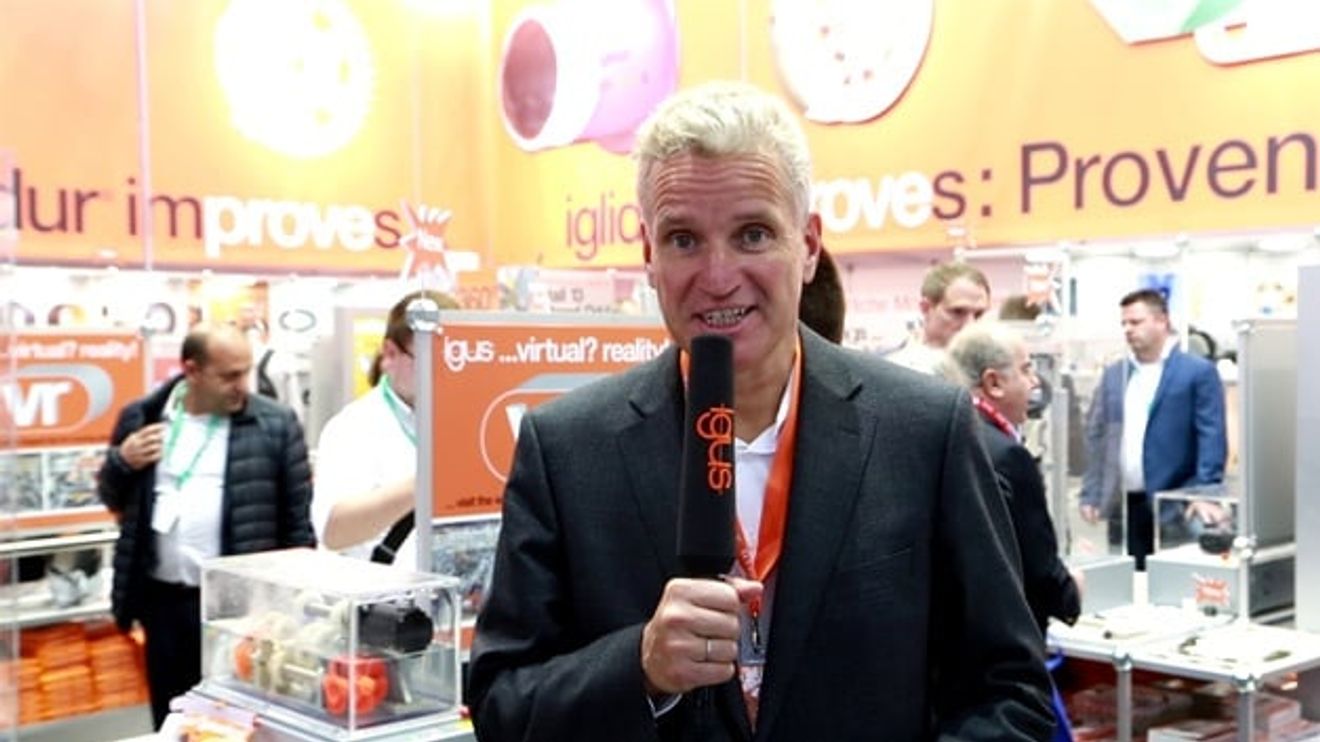
Frank Blase, Igus Managing Director: "We calculate that our recycling program will not only pay off ecologically in the medium term, but also economically: the customer receives a voucher for new igus products and saves recycling costs. We and other companies use the recyclate for new products. But the same applies here: start, learn, improve."
© IgusEven if a long-lasting plastic energy chain is not comparable to daily disposable products such as plastic packaging, the question of disposal also arises here at the end of its service life. Normally, the chain is disposed of together with other plastic waste. Recycling rarely takes place, as the effort involved in separating it by type and processing it into reusable granulate is too high. It is therefore common practice in most factories to remove old energy chains and drag chains from their machines and throw them into industrial waste containers. The plastics are then usually incinerated.
Igus offers an environmentally friendly alternative with the 'igus green chainge recycling program'. The aim of the program is to recycle and reuse the plastic from the energy and drag chains and thus feed it back into the material cycle. To this end, users can send their discarded, cleaned plastic chains to Igus - completely independently of the manufacturer of the chain. There are currently no exclusion criteria for the acceptance of discarded plastic chains: "We are able to recycle a wide range of chains. We currently accept everything that is sent to us. We will learn where the limits may lie," explains Igus Managing Director Frank Blase. The plastics are sorted by material type, cleaned, shredded and packaged. They can then be reused by Igus or other companies for the production of high-quality technical products. In return, the customer receives an Igus voucher worth 0.78 euros per kilogram.
The topic of recycling is nothing new at Igus: 99% of the plastic waste generated in production is already recycled as re-granulate. "The waste that arises during ongoing production is regranulated directly and returned to the production process. This ensures almost complete recycling," explains Frank Blase. "This is more difficult with energy chains and drag chains that have already been in use for many years, because the materials first have to be carefully cleaned. After cleaning, our laboratory ensures that the materials are separated by type by precisely analyzing them. Once cleaned and separated by type, the materials can then be processed into regranulate." The 'chainge' program is therefore the next step towards sustainable management.
Igus is rolling out the recycling programme worldwide; it has currently been launched in Germany and will then be localized in other markets such as China, the USA, Japan, Taiwan and Korea.


You might also be interested in
Energy chain made from completely recycled material
A 32% increase in turnover and the first energy chain made entirely from recycled material - at its annual press conference, Igus provided an insight into interesting developments at the Cologne-based company.
 read more...
Management increased
The Cologne-based company Igus is expanding its management team, which now consists of five people.
read more...Vector Award presented
Every two years, Igus presents the Vector Award to recognize exciting and creative energy chain applications. This year, 266 applications from 32 countries were received. The winners have now been chosen.
read more...Igus invests in chemical recycling pioneer
Igus has invested 4.7 million euros in the company Mura Technology, which plans to commission the first commercial Cat-HTR plant. The Catalytic Hydrothermal Reactor (Cat-HTR for short) enables plastic waste to be recycled and crude oil to be...
read more...Reuse instead of waste
Since summer 2019, KBK Antriebstechnik has been offering a special recycling service. Managing Director Sven Karpstein explains which one.
read more...Recycle instead of new
Reiku shows that sustainability and industrial robots are not mutually exclusive with its corrugated cable protection conduits, which are made from 100% recycled polyamide 12. The manufacturer of cable protection systems relies on Agiplast as its...
read more...On the way to the world library
The vision has been in place since the end of 2014: OPC UA is to achieve the status of a globally recognized standard for the Industrial Internet of Things IIoT by 2019 at the latest. During the press conference at SPS, the Foundation took a stand...
read more...More investment in software expertise
The economy is leaving its mark: compared to the previous year, Turck expects total sales of around 640 million euros for the 2019 financial year, a decline of 3%. Nevertheless, Managing Director Christian Wolf is optimistic.
read more...A look back at the fair
The 30th SPS was the highlight of the automation industry at the end of November. The keywords 'digitization' and 'digital transformation' were visible right through the halls. The main trends can be seen in the film below.
read more...