
Standardized cell phone charging socket
EU Commission wants one cable for all!
The EU Commission is proposing a uniform standard for charging sockets in cell phones and other devices. What is the background to this?
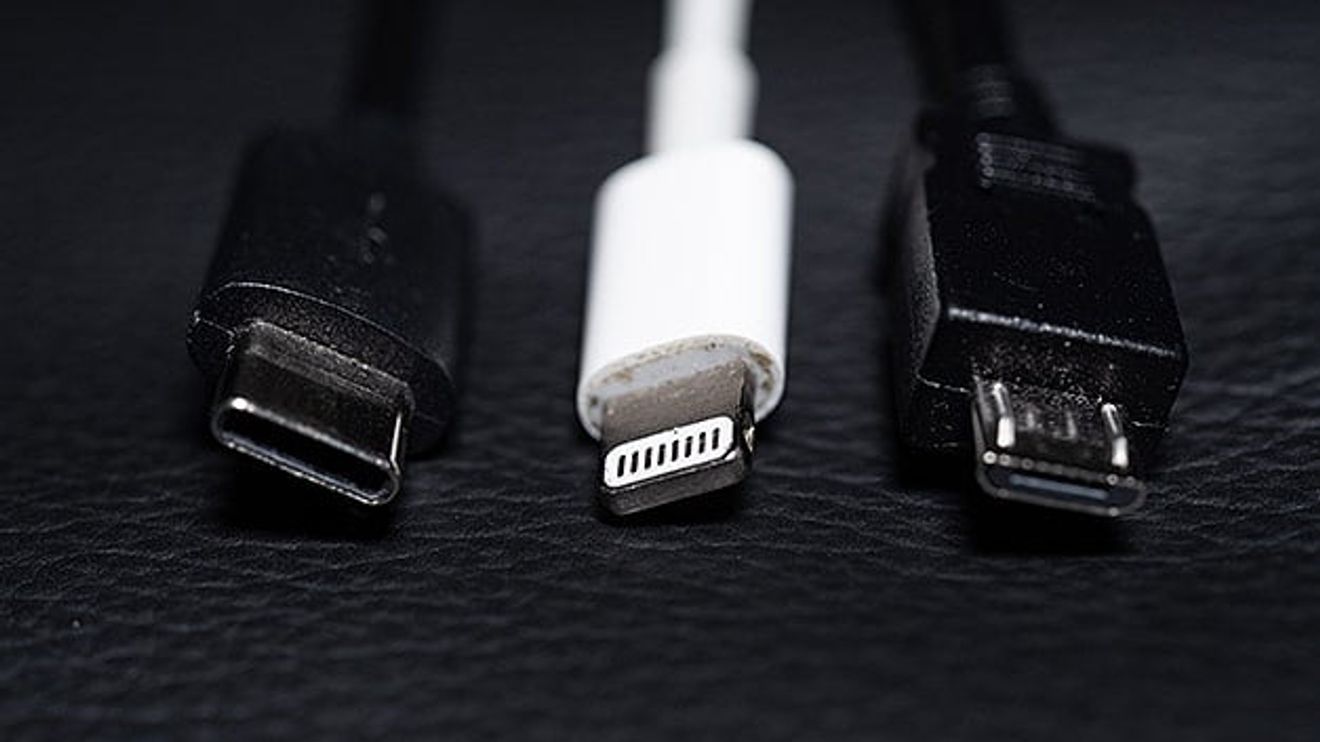
The tangle of cables in German households is hard to keep track of. Cell phones, tablets and headphones often require different charging cables, depending on the manufacturer. The iPhone company Apple in particular, with its proprietary Lightning connector, has so far made it difficult to find a standardized solution in the EU. This should soon come to an end - at least if the EU Commission has its way. On Thursday (23.09.2021), the Brussels authority presented a legislative proposal for standardized charging sockets in electrical devices.
Why hasn't there been a standardized solution for a long time?
So far, the EU Commission has relied on voluntary cooperation from the industry - although the European Parliament in particular has been calling for more pressure on companies for years. The EU Commission has not achieved its goal of one charging cable for all devices. In 2009, 14 cell phone manufacturers - including Apple - agreed on a uniform standard for power adapters in a voluntary commitment under pressure from the EU Commission. Of the several dozen types of sockets once used in smartphones and tablet computers, three remain: the now obsolete micro USB, the newer USB-C and Apple's thinner Lightning connectors. The iPhone company refuses to completely abandon its standard. The competition, from Samsung and Xiaomi to Oppo, OnePlus and Motorola, now generally use USB-C sockets in their devices.
What has the EU Commission now proposed?
If the EU Commission has its way, USB-C will become the standard for sockets in devices. Fast-charging technology should also be standardized in all devices. In addition, customers should no longer be obliged to buy a power adapter when they buy a new cell phone, for example. However, Apple, Samsung and other manufacturers already supply their smartphones without a power adapter.
Which devices should this apply to?
The EU Commission is targeting six device categories. In addition to smartphones, these include tablets, headphones, speakers, portable games consoles and cameras.
What is the aim of the initiative?
On the one hand, consumers should benefit from it - because there are fewer cables in their household and they also save money if they do not buy a new power adapter with every device. On the other hand, huge amounts of electronic waste are to be avoided. The EU Commission speaks of 11,000 tons per year.
Apple the obstructionist?
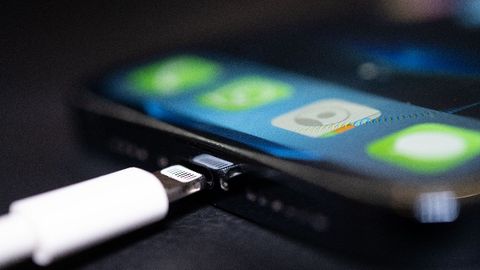
Why is Apple resisting standardization?
Apple wants to keep its Lightning connector. It is currently used in all iPhones, but also in some tablet models such as the current iPad 9 or the AirPod headphones. Initially, the main reason was that extremely flat devices could be built dust- and waterproof with Lightning, which would not have been possible with the inferior Micro-USB standard. However, there is now a viable alternative in the form of USB-C, which is also used by Apple in some cases. Apple already relies on USB-C for its power supply units - which can usually be separated from the charging cables.
An Apple spokesperson said on Thursday: "We are still concerned that a strict regulatory framework that prescribes only one type of charging socket hinders rather than encourages innovation." EU Internal Market Commissioner Thierry Breton strongly disagreed: The proposal was not at all directed against innovation - and certainly not against any particular company. Rather, it is intended to benefit consumers. Apple could of course continue to use Lightning, but in this case would also have to install USB-C. However, two different charging sockets in one smartphone are difficult to imagine.
Does Apple also have economic reasons for retaining the Lightning socket?
Yes, the company generates revenue with its "Made for iPhone/iPad" (MFI) program. Third-party manufacturers of Lightning cables must have their products certified in the MFI program.
Standardized charging sockets - time frame and criticism
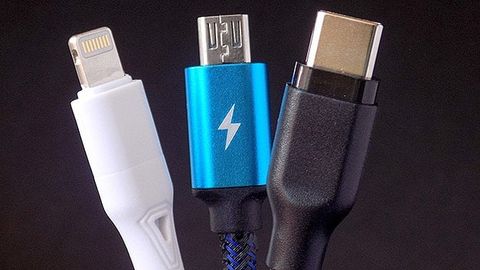
The EU Commission wants to standardize charging plugs for smartphones, tablets, etc.
© Pixabay / CC0What does the industry say about the plans?
The digital association Bitkom criticized the Commission's initiative. There are many levers and measures to avoid electronic waste, the association explained. "Standardized charging sockets for smartphones and other devices are not one of them." Many manufacturers are already much further ahead than the politicians in this respect: they rely on wireless charging based on the cross-manufacturer Qi standard. In the interests of sustainability, new devices are also often already being delivered without a power supply unit so that consumers can continue to use their power supply units. "In this context, standardized charging sockets even have a negative environmental effect. If a not exactly small proportion of smartphone users can no longer use their existing charging cables for new devices as a result of such an intervention, this will increase the amount of electronic waste generated," explained the association.
What happens after the charging socket proposal?
First of all, EU states and the European Parliament must now discuss the issue and find a common line. National governments would then have one year to transpose the new rules into national law. A transitional period of two years is also planned for companies. The standardized charging socket would therefore be mandatory for companies by the end of 2024 at the earliest - and the cable clutter in households would decrease. Until then, charging cables may only play a subordinate role because devices will increasingly be charged wirelessly in the future. Wireless chargers are not affected by the new proposal. The EU Commission argues that the supply here is not yet so fragmented.
Is the EU Commission planning further simplifications for consumers?
Chargers for cell phones or tablets would not yet be completely standardized under the current proposal - the plug that goes into the power supply unit would also have to be standardized. This is to be tackled this year with an update to the so-called Ecodesign Directive. The EU Commission could then also propose new regulations for the design of cell phones, tablets and laptops sold in the EU. This is because the authority wants these devices to be fundamentally repairable and therefore usable for longer, for example with replaceable batteries and software updates over several years.


You might also be interested in
The foundation of the digital society
Most people know little about Linux, even though they come into contact with the universal operating system several times a day: from sat navs in cars to smartphones. The free system has only failed to conquer conventional PCs.
 read more...
The steep rise and sudden fall of the IBM PC
40 years ago, IBM launched a new era in the history of technology with its first personal computer. The IBM PC 5150 was neither the first nor the best computer. But no other computer had as much influence on the industry as the first IBM PC.
read more...The top-secret universal computer
On February 15, 1946, the New York Times published a report on the world's first universal computer, revealing the "top secret of the Second World War" 24 weeks after the end of the war: the existence of the world's first freely programmable...
read more...Kontron Begins Production of 5G Modules in Düsseldorf
Kontron has launched mass production of 5G communication modules in Düsseldorf. The modules, which were developed in Berlin, are used in a variety of sectors, including industry, transportation, and critical infrastructure.
read more...Embedded module for CRA-compliant communication
With the 'comX 90' embedded module, Hilscher is expanding its industrial communication portfolio with a new generation of compact communication modules.
read more...Softing Industrial Automation takes over Delta Logic
Softing Industrial Automation has acquired 100% of the shares in Delta Logic Automatisierungstechnik in Schwäbisch Gmünd.
read more...Range of embedded communication interfaces expanded
HMS Networks is launching another version of the embedded communication interfaces 'Anybus CompactCom'. Anybus CompactCom B40 Mini' complements the 40 series with a communication interface that is optimized for automated production.
read more...Update brings support for TIA V19
Delta Logic has updated the 'Accon OPC UA Server' software to version 1.4.0.0. The new features include support for TIA Portal projects of version V19 and for the latest firmware for CPUs of the Siemens S7-1200 and S7-1500 controllers.
read more...The e-paper for the special issue
Communication & networking 09/24
Communication and networking form the backbone of industrial automation. It enables flexible production processes and creates the basis for innovations and new business models. The news is now available in this e-paper.
read more...