

Endress+Hauser
Digital twins on the rise
Digitalized processes along the entire value chain require a digital twin. Behind this virtual image of a real object is a wealth of data and algorithms that are used to simulate, control and improve processes.
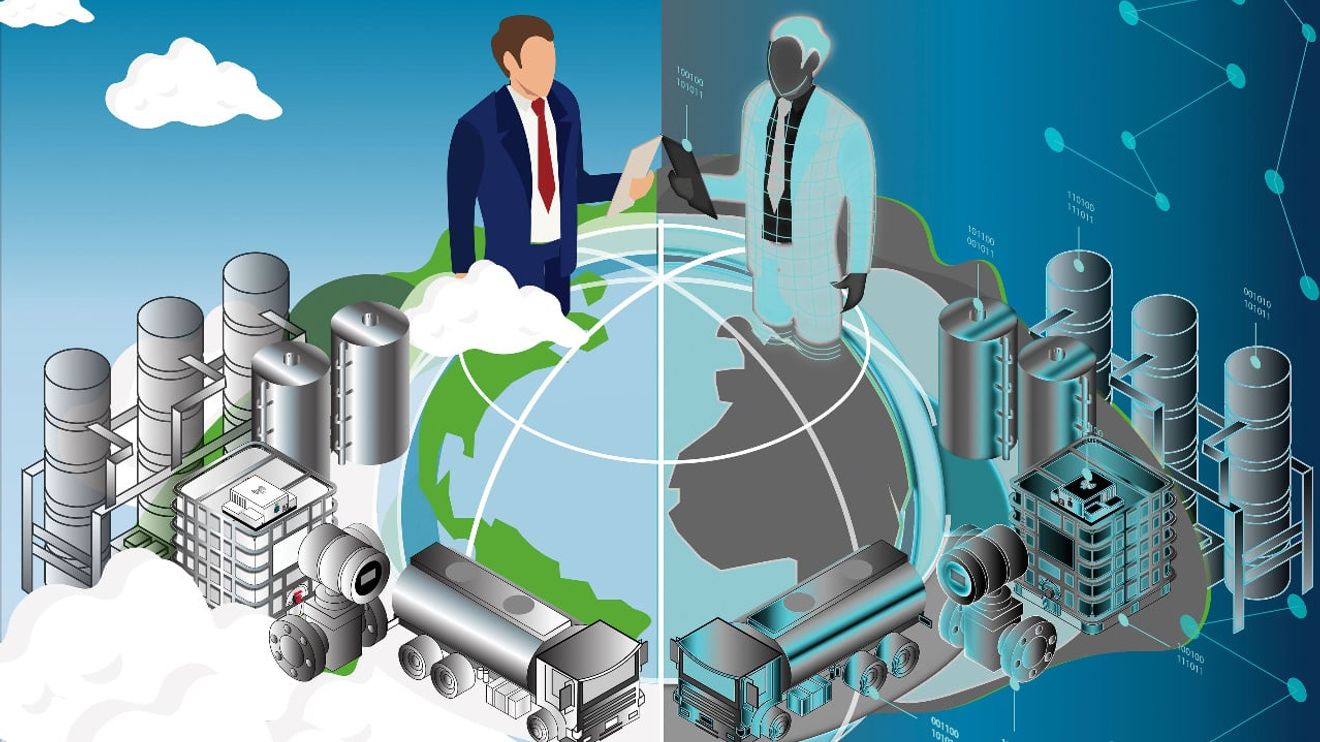
Just a few years ago, it was common for customers to have to pore over thick catalogs, read countless technical data from tables and compare documentation in different formats when selecting components for their systems. During operation, documents for certifications and tests, maintenance and safety checks were then laboriously created, updated and filed by hand. With the digital twin approach, Endress+Hauser is transferring all of this into the virtual world.
The vision is for customersto use an online configurator to select the right sensor based on their requirements profile as early as the planning phase of a new system and to use the digital twin for installation and function simulations. When ordering, product information such as type and model number is passed on in such a way that it can be read by the customer's business software. Electronic instructions and descriptions, which are available online worldwide, make it easier to install, calibrate and commission the measuring device. Automated certificates and checklists lead to accelerated technical approvals and inspections, as all necessary documentation is prepared in accordance with standards and can be viewed at any time. During the maintenance phase, dynamically updated digital service plans support the lifecycle management of the device. Necessary maintenance is displayed at an early stage and can be ordered automatically. If the service life of a sensor is coming to an end, customers are offered a replacement device that meets their needs.
To create the digital twin, IT systems transfer all information on the respective measuring device - design data as well as instructions, certificates and other technical documentation - into data records that can be integrated into the customer's digital ecosystem.
Networking data streams
Once the data has been collected, the next step is to network these data streams. This is a major challenge for the process industry, as around 97% of field data remains unused. However, the foundations for networking locations and devices have already been laid: After decades of being used exclusively in the office buildings of the chemical industry, Ethernet data transmission technology has now become a major beacon of hope for digitalization. This change of heart is being driven by the properties of the physical layer for Ethernet Advanced Physical Layer, or APL for short. Thanks to APL, it is possible for devices in the process industry to communicate with each other at high speed and over distances of up to 1000 meters.
Making data usable
To analyze the data streams obtained, Endress+Hauser offers 'Netilion', a manufacturer-independent and cloud-based industrial IoT ecosystem that is designed for processes in industrial process engineering and connects the physical and digital worlds. All data can be automatically linked and collected with the digital twin of the field device in 'Netilion Library'. To ensure that the collected data can subsequently be used further, 'Netilion Connect' offers the connection via a standard interface (API) for use in various other IT systems. The 'Netilion Analytics' web application prepares the data and provides an overview of all sub-processes and all components from different manufacturers recorded in the system.
Flood warning system
Netilion is already being used for early flood warnings, for example. Particularly in mountainous regions, but also in landscapes with valleys or gorges, prolonged, heavy rainfall can lead to flooding. Grade 2 and 3 watercourses in particular then quickly develop from small rivulets into raging torrents. If the soil around the streams no longer absorbs moisture, the risk of flooding increases. For this reason, measuring with soil moisture sensors and holistic monitoring of the situation on site is important.
'Netilion Flood Monitoring' monitors aspects such as soil water saturation, changes in the riverbed and the development of stream inlets. By combining real-time measurements, topographical data and historical information, the system provides precise statements and forecasts about the flood situation on site in both online and offline mode. This analysis is supported by water level gauges, rain sensors and soil moisture sensors throughout the area, which provide continuous data. In addition, the system uses artificial intelligence to link the local sensor data with current weather forecasts and terrain information. This enables it to make accurate and early predictions as to whether and when flooding is imminent. Netilion Flood Monitoring's flood protection also takes into account the water saturation of the soil as well as changes in the riverbed and the resulting development of stream inlets.

Analysis of measured values from the flood protection system
Once the sensors have been installed, the flood protection system delivers measured values from day one. These are sent to the cloud platform and evaluated there by an AI. The specially developed algorithm learns over time and can make increasingly accurate predictions about whether and when flooding is imminent and where the causes lie. The evaluations of existing devices, such as those of the state water level measuring stations, are also integrated into the analysis.

The author: Markus Ketterer is Head of Department Sales Marketing Communication at Endress+Hauser in Weil am Rhein.
© Endress+HauserAlmost all sensors are battery-operated and require no infrastructure. Complex construction measures and permits are not required for installation. The water level sensors can be mounted anywhere on existing transverse structures (such as pipelines, bridges, underpasses, walls and roads) in the terrain. The bracket protects the sensor both from theft and from being washed away during a flood (HQ100).


You might also be interested in
Matthias Altendorf joins the Board of Directors
Matthias Altendorf moves to the Board of Directors at Endress+Hauser and hands over the position of CEO to Dr. Peter Selders. The management of Endress+Hauser Level+Pressure has also been restaffed.
 read more...
Digital twin as an integration entity
The digital twin is an important component of the Industry 4.0 administration shell standard. However, the "Manufacturing-X" proof of concept for the Asset Administration Shell (AAS) is still pending. Proof of concept for IoT communication...
read more...The top 10 articles in August 2024
The top 10 articles from Computer&Automation in August 2024. Readers were most interested in these reports.
read more...Sick and Endress+Hauser establish joint venture
Sick and Endress+Hauser have signed an agreement to jointly drive forward the decarbonization of the process industry. The companies are establishing a joint venture for this purpose.
read more...Strong growth recorded
The specialist for measurement technology and automation solutions increased its consolidated turnover in 2023 by 11% to over EUR 3.7 billion and created 715 new jobs worldwide.
read more...Important supplier acquired
Endress+Hauser intends to take over the operations of the Swiss supplier Angenstein Estech, including the production plant in Cernay, France, Estech Industries Angenstein, succursale de Cernay.
read more...Matthias Altendorf joins the Board of Directors
Matthias Altendorf moves to the Board of Directors at Endress+Hauser and hands over the position of CEO to Dr. Peter Selders. The management of Endress+Hauser Level+Pressure has also been restaffed.
read more...The top articles of the year
Anniversaries and partnerships, trends in new cloud solutions and digital transformation, networking developments for process and factory automation as well as new and award-winning products - we take a look back at them in the most-read reports of...
read more...Sick and Endress+Hauser join forces
The German sensor company Sick and the Swiss measurement and automation technology provider Endress+Hauser want to work more closely together. The two companies are aiming for a strategic partnership for Sick's process automation business field.
read more...