
Magnetic field measurement
Automated parking space monitoring
Around 50 million motor vehicles were registered in Germany last year. A challenge for the infrastructure - both for moving and stationary traffic. The issue of parking space monitoring is therefore becoming increasingly important.
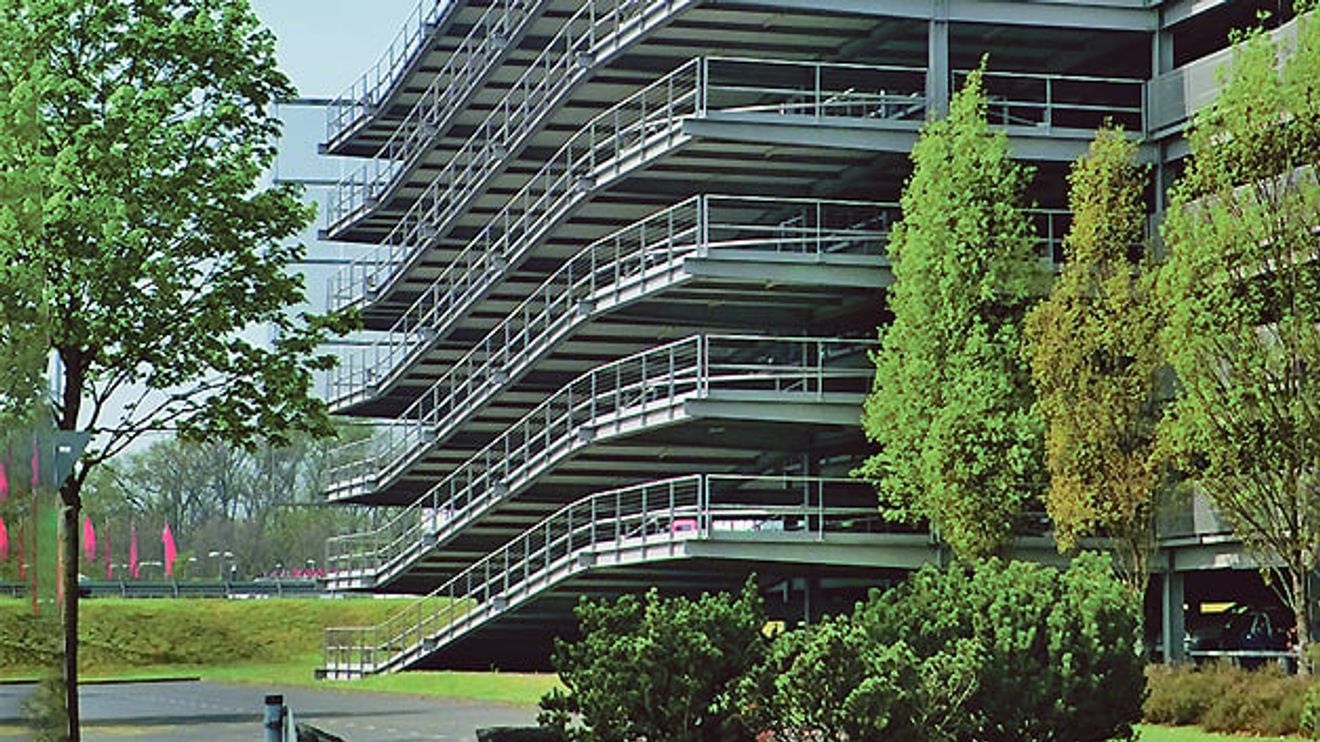
According to international studies, around 30% of traffic in cities is generated by the search for parking spaces. The Croatian company Mobilisis, based in Varaždin, therefore began developing sensors to detect moving and stationary traffic three years ago. The result is the 'Magsense' system, which enables the detection of parked vehicles in parking lots, multi-storey and underground parking lots.

The 'Magsense' sensor can precisely measure the earth's magnetic field and evaluate even the smallest changes.
© JumoThe system is based on magnetic field measurement. The Magsense sensor is able to precisely measure the earth's magnetic field and evaluate even the smallest changes. In the vehicle and traffic data acquisition applications implemented to date, the sensor initially measures the 'undisturbed' earth's magnetic field. This is influenced by ferromagnetic substances, which are present in all vehicles. As soon as a vehicle enters the measuring range of a sensor, it can detect and measure the changes in the earth's magnetic field. The measured values are read out and evaluated in a targeted manner. In addition to ferromagnetic materials, the sensors also detect influences on the earth's magnetic field caused by aggregates and eddy currents.
For parking and moving traffic

The sensors record the occupancy of the parking spaces and send this information wirelessly to corresponding display devices in the parking garage. In addition, the current occupancy can be forwarded directly to mobile devices or websites.
© JumoThe magnetic field sensors detect the occupancy of individual car parking spaces with a detection rate of over 99%. The real-time data of each parking process is forwarded to a parking guidance system or an external server. The system also allows individual parking spaces to be detected, which enables direct guidance to free parking spaces. The system is also being used at a major German airport.
In flowing traffic, the technology can be used to count and classify vehicles such as cars and trucks, for example at entrances and exits as well as on federal highways and freeways to determine the traffic load. The magnetic field sensors are also suitable for use in signal control systems and for checking access authorizations. For example, access control for long-term parkers with a monthly billing system can be implemented at entrances and exits or at assigned parking spaces.
The electronic assemblies of the sensors are manufactured at Jumo in Fulda according to customer specifications and then programmed, tested and soldered by Mobilisis. Mobilisis also benefits from Jumo's complete service and manufacturing expertise. Three SMD assembly lines, which can assemble up to 100,000 components per hour, are at the heart of the Fulda-based company's electronic component production; the annual capacity for SMD assembly is currently 140 million components. In addition, ten semi-automatic placement machines are available for THT placement. The maximum annual capacity here is 14 million components.
Author:
Michael Brosig is press officer at Jumo in Fulda.


You might also be interested in
Products of the year - The e-paper special
"Products of the Year 2023" goes interactive: the new e-paper including video news is here! The winners of the readers' poll have been chosen and in our interactive special edition you will find all the winning products at a glance and exclusive...
 read more...
Measurement technology - The winners
Whether it's heat, pressure or flow, measurement technology allows the system operator to keep an eye on everything. The winning products in the 'Measurement technology' category show which measuring principles can help with this.
read more...With a focus on edge & cloud computing
The e-paper of issue 03/23
Sustainability is at the top of the embedded community's agenda. Prof. Dr. Peter Fromm from Darmstadt University of Applied Sciences explains in an interview why embedded technologies are becoming the key to a sustainable future - in cars, in...
read more...With a focus on sustainability
The e-paper of issue 01/02
The climate crisis is omnipresent and everyone must make their contribution to greater sustainability. If there are many opportunities to save resources in the private sphere, what contribution can companies make? Assessments and models in the new...
read more...The e-paper of the January issue
Computer&Automation turns 25 this year! Throughout the year, we will be looking back at exciting aspects: What has happened in 25 years? What changes has the industry undergone? Until then, enjoy reading our first issue in 2023.
read more...These are your "Products of the Year 2022"!
Here they are, the winners of the "Products of the Year 2022" readers' poll! Find out which products and solutions from 2021 impressed our readers!
read more...Measurement technology - The winners
Quickly checking conditions or continuously monitoring processes are among the standard tasks of measurement technology. Here are the top 3 in this category.
read more...Continuously measured
Safety PLCs are not always necessary to implement safety requirements in tank systems. In some cases, the use of safety monitors or limiters is also sufficient.
read more...Supplemented by three modules
The Varitron automation system from Jumo is being extended by three modules: The 32-channel digital I/O module offers 32 channels, 17 of which are configured as digital outputs as standard.
read more...