
Alliance
Online blackmail continues to be a growing problem
Criminal hackers do business with online blackmail, perpetrators are rarely caught. There seems to be no relief in sight.
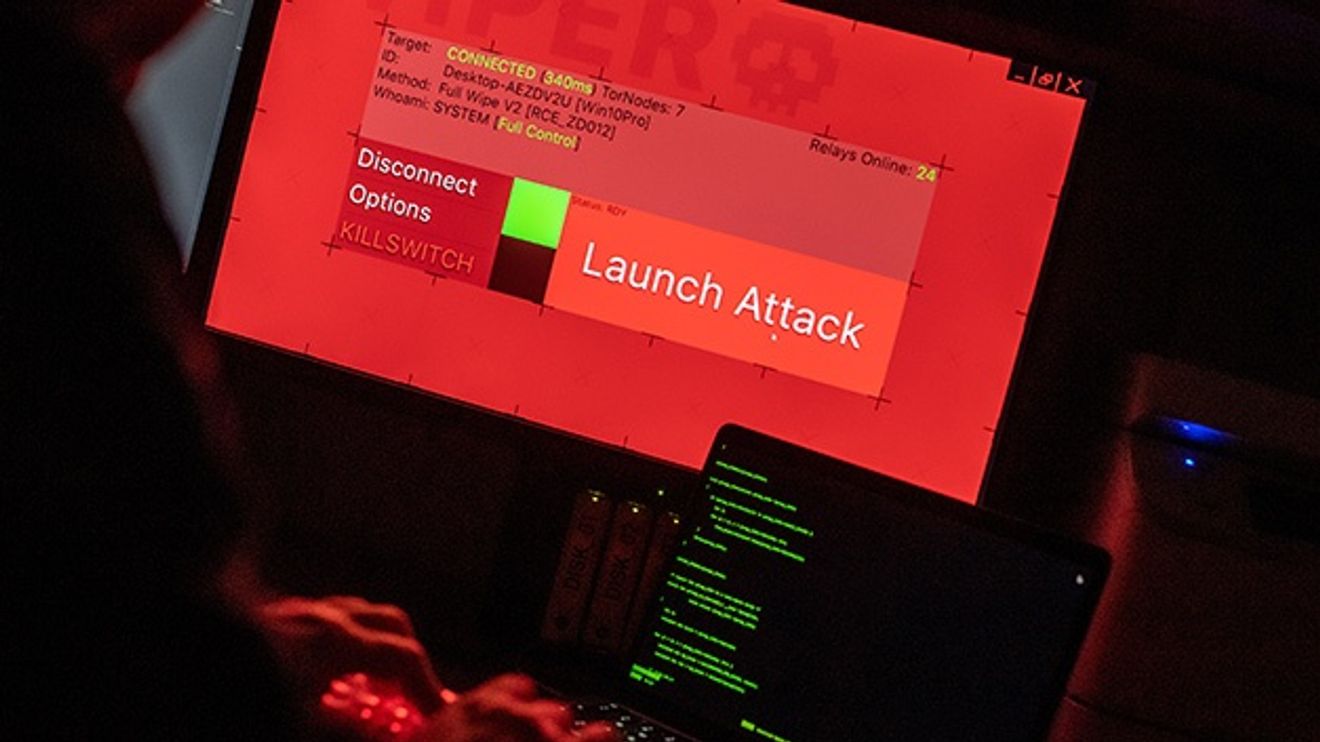
According to Allianz, the risk of online extortion for companies, authorities and critical infrastructure will increase in the coming years. In addition, the risk of cyberattacks "by nation states" is also increasing as a result of the war in Ukraine, write the experts at Allianz industrial insurer AGCS in their Cyber Report published on Wednesday.
According to the report, cases of online blackmail are not only increasing in number. The damage to the institutions attacked is also increasing, and not just financially. "Double and triple extortion attacks are now the norm," said Scott Sayce, head of the cyber insurance division at AGCS.
Online extortion in its original single form works by hackers installing malicious encryption software (ransomware) on a network and then demanding a ransom to unlock it. In double extortion, the hackers also steal sensitive data, which is then also used for extortion attempts. In the triple form, customers, suppliers, business partners and other contacts of the originally attacked organization are also blackmailed. Sayce and his colleagues warn that small and medium-sized companies are increasingly being targeted by blackmailers.
623 million online blackmail attempts worldwide
The AGCS refers to estimates by the US cybersecurity company Sonic Wall, according to which there were 623 million online extortion attempts worldwide in 2021, twice as many as in 2020. This year, the number of cases has fallen slightly worldwide, but has continued to rise in Europe. Hackers still often use emails with attached files in which the blackmail software is hidden.
Another scam, in which hackers pose as superiors and deceive subordinates with fraudulent payment instructions and other instructions, is also becoming increasingly widespread, according to AGCS. According to the AGCS report, hackers are increasingly using artificial intelligence to slip into supervisor roles with manipulated "deep fake" audio files or videos. According to the report, there was a case in the United Arab Emirates in 2021 in which 35 million dollars were stolen from a bank after an employee was deceived with the cloned voice of his boss.
In connection with the war in Ukraine, the AGCS assumes that the risk of espionage, sabotage and cyber attacks against companies with links to Russia and Ukraine as well as to allies and companies in neighboring countries is increasing. State-sponsored cyber attacks could target critical infrastructure, supply chains or companies, the report states. "So far, the war between Russia and Ukraine has not led to a significant increase in cyber insurance claims, but it does indicate a potential increased risk from nation states," Sayce said.


You might also be interested in
Training environment for security experts
The Information Security Hub (ISH) at Munich Airport is an immersive training facility where cyberattacks are simulated. Marc Lindike, Head of Information Security Assurance at Munich Airport, explains the aims of this unique environment in an...
 read more...
Safety and security on board
As the capabilities of driverless transport systems - whether track-bound or freely navigating - increase, so does their complexity. Mobile platforms therefore place high demands on safety - collision protection for humans and AGVs is not enough!
read more...OT security with Zero Trust
The advantages of digital automation concepts are manifold. However, increasing networking is also making industrial production the focus of cyber criminals. In this interview, Michael Veit from Sophos explains the potential dangers and protection...
read more...The lax handling of security
In mid-December 2021, the "Log4Shell" vulnerability was discovered in the Java library Log4j. An incident that gnaws at the image of open source. How is damage limitation possible when using open source?
read more...Hacker attack on Fraunhofer IMWS
Hundreds of gigabytes of data, some of it sensitive, are said to have been illegally siphoned off from the Fraunhofer Institute for Microstructure in Halle. The institute let a ransom demand lapse. Who is behind the attack?
read more...Quantum-resistant hardware security for Nvidia robotics platform
Infineon Technologies integrates the hardware security module 'Optiga TPM SLB 9672' into Nvidia's 'Jetson Thor' computing platforms for robotics and autonomous systems. The module secures cryptographic keys directly at chip level and thus protects...
read more...Safety solutions for the smart factory
Schmersal is launching IO-Link safety products on the market with the solenoid interlock 'AZM42' and the safety sensor 'RSS362'.
read more...Security portfolio expanded
Adlon is further developing its Security Operations Center and adding another module to the existing Managed SOC for Microsoft 365 environments (based on Managed XDR): 'Managed SOC Advanced'.
read more...New Vice President of Global Partner Ecosystem appointed
Effective immediately, John Ryan is the new Vice President of Global Partner Ecosystem at Claroty, a specialist in the security of cyber-physical systems (CPS).
read more...