

Follow-up with Benjamin Häfner
The autonomous production system
Researchers from the fields of mechanical engineering, electrical engineering, information technology and computer science are developing an agile production system at KIT that adapts autonomously to changing product specifications. Project coordinator Dr. Benjamin Häfner reveals the details behind this.
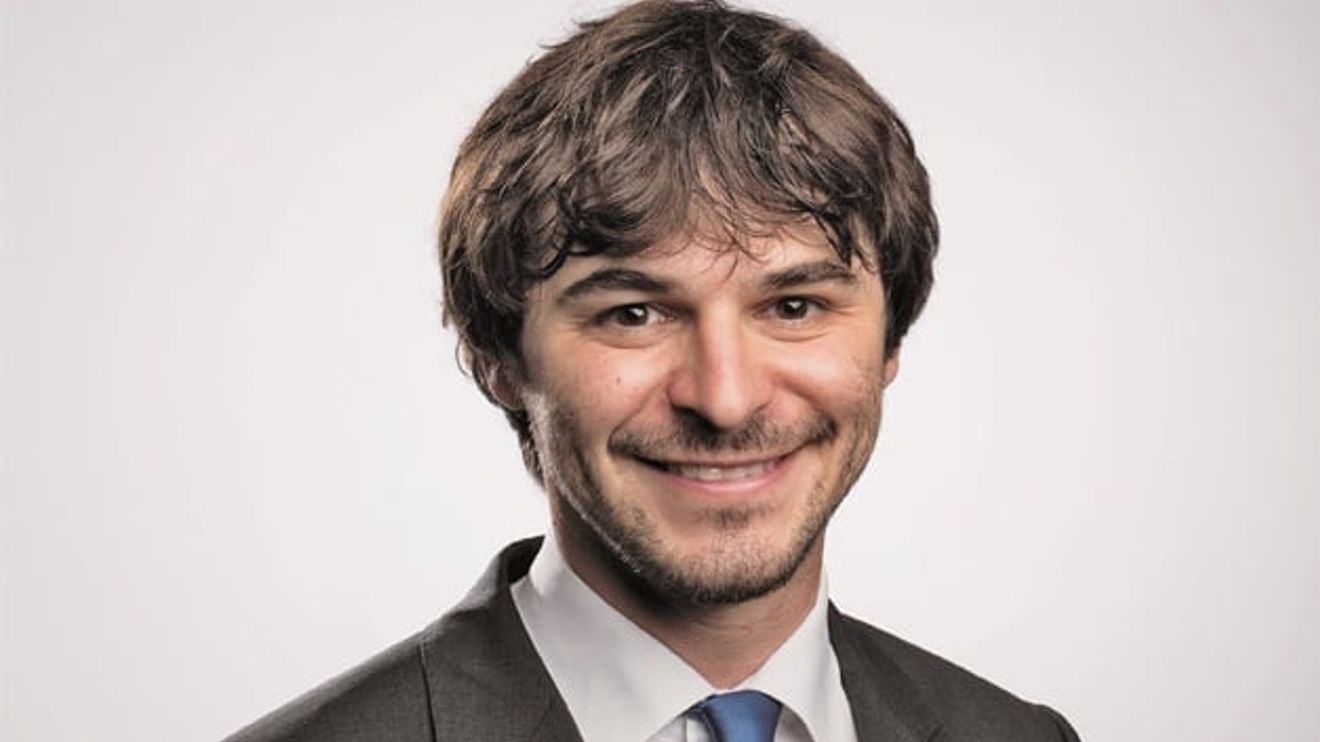
Dr. Häfner, 'AgiProbot' stands for 'Agile production system using mobile, learning robots with multi-sensor technology for uncertain product specifications'. Could you briefly describe the project?
Benjamin Häfner: 'AgiProbot' is a research project funded by the Carl Zeiss Foundation with 3 million euros, in which nine chairs at KIT are jointly researching the possibilities of artificial intelligence and diverse digitalization technologies. This is being done using the example of a production system with so-called remanufacturing - i.e. the disassembly and reassembly - of electric motors.
With what goal?
Benjamin Häfner: The aim of the project is to develop an agile production system that is capable of reacting autonomously to uncertain product specifications. The system to be developed should be able to deal with uncertain component conditions in terms of wear, geometry, degree of contamination, etc. and develop agile solutions to cope with production tasks.
What does the system consist of?
Benjamin Häfner: The agile production system will consist of a series of stations in a matrix factory structure. Each station will consist of a variable number of modular robot systems that work in collaboration with each other or with humans and will be able to adapt to uncertain component properties in a self-learning manner and perform the required disassembly processes autonomously. The intralogistics processes between the stations are also considered by using mobile robotics with autonomous vehicles to enable varying value streams. Various self-adaptive sensor systems are integrated into the plant technology and vehicles. Interaction with humans and the use of existing prior knowledge will also be specifically included in the learning processes mentioned.
As a tangible result of the project, the scientific methods developed will be implemented in an industry-oriented, joint demonstrator factory at KIT, in which the remanufacturing of real electric motors from the automotive industry will be implemented.
What role does artificial intelligence play here?
Benjamin Häfner: In the project, artificial intelligence methods are the key enablers for realizing the necessary learning processes of the agile production system. This concerns different levels of consideration: First of all, the key information on the unknown product features must be captured from measurement data collected using suitable sensor technology. Deep learning methods, for example, are suitable for this. Then the robots have to learn optimal work processes - for example using various reinforcement learning approaches. Assisted learning through human observation is also being intensively investigated. Finally, the material flows in the matrix factory structure of the production system should also be learned autonomously, which is possible using so-called Q-learning, for example.
What are the challenges?
Benjamin Häfner: The particular challenge of the project is to design the aforementioned approaches across domains and implement them together in a realistic factory structure in order to develop a dynamically learning overall production system. This leads to significantly greater complexity than if the various subsystems are only considered independently of each other.
What does the project roadmap look like?
Benjamin Häfner: We are organizing the project based on SCRUM principles, which are already widely used in the field of software development. This is characterized in particular by the fact that we are developing iteratively as part of the project in order to make the complexity as manageable as possible. Over the course of the five-year project, we have set ourselves the goal of implementing a simple but functional version of the agile production system after the first year.


You might also be interested in
The autonomous industrial revolution
The fourth industrial revolution requires that the underlying technologies are continuously developed further. Automated and autonomous systems are key pillars.
 read more...
Service robotics at Conrad Electronic
Sales robots in use around the clock
To provide its customers with a 24/7 shopping experience in Berlin Schöneberg, Conrad Electronic has now deployed a sales robot. The robot 'Alex' is designed to provide a high-tech shopping experience. It comes from the manufacturer pi4_robotics.
read more...Follow-up with Kevin Carlin, ADI
Entry into the IE business
With the new 'ADI Chronous' brand, Analog Devices wants to have a major say in Industrial Ethernet (IE) in the future. Kevin Carlin, Vice President Industrial Automation & Energy at ADI, explains exactly what this plan looks like.
read more...Follow-up with Dr. Jochen Schlick
Bogged down in individual projects
For the sixth time, the management consultancy Staufen has compiled the 'German Industry 4.0 Index' and surveyed more than 300 German industrial companies on the topic of digitalization. Dr. Jochen Schlick from Staufen Digital Neonex explains the...
read more...The Internet of Production
The Internet of Production (IoP) is based on the idea of enabling a new level of cross-domain collaboration. The Cluster of Excellence IoP at RWTH Aachen University is working to realize this vision. Rahman Jamal, member of the Industrial Advisory...
read more...Follow-up with Dr. Thomas Kuhn
An operating system for Industry 4.0
The three-year BMBF project 'Basic System Industry 4.0' came to an end on June 30, 2019. What goals were achieved? What can be transferred into practice? Where do we go from here? Project manager Dr. Thomas Kuhn gives his opinion.
read more...The interface to the motor
A year and a half ago, the encoder manufacturers Baumer, Hengstler and Kübler joined forces to establish an open single-cable solution between motor and drive with 'SCS open link'. What has become of it? Jonas Urlaub from Kübler takes a stand.
read more...The face of the FLC initiative
At SPS IPC Drives 2018, the OPC Foundation presented the 'Field Level Communication' initiative - FLC for short. Since the Hannover Messe, the initiative has had a director, Peter Lutz, who explains the background to the OPCF's new management...
read more...AI in the industry
How widespread is artificial intelligence in industry today? The ARC Advisory Group is currently getting to the bottom of this question with a study. Ebele Maduekwe explains the upcoming results in advance.
read more...