

Between Hype and Reality
Robotics Insider on the Opportunities of Humanoid Robots
Humanoid robots are still in their infancy. Nikolayi Ensslen (Synapticon) and Michael Mayer-Rosa (Delta Electronics) explain why transparency is now more important than PR, what real progress is being made - and how the industry needs to build trust.
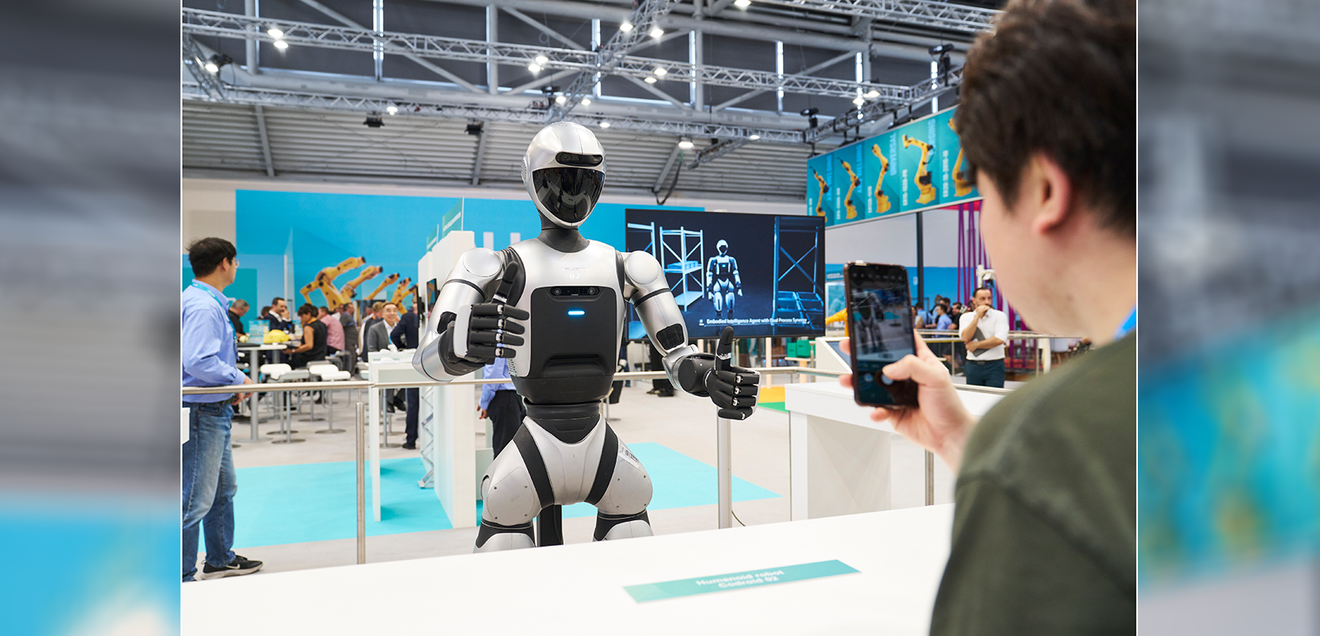
The topic of 'humanoid robots' is experiencing a real hype: hardly any other field of technology is currently as fascinating as bipedal robots in human form, which are supposed to act largely autonomously thanks to AI. Within a short space of time, expectations have been raised that can hardly be maintained at present. While start-ups are fueling billion-dollar ambitions with spectacular visions, industry experts such as Nikolai Ensslen, CEO of Synapticon, and Michael Mayer-Rosa, Head of Intelligent Robot Systems at Delta Electronics, are calling for a greater sense of reality. They explain why the industry now urgently needs a reality check.
Humanoid robots: honest roadmaps instead of full-bodied promises
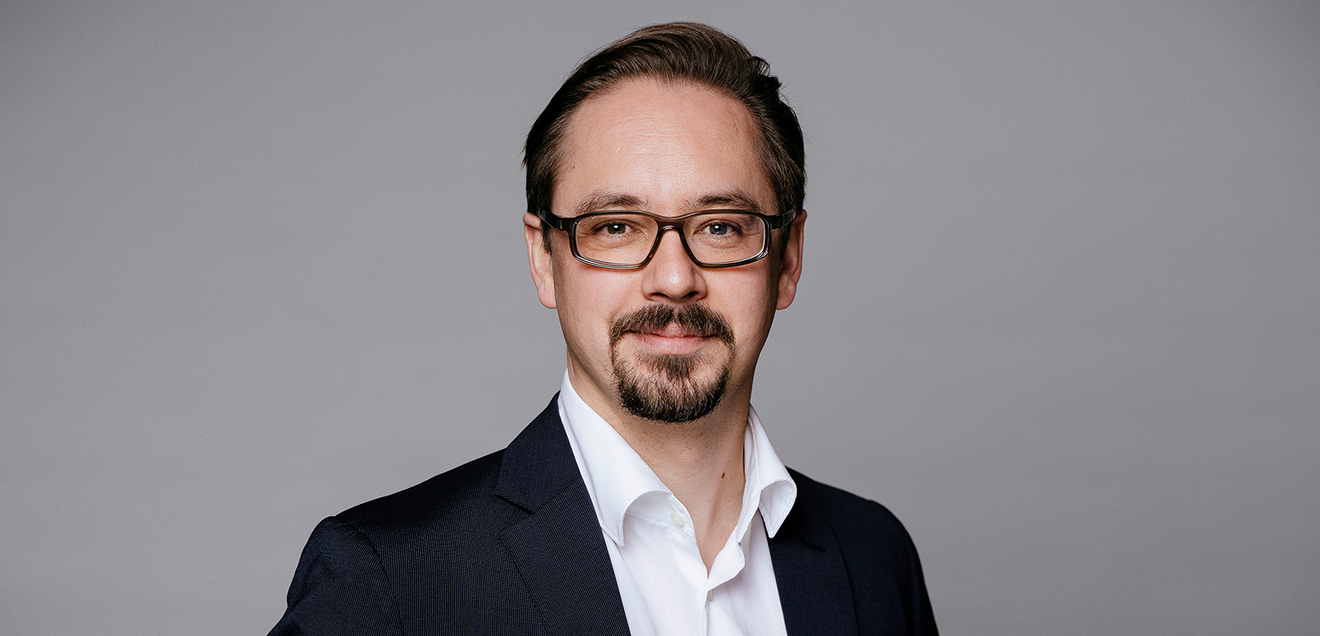
A commentary by Nikolai Ensslen, CEO Synapticon:
"Hardly any other technology topic is currently dominating the headlines as much as humanoid robots. Within a few days, leading media outlets reported on the billion-dollar ambitions of European robotics start-ups, published market forecasts in the three-digit billion range and accompanied premieres at the automatica robotics trade fair in Munich that failed to meet the high expectations. Meanwhile, other start-ups, mostly from the USA, are driving up expectations with perfect demo videos without being able to credibly demonstrate the actual development status in practice.
This dynamic is a double-edged sword. On the one hand, the combination of AI breakthroughs, mechatronic advances and a shortage of skilled workers is rightly putting the topic in the spotlight and releasing energies that have only been dormant until now, especially in Germany. On the other hand, loud promises suggesting that humanoid robots will be walking through living rooms and factory halls virtually tomorrow are fueling far too short-term expectations. When - as recently in Munich - "the best robots in the world" are announced with much fanfare, but then never come or do nothing, then the trust of investors, customers and politicians alike is being put at risk too lightly.
In fact, important, tangible progress has been made in recent months: In the first logistics pilots, humanoid helpers are already carrying out thousands of pick & place cycles, inspecting factories, monitoring objects - and earning their maintenance money back per hour. Such deployments show what actually works today - and where improvements and developments still need to be made, for example in the generalization capability of AI, runtime robustness, energy efficiency, costs and functional safety.
Precisely because these successes are tangible and can be experienced in practice, the industry must of course not lose sight of the big vision. A universal robot that alleviates the labor problem in aging societies and relieves people of dangerous or monotonous tasks remains a legitimate and necessary vision. It inspires young talent, attracts investment and shows the public why robotics deserves a place in everyday life. Vision and enthusiasm are the indispensable fuel without which technological change would hardly come about.
But visions must not become false claims about what is possible today. Anyone who promises capabilities today that are still years away is not only jeopardizing their own credibility. Exaggerated claims obscure investors' view of feasible business models, cause customers to doubt the entire industry and create a climate in which people will soon be saying: "Another robotics bubble." The result is scorched earth - for start-ups, established manufacturers and society, which is urgently waiting for functioning solutions.
What is needed now? Above all, transparent and feasible roadmaps instead of quick fixes and smoke and mirrors. Companies that disclose what their systems really achieve today, which intermediate steps will follow before series production and which key figures - productivity, energy consumption, safety certificates - they want to achieve, create a reliable basis for decisions. Glossy videos are only convincing in the long term if they are flanked by solid data.
An honest risk/reward assessment is just as important. Humanoid robots can close important gaps in production and logistics processes and do indeed have the potential to solve the problem of skilled workers in many areas - but not overnight. Those who openly address cost benefits, maintenance requirements and regulatory obligations will prevent the overheating of expectations that caused previous robotics waves to break (too) early.
Thanks to world-class drive, sensor and safety technology, Germany's robotics scene has the opportunity to set global standards. Whether it seizes this opportunity now depends on whether it leaves the fairground of records and delivers reliable results - enthusiastically communicated, but soberly and solidly documented. This is the only way to create the trust that turns prototypes into productive solutions - and the great vision into a real contribution to the future of work and the economy."
Everyone benefits from the humanoid: a plea for realistic expectations
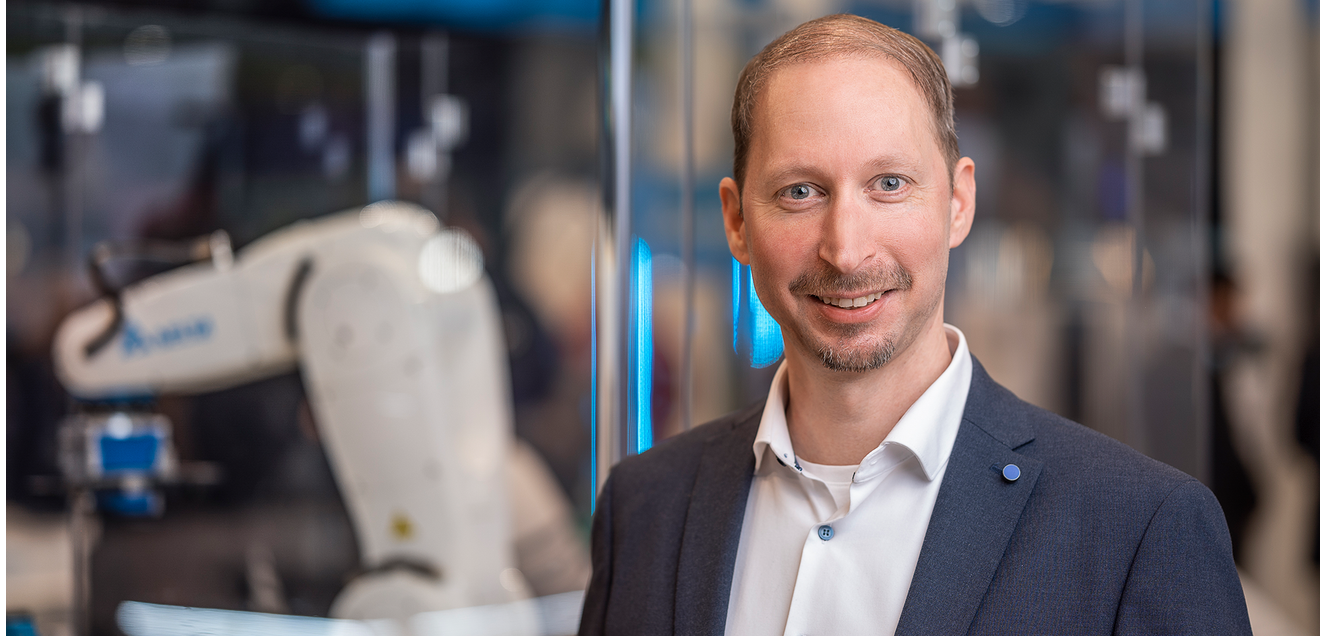
A commentary by Michael Mayer-Rosa, Head of Intelligent Robot Systems (IRS) at Delta Electronics:
"When it comes to robotics in the home and automation in industry, there is hardly a more fascinating topic than humanoids. People have been fascinated by two-legged robots in human form for decades. Films such as Robocop or Terminator already fired people's imagination in the 80s. Today, in the year 2025, the fully autonomous humanoid that can be used safely anywhere is on the roadmap of countless robot manufacturers. It really is a race to the moon, because the market launch of such a system would truly be the moon landing of robotics.
Like them, this will certainly be achieved one day. I strongly advise against always focusing on this final goal, which is certainly still some time away, when evaluating the entire development. I am convinced that the journey is at least as valuable as the destination. The numerous developments in the field of software and hardware that research into humanoids is bringing with it are extremely helpful for other areas of automation. The entire robotics industry is already benefiting from the energy and ideas that are flowing into humanoid projects.
Humanoid robots are only useful if they are based on AI. However, this in turn must be safe. The humanoids must also have a compact design, i.e. motors, gears and other components must be very small. Humanoid robots also require a high level of cognitive abilities, energy efficiency and flexibility. Many of these aspects are also very important for classic industrial robots, lightweight robots and cobots.
This means that SMEs, for example, that are yet to start using robots are also benefiting from the huge leaps in the development of humanoids. Thanks to the current development boom, traditional robots are also becoming more powerful, safer, smarter and ultimately more economical for German SMEs. The entire automation sector is being boosted by this.
The success of humanoid development should therefore not only be measured in terms of when or whether the "perfect humanoid" is ready for the market, but progress must also be assessed in terms of how the entire automation and robotics industry benefits from the many small and large development steps."


You might also be interested in
"AKIMI" Research Project develops AI for Flexible Robotics
The AKIMI research project is launching at the WZL at RWTH Aachen University. The goal is to develop agent-based AI that simplifies the programming and reconfiguration of robotic systems for small and medium-sized enterprises.
 read more...
Aachen-based start-up transfers AI robotics to industrial applications
Many developments in the field of artificial intelligence have so far failed to be transferred from the research laboratory to industrial practice. The spin-off Athenyx Robotics from RWTH Aachen University aims to change this: The start-up is...
read more...Strike at the start of the Hannover Messe
On the occasion of the strike announced by ver.di on the first two days of Hannover Messe 2026 (20 and 21 April), which will paralyze public transport in Hanover, the organizer, Deutsche Messe, is expressing clear criticism and great concern about...
read more...Strategic Cooperation between SEW-Eurodrive and Safelog
SEW-Eurodrive and Safelog announced a strategic partnership at Logimat to jointly develop and establish a powerful software system for controlling mobile and stationary processes in intralogistics.
read more...Rollout of more than 100 AI-controlled Robot Systems planned
Syncore (formerly known as Reesink Logistic Solutions) and Stuttgart-based AI robotics company Sereact are deepening their partnership. At Logimat, the companies signed a letter of intent to expand their partnership with the aim of introducing more...
read more...Modular Robot Hands for Industry
Schunk and DLR intensify Cooperation in Humanoid Robotics
Schunk and the German Aerospace Center (DLR) are expanding their collaboration in humanoid robotics. The aim is to improve the fine motor skills of humanoid robot hands for industrial applications and to translate research into practical solutions...
read more...IFR presents Award Winners
To give women in the robotics industry more visibility and recognition, the International Federation of Robotics (IFR) has honored eleven women in 2026 who are shaping the future of robotics.
read more...Schaeffler expands its Global Partner Network
Motion Technology Company Schaeffler has agreed a partnership with Leju Robotics Technology, a Chinese technology company in the field of humanoid robotics. This is Schaeffler's first cooperation with a Chinese company.
read more...Exoskeleton: Strength to put on
Automation specialist Comau is expanding its portfolio of wearable robots with a new exoskeleton. The wearable system reduces muscle strain by up to 50 percent and is aimed at a wide range of applications in industry and SMEs.
read more...