

International Federation of Robotics
IFR compares Robotics Funding Programs worldwide
Economies around the world are heavily investing in robotics to drive industrial innovation and societal progress. The »World Robotics R&D Programs 2025« report reveals that Asia, Europe, and America are pursuing different strategies.
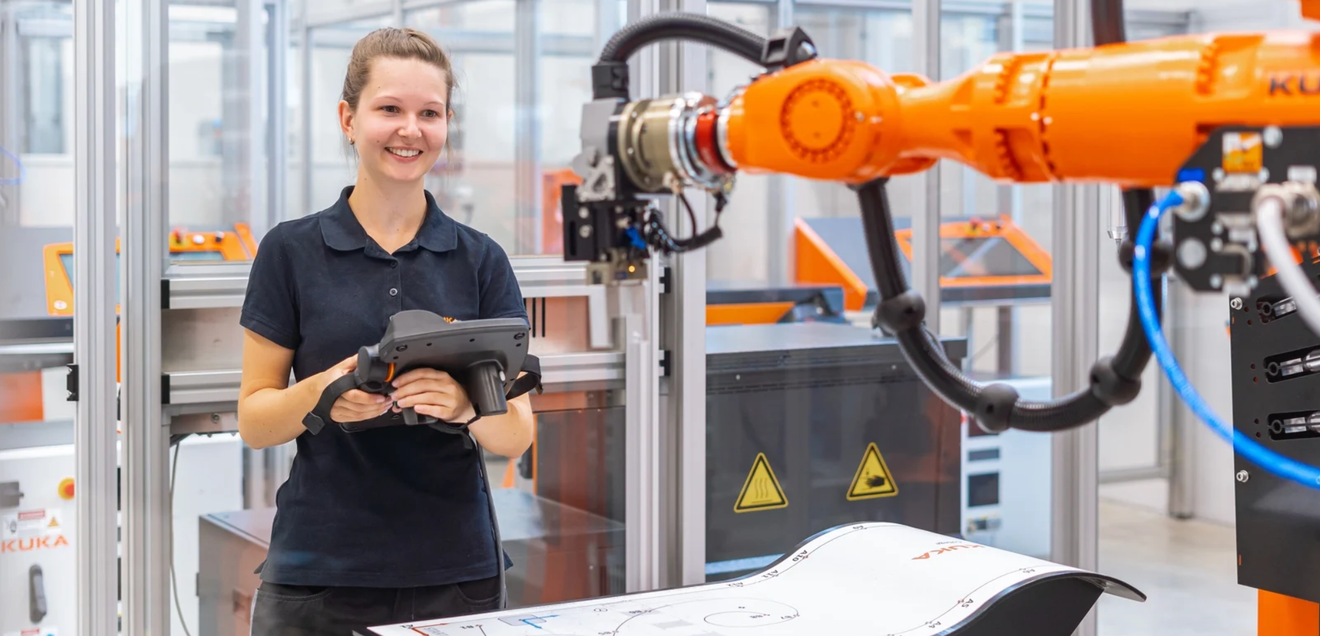
In its latest report »World Robotics R&D Programs 2025«, the International Federation of Robotics (IFR) sheds light on government research and development initiatives worldwide. A total of 13 countries were examined. One focus is on the strategies in China, Japan, South Korea, the European Union, Germany and the USA. Prof. Dr. Jong-Oh Park, Vice Chairman of the IFR Research Committee, explains: »The fourth edition of the report provides comprehensive insights into the latest developments in funding programs, including updates for 2024. For the first time, we present the programs of Singapore and Canada in detail.«
China: Innovation for a leading role in robotics
The »14th Five-Year Plan« for the robotics industry runs until the end of 2025, with a budget of around 45.2 million dollars (approx. 329 million CNY) to promote the development of key technologies such as generative AI. China is aiming to become a global leader in the field of robotics.
According to the IFR, China has a robot density of 470 units per 10,000 employees, putting it in third place worldwide. China only entered the top 10 list in 2019 and has managed to double its robot density within four years.
Japan: innovation leader with a long-term vision
The »New Robot Strategy« focuses on robotics in industry, healthcare and agriculture. The »Moonshot Research and Development Program« (budget: 440 million dollars or 25 billion yen) runs until 2050 and addresses challenges such as the ageing of society and climate change.
Japan is the world's largest manufacturer of industrial robots and ranks fifth in terms of robot density (419 units per 10,000 workers).
South Korea: leader in robot density
The »4th Basic Plan on Intelligent Robots« with a funding amount of 128 million dollars (180 billion KRW) promotes innovations in industry and services until 2028. The aim is to develop South Korea as a leading robotics nation.
With 1,012 robots per 10,000 employees, South Korea is in first place worldwide. Robot density has increased by an average of 5% every year since 2018.
European Union: Focus on research and innovation
The »Horizon Europe« program with a budget of 100 billion dollars (95.5 billion euros) runs until 2027 and supports projects in the fields of AI, robotics and clean energy. 183.5 million dollars (174 million euros) are available for robotics-specific initiatives.
The EU has a robot density of 219 units per 10,000 employees.
Germany: technology leader in Europe
The German »High-Tech Strategy 2025« (HTS) with a total budget of 369.2 million dollars (350 million euros) strengthens the networking of research centers and the application of robotics innovations. The »Robotics Research Action Plan« is intended to support the networking of research centers as the »Robotics Institute Germany« (RIG) and bring robotics research results into application.
According to »World Robotics« statistics, Germany is Europe's largest robot market with a density of 429 units per 10,000 employees and ranks fourth worldwide.
USA: Research for industrial and military applications
The National Science Foundation (NSF), NASA and the Department of Defense (DoD) are funding robotics projects with a total budget of over 10.3 billion dollars. Following the Mars exploration program, NASA launched the Artemis project in May 2019 to send astronauts to the lunar surface and develop new capabilities for Mars missions after 2024. The total budget for Artemis for the financial years 2021 to 2025 is 53 billion dollars.
The NSF research programs promote the development and use of robots in the workplace, hospitals, communities and households. The budget requested for 2024 amounts to around 70 million dollars.
According to IFR statistics, the USA ranks tenth in the world with a robot density of 295 units per 10,000 employees. In terms of annual installations of industrial robots, the USA is in third place worldwide.


You might also be interested in
"AKIMI" Research Project develops AI for Flexible Robotics
The AKIMI research project is launching at the WZL at RWTH Aachen University. The goal is to develop agent-based AI that simplifies the programming and reconfiguration of robotic systems for small and medium-sized enterprises.
 read more...
Aachen-based start-up transfers AI robotics to industrial applications
Many developments in the field of artificial intelligence have so far failed to be transferred from the research laboratory to industrial practice. The spin-off Athenyx Robotics from RWTH Aachen University aims to change this: The start-up is...
read more...Strike at the start of the Hannover Messe
On the occasion of the strike announced by ver.di on the first two days of Hannover Messe 2026 (20 and 21 April), which will paralyze public transport in Hanover, the organizer, Deutsche Messe, is expressing clear criticism and great concern about...
read more...Strategic Cooperation between SEW-Eurodrive and Safelog
SEW-Eurodrive and Safelog announced a strategic partnership at Logimat to jointly develop and establish a powerful software system for controlling mobile and stationary processes in intralogistics.
read more...Rollout of more than 100 AI-controlled Robot Systems planned
Syncore (formerly known as Reesink Logistic Solutions) and Stuttgart-based AI robotics company Sereact are deepening their partnership. At Logimat, the companies signed a letter of intent to expand their partnership with the aim of introducing more...
read more...Modular Robot Hands for Industry
Schunk and DLR intensify Cooperation in Humanoid Robotics
Schunk and the German Aerospace Center (DLR) are expanding their collaboration in humanoid robotics. The aim is to improve the fine motor skills of humanoid robot hands for industrial applications and to translate research into practical solutions...
read more...IFR presents Award Winners
To give women in the robotics industry more visibility and recognition, the International Federation of Robotics (IFR) has honored eleven women in 2026 who are shaping the future of robotics.
read more...Schaeffler expands its Global Partner Network
Motion Technology Company Schaeffler has agreed a partnership with Leju Robotics Technology, a Chinese technology company in the field of humanoid robotics. This is Schaeffler's first cooperation with a Chinese company.
read more...Exoskeleton: Strength to put on
Automation specialist Comau is expanding its portfolio of wearable robots with a new exoskeleton. The wearable system reduces muscle strain by up to 50 percent and is aimed at a wide range of applications in industry and SMEs.
read more...