
Yaskawa on robot integration
"There is actually only one common mistake"
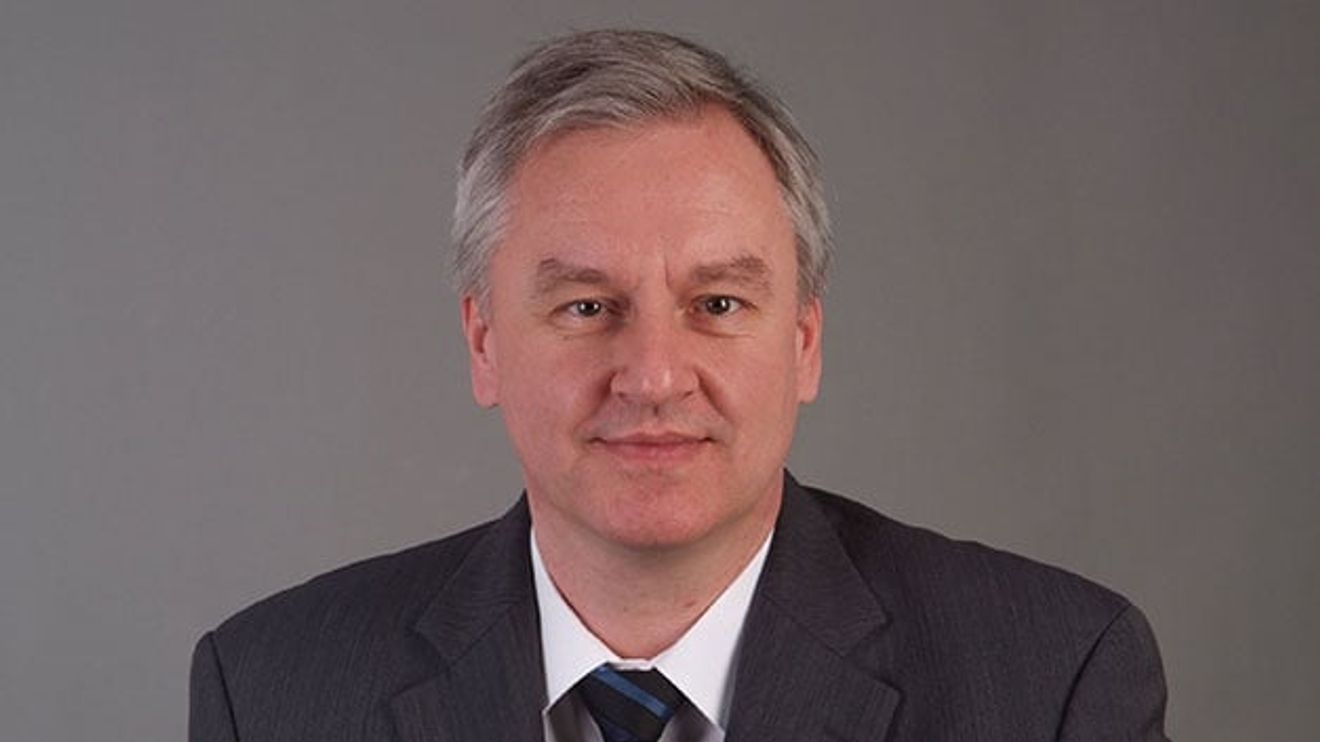
What mistakes do companies make when integrating robots? How important are integration partners? Dr. Michael Klos, General Manager Robotics Division at Yaskawa Europe, provides answers.
What should be the first step if you want to integrate a robot into your own production?
Dr.-Ing. Michael Klos: You should always seek contact with people with experience - first and foremost with the robot manufacturers' sales engineers, with whom you can think through and discuss all aspects of the project during an on-site visit or in a web meeting. These discussions are free of charge and without obligation. Depending on the outcome of the meeting, the sales engineer can put you in touch with suitable system integrators or technology providers.
What are the three most common mistakes in robot integration?
There is actually only one common mistake, namely underestimating the robotics project, for example with the attitude: "I'll carry out the robot project myself and save money on engineering services - it can't be that difficult." The result: you get bogged down, tinker, lose time - and you have no control over the required budget.
Doing robotic installations yourself - today, however, this is already possible with very simple and isolated standard cells, for example for handling small components, palletizing or welding. You can buy the components yourself. Yaskawa, for example, offers an extensive ecosystem with compatible and plug & play products and prepared interfaces. There are also simple configurators, how-to videos and modern e-learning training courses. But very quickly you get to the area where you need an expert's view, e.g. for questions about CE, machine safety or integrating the robot into conveyor systems or signal flows. How do I know that I have found the optimum solution for my case? Respect for those who do it themselves, trying out new things is good, but experience has never done anyone any harm. That's why you should always seek (free and non-binding) advice from experienced robot manufacturers or system integrators to save money, time and trouble.
Unfortunately, the appreciation of engineering services, solution competence, creativity and experience is declining in our society, but these are really necessary for the successful realization of robot installations.
SMEs also need system integrators - because SMEs want to produce rather than program, and even they only have limited time and personnel for playing around and tinkering with robots after work. A finished system with little stress, with a start/stop button and great visualization is often what SMEs want, but not trial and error, even if it is low code and plug-and-play.
With regard to the integration of robots into higher-level PLC-controlled systems, many people are not aware that this integration is possible today without having to be familiar with robot programming. Robots can be easily integrated, programmed and operated via interfaces such as OPC-UA, SRCI or our own Motologix interface. This pays off not only in the project phase, but also in the life cycle, because a PLC technician can also take care of the robot.
What are the technical requirements for robot integration?
Yes, there are prerequisites. But as a user, don't worry too much about possible prerequisites - they vary greatly depending on the application, and modern robot technology, image processing and AI can handle many scenarios without any major prerequisites. The necessary requirements for a particular task are discussed in the project planning meeting.
The integration of robots leads to a redesign of processes. How can robots from different manufacturers be configured and programmed?
We don't see it that way. Of course, it is always ideal for automation if processes can be completely redesigned (greenfield), but in practice, robots (especially cobots) are characterized above all by the fact that they can be flexibly adapted to existing conditions (brownfield).
And to the second part of the question: This question is certainly aimed at engineering and programming platforms for robots. But who really wants to plan and program robots from different manufacturers? The aim is more likely to be a platform for different technology providers so that they can be combined more easily with a robot.
What are the differences in the integration of cobots, articulated arm robots and mobile robots?
There are not really any major differences in terms of integration. The differences between cobots (which are also articulated robots), industrial robots and mobile robots lie more in the application profile than in the way they are integrated. Cobots are often suitable for integration into existing production environments where there is no space for a safety fence, where interaction with humans may be required and where the working speed may be moderate. With mobile robots, the material flow needs to be thought through very carefully, because very often people are fascinated by the technology of mobile robots, but on closer inspection the installation is sometimes not economically viable compared to conventional conveyor belt technology, for example.
On the subject of integration in general: all robot installations are the result of a clever arrangement or combination of automation components (robots, EoAT, devices, parts flow, safety concept) that can actually be used universally for a specific application, which is always different. This requires brains (engineering). System integrators provide concept consulting, engineering, planning, ROI calculation, quotation and assumption of responsibility, installation, assembly, commissioning and documentation. But above all, they offer support, conviction, trust and certainty that the planned robot installation will work successfully in the end.
Yaskawa Europe at the SPS 2023: Hall 7, Stand 340


You might also be interested in
Processor supports Codesys
The 'Triton' industrial processor from Yaskawa now also supports the manufacturer-independent IEC 61131-3 automation software Codesys.
 read more...
Processor supports Codesys
The 'Triton' industrial processor from Yaskawa now also supports the manufacturer-independent IEC 61131-3 automation software Codesys.
read more...Welding cobot in action
With a major order from a neighboring customer, Stöckl Maschinen und Gerätebau in Schliersee was ready: The company ventured into robot-based welding - with a CE-capable complete cobot cell from Yaskawa.
read more...Large mobile robot for flexible use
The Laboratory for Machine Tools and Production Engineering (WZL) at RWTH Aachen University has presented a large mobile robot as part of its research into line-free mobile assembly systems, or LMAS for short. This enables the flexible manipulation...
read more...Fully automatic welding system for scaffolding parts
A lot of high-tech goes into good scaffolding. At Peri, a total of 18 Yaskawa robots therefore weld and assemble so-called horizontal ledgers fully automatically.
read more...Phoenix Contact on robot integration
"Avoid fear and mistrust"
Robotics is seen as a key technology for overcoming various challenges - from the shortage of skilled workers to greater sustainability. Frank Woortmann, Vice President Factory Automation at Phoenix Contact Electronics, summarizes the most important...
read more...Regulation and safety slow down robotics projects in Germany
QNX has published the study "Inside the Robot: Architecture Benchmark Report". The results of the global survey of 1000 robotics developers show that software and safety requirements are increasingly becoming the central bottleneck for innovations...
read more...Dr. Olaf Munkelt becomes new Chairman
Dr. Olaf Munkelt, co-founder and Managing Director of MVTec Software, is the new Chairman of the VDMA Robotics + Automation Association. He succeeds Dr. Dietmar Ley, former CEO of Basler, who stepped down from the board for statutory reasons.
read more...Change in the VDMA Robotics + Automation Board
Dr. Michael Jürgens, CEO of Kuka Robotics, is a new member of the board of the VDMA Robotics + Automation Association.
read more...