
40 years :-)
Keep on smiling!
Colon, minus, parenthesis closed: How a computer scientist invented a digital symbol 40 years ago and how its successors shape today's communication via text messages.
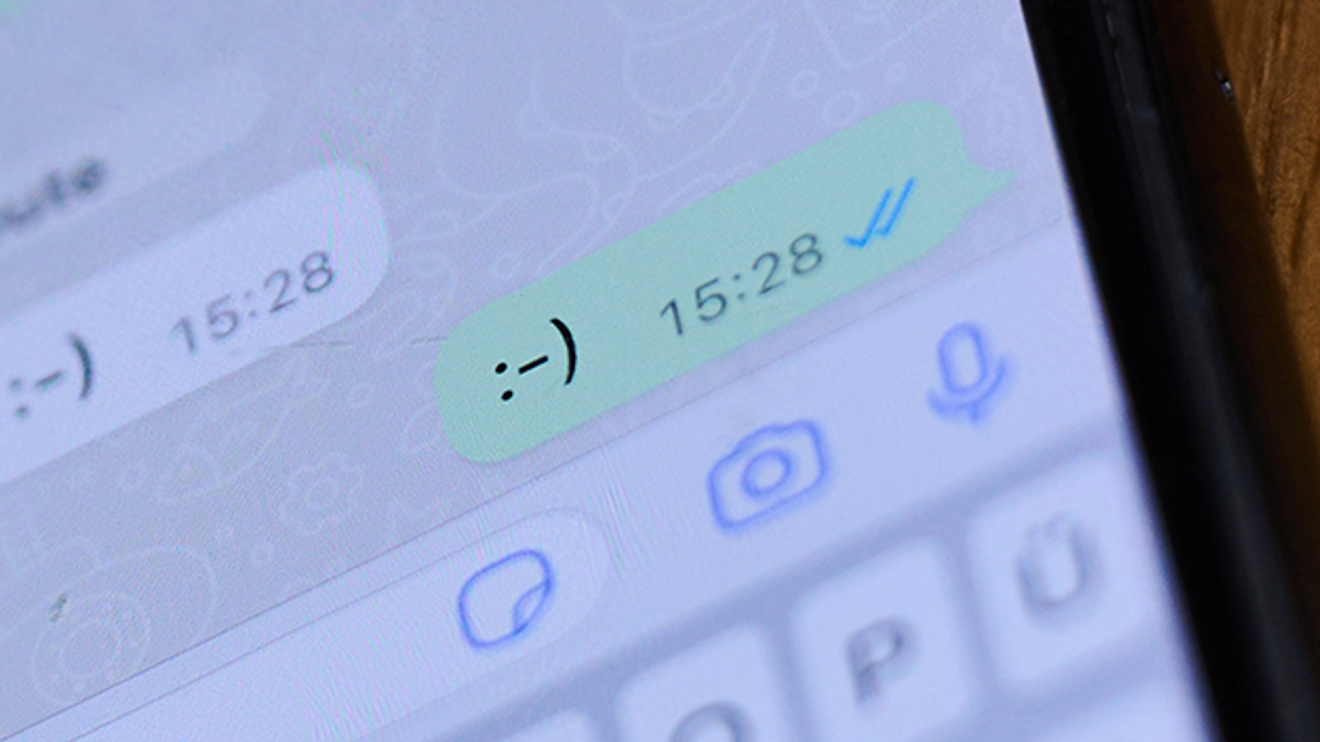
A joke license plate that wasn't actually meant to be taken seriously? Sounds a bit weird, but it is the beginning of the history of the digital smiley. The smiling face lying on its side began its triumphal march around the digital world 40 years ago on Monday (September 19) from a US university. Since then, it has become an integral part of text messages, usually in the form of a ready-made mini-image.
Emojis - drawn faces, hand signs, hearts and so on - play an important role in typed communication. "They give an indication of how an utterance should be understood," says linguist Erika Linz from the University of Bonn, who studies language and communication in digital media. Text messages lack the elements that make it clear what someone means in a conversation: voice and tone of voice as well as facial expressions and gestures.
Symbols to prevent misunderstandings
Symbols to avoid misunderstandings in digital conversations - this is exactly what the typed laughing face of American computer science professor Scott E. Fahlman should be. In 1982, computer scientists at his university in Pittsburgh sent messages to each other via Arpanet (the precursor to the internet) and posted them on digital pinboards.
The community consisted exclusively of nerds with a penchant for sarcasm and weird humor, said Fahlman in an interview with the 'Frankfurter Rundschau' newspaper earlier this year. So a lot was posted that was intended as fun. But there was always someone "who didn't understand the intention and wrote back indignantly. This led to real word battles," says the computer scientist.
To avoid this, there was discussion about labeling jokes as such. Again, not entirely seriously. On September 19, 1982, Fahlman posted his suggestion: a combination of colon, minus and closed parenthesis, together with the instruction to read it sideways. He later explained that he only wanted to amuse the few people involved in the short term. But he obviously hit a digital communication nerve. The lying smiley spread from the university via the Arpanet - and ultimately worldwide via the Internet.
From symbol to accepted answer
In today's text messages, emojis take on other functions in addition to expressing how you want something to be understood. They regularly serve as punctuation marks, explains linguist Erika Linz. For example, if an emoji is typed instead of a period, "it takes on an expressive meaning". In addition, the small characters make communication more economical, says the linguist. For example: Thumbs up instead of a formulated answer.
If no picture is used, this can also be interpreted as a sign that someone really means what they are saying. People have an awareness of what kind of messages they should and should not use emojis in, says Linz. Her students recently analyzed how well-known personalities on Instagram use the little symbols. The result: actors and actresses use emojis in their posts significantly more often than politicians.
Emojis on the rise
So is it only serious without symbols? Linz says: "I believe that in the long term, this will move even more into formal communication. The triumph of emojis is unstoppable." However, even with the small symbols, misunderstandings cannot be completely stopped. Because not all emojis are completely unambiguous. And people use some of them in different contexts with different intentions. This is where Fahlman's lying laughing face comes into its own. It is almost impossible to cause major confusion or serious annoyance with them.


You might also be interested in
Search terms as a mirror of the recent past
Sometimes it's "schüler vz", sometimes "coronavirus": the trends among Google searches show very clearly which topics Germans have shown particular interest in over the years.
 read more...
Revolutionary for medicine and technology
What Professor Röntgen discovered by chance in the evening during experiments in the laboratory in Würzburg revolutionized science. 100 years after his death, researchers are using the rays named after him to illuminate more than just people.
read more...How start-ups want to clean up the universe
Earth's orbit is becoming increasingly crowded. Metal parts are buzzing around the planet and pose risks to space travel. That's why they need to be removed. Some companies see this as a future market.
read more...Curious standards from tea to clay
Tea is quickly made in everyday life. But not when it comes to ISO standard 3103. Here, the process is explained in great detail over six pages. You can read these and other strange guidelines here.
read more...Google.com registered 25 years ago
A spelling mistake as godfather
Instead of "google", we could now also "backrub" or "whatbox" if other name ideas had prevailed. But in September 1997, Larry Page registered google.com as a domain name. A spelling mistake is said to have been the inspiration.
read more...Alexander Graham Bell died 100 years ago
With the very first telephone, Alexander Graham Bell, who died 100 years ago, ushered in a completely new era of communication - which has since led to the age of smartphones.
read more...30 years of digital mobile communications
From the "bone" to the smartphone
The first cell phones, which ushered in a new era in the age of communication 30 years ago, were as heavy as a wholemeal loaf of bread. In the beginning, consumers didn't know what to do with them. But that was soon to change.
read more...75 years of the instant camera
Polaroid - A cult object celebrates its birthday
One press of a button and you have a photo: the idea for the instant camera was revolutionary - and it lives on. It still inspires entire generations today.
read more...First SMS in the world auctioned as a code
Today we take it for granted, but back then it was a world first: sending text messages via cell phone. The good old SMS has been around for almost three decades. Now it is at the center of an auction and part of a new trend in the digital age.
read more...