
Check with Reinhard Achatz, B&R
The "Margo" project
On April 16, the Linux Foundation launched the "Margo" initiative. The aim is to define and implement mechanisms for the interoperable orchestration of edge applications on a large scale. Reinhard Achatz is involved in the work and takes a stand.
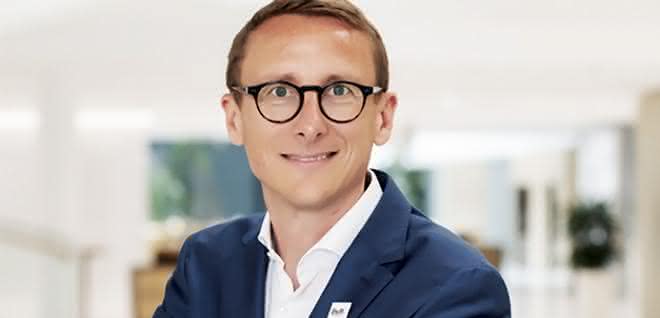
Mr. Achatz, the Margo initiative is mainly driven by the companies ABB, Capgemini, Microsoft, Rockwell Automation, Schneider Electric and Siemens. Why is this initiative being hosted by the Linux Foundation?
The main aim of Margo is to create an open standard that will significantly reduce the considerable effort involved in orchestrating apps and edges on a large scale. This should give app manufacturers more freedom to invest in value-adding applications instead of having to invest in non-differentiating infrastructure. Plant operators should be able to seamlessly expand their machinery by combining different apps and devices, i.e. edges, without having to invest multiple times in different orchestration solutions. Openness and standardization are undoubtedly the key to enabling plant operators to exploit the full potential of digital solutions more quickly. In addition, it was important for us to make progress as quickly as possible and achieve initial results that could be implemented, which in turn requires agile process models. This is where the Linux Foundation comes into play: Linux is synonymous with open source and therefore openness. The Linux Foundation stands for pragmatic and agile approaches and offers a proven platform for collaboration between many contributing companies. These characteristics make the Linux Foundation the ideal organization to successfully drive Margo forward and promote collaboration and innovation in the field of industrial automation.
What are the core elements on your to-do list?
The current focus is clearly on three topics: Firstly, the release of the first version and the reference implementation of Margo. Secondly, the provision of a compliance testing toolkit. This is intended to offer a quick and easy way of checking Margo compliance instead of complex certification procedures, thereby significantly speeding up the implementation of the standard and reducing costs. And thirdly, cooperation with other potential members and collaborators is at the top of the list.
What does your schedule look like?
We started work at the beginning of 2023 in an organized marketing, technology and strategy workstream. Our intention as early as 2023 was not to make declarations of intent at the public announcement in May 2024, but to deliver a clearly defined scope and initial results. The first release in the form of a minimum viable product is planned for the end of this year. The first Margo-compliant products are planned for the end of 2025.
How does Margo differ from other app platforms such as Flecs, ctrlXworld or the app store activities of the Open Industry 4.0 Alliance?
This question is of course very important for the user. I can tell you at this stage that Margo has no overlap with other standards or consortia, but rather complements them; Margo has no focus on business logic or features. Rather, Margo defines the communication mechanisms between the individual objects in an ecosystem - for example, device registry/repository, app registry/repository, workload orchestration - and the missing data formats such as descriptions or manifest of apps and repositories. But please give us a little more time for a precise description of the positioning in relation to other standards, as this is our top priority.


You might also be interested in
The e-paper of issue 07/2024
Read in the current issue of Computer&Automation how ChatGPT can provide support in the conception phase, how LLMs are used in code analysis and whether TSN can be considered as a backbone for virtualized control systems.
 read more...
A prototype in four days
The 'Smart Green Island Week' brought together 1,000 technology enthusiasts on Gran Canaria to promote sustainable digitalization and encourage young STEM talent. For one week, the capital Las Palmas was transformed into a laboratory for...
read more...Products of the year 2023 - your vote counts!
96 products in 12 categories are up for election for the "Products of the Year 2023"! Take part and win Saturn vouchers worth €500, among other things!
read more...OpenSafety via Bluetooth
Schildknecht has announced a partnership with the EPSG. The aim: the safe and stable transmission of the openSafety protocol via Bluetooth radio data transmission.
read more...New products at the industrial trade fair
'Integrated Industry - Connect & Collaborate' - this is the motto of the world's most important industrial trade fair, Hannover Messe 2018. Computer&AUTOMATION shows an excerpt of the products that can be seen in Hanover in a picture gallery.
read more..."Shapers" put pressure on fieldbusses
Is OPC UA plus TSN the exclusive industrial communication solution of the future? The so-called Shaper Group is now emphasizing this conviction with a new whitepaper. Computer & AUTOMATION offers it for download.
read more...From OPC UA to the cloud
The automation specialist B&R wants to continue its double-digit growth. In the run-up to SPS IPC Drives, Peter Gucher, General Manager, explained the company's strategy and gave an outlook on the highlights to be expected at the trade fair.
read more...How quickly is TSN being adopted in the factory?
With Time Sensitive Networks - TSN for short - a new standard in industrial communication technology is on the horizon. Over 160 experts attended the 'Industrial Ethernet TSN' congress in September 2016 to find out about the status quo of the...
read more...Eric Brabänder takes over as CEO of Empolis
Eric Brabänder took over as CEO of Empolis on July 1, 2026. The long-time product and AI expert succeeds Andreas Klüter at the helm of the software company.
read more...