

Follow-up with Rainer Glatz
IT in mechanical engineering
How strong is the influence of IT on mechanical engineering? And how well do German mechanical engineering companies compare internationally when it comes to IT? Rainer Glatz looks back over two decades.
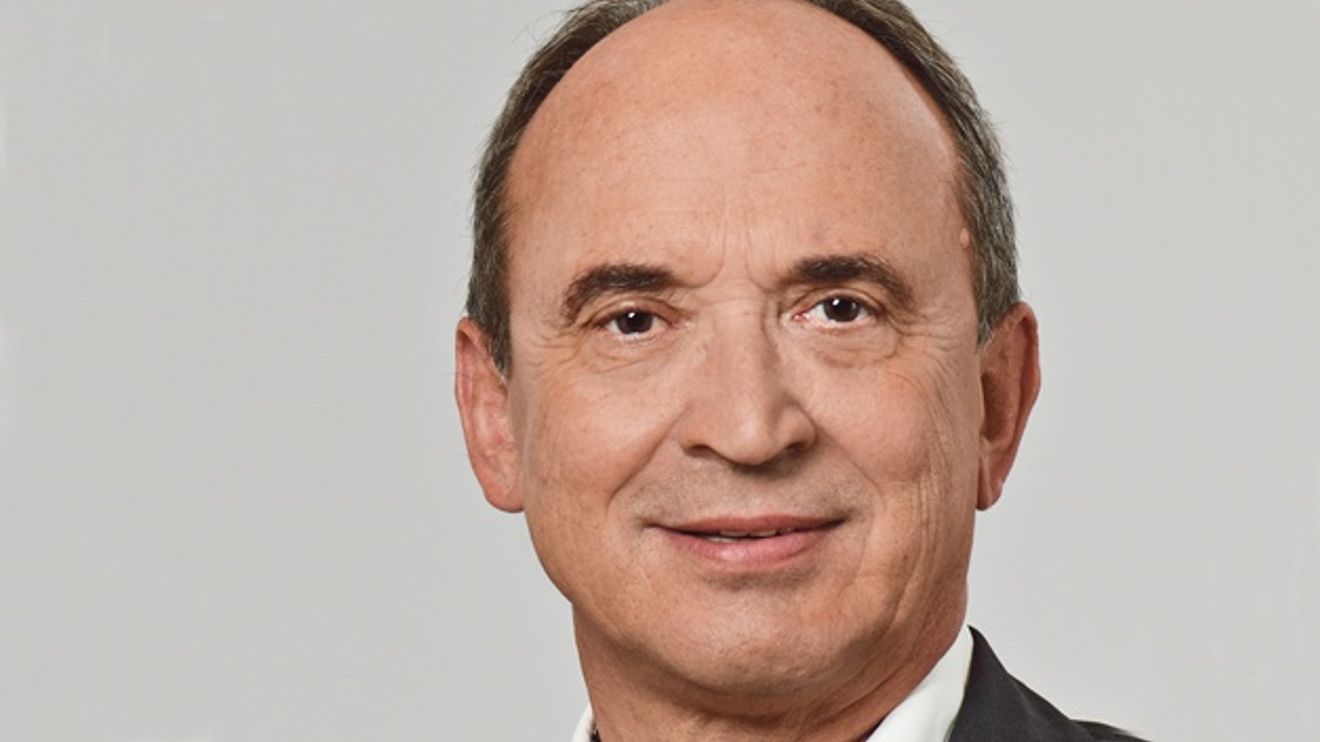
Mr. Glatz, before you went into 'active' retirement on 1 January, you were Managing Director of the Electrical Automation Association for 18 years and also founded the Software Association. What have been the most striking trends that you have witnessed over the last 18 years at the VDMA?
Rainer Glatz: The defining trends came mainly from IT. It was about adapting the latest IT technologies to the special needs of automation, in other words 'industrializing IT'. Typical examples are Industrial Ethernet, graphical HMIs, object orientation and agile software development, open data interfaces and cloud services.
One child of these trends is the Digital Factory in Halls 6 to 8 of the Hannover Messe, which you created. How has the trade fair developed and, above all, how will it continue to develop now that Cebit is a thing of the past?
Rainer Glatz: Following the departure of robotics and logistics from Hannover Messe in 2004, we proposed positioning IT and software independently under the 'Digital Factory' label. It took a few years to fill an entire hall with manufacturers of business software such as PLM, ERP and MES in the vicinity of Cebit. The decisive impetus for growth came with the topic of Industry 4.0. It is remarkable that the Digital Factory is now the world's largest trade fair for digital platforms in the B2B environment. Both the discontinuation of Cebit and the growing importance of digitalization in the industry will further accelerate growth. Digitalization will become the central cross-cutting theme of the Hannover Messe and will be addressed in almost all halls.
You also founded the Software Association - today: Software and Digitization. How has it developed and what role does it play in the VDMA?
Rainer Glatz: The Software Association was actually only made possible by a departure - the VDMA's Information Technology Association merged with Bitkom in 1999. This created a technological vacuum in the VDMA in the software sector that had to be filled. In the meantime, the association has grown to become the VDMA's largest trade association with over 400 members.
How important is digitalization for mechanical engineering? What are the topics of the future?
Rainer Glatz: Digitalization is not actually a new topic for mechanical engineering. Mechanical engineering has been using IT and software for a long time to optimize internal company processes with standard software such as ERP, PLM or MES on the one hand, and to improve its own products with industrial IT and embedded software on the other. With Industry 4.0, however, the significance has changed massively: Digitalization is increasingly becoming a decisive competitive factor and offers potential for new business areas. After networking and integration solutions in the factory, digital B2B platforms and AI or machine learning are currently gaining in importance. After that, topics such as autonomous systems, adaptive operator guidance and even quantum computing for industry will certainly be discussed.
How well positioned do you think the German mechanical engineering industry is in terms of digitalization?
Rainer Glatz: First of all, we can be proud of the fact that the German mechanical engineering industry has taken on a global leadership role with Industry 4.0 in close cooperation with the automation and IT sectors. Many other sectors have slept through the new digitalization topics and left successful business areas primarily to US companies. At the moment, however, I see the problem that the mechanical engineering sector is weakening in the concrete implementation of digitalization projects. This may be due to the extremely good economic situation or the lack of suitable IT specialists. But the competition is not sleeping. China in particular is trying to take on a global leadership role in the field of intelligent manufacturing with government support. The USA is also increasingly seeing the industry as an interesting sales market.


You might also be interested in
Industry 4.0 in mechanical engineering
Since 2008, Michaela Rothhöft has been conducting the "Industrial Communication / Industry 4.0" market study every three to five years with the support of the VDMA. The results of the 2020 update.
 read more...
ZVEI expects moderate production growth for 2019
The German electrical industry continued to grow in 2018. New records were set for both sales and exports. For 2019, the ZVEI is expecting a further one percent increase in production in "uncertain times".
read more...Follow-up with Kevin Carlin, ADI
Entry into the IE business
With the new 'ADI Chronous' brand, Analog Devices wants to have a major say in Industrial Ethernet (IE) in the future. Kevin Carlin, Vice President Industrial Automation & Energy at ADI, explains exactly what this plan looks like.
read more...Follow-up with Dr. Jochen Schlick
Bogged down in individual projects
For the sixth time, the management consultancy Staufen has compiled the 'German Industry 4.0 Index' and surveyed more than 300 German industrial companies on the topic of digitalization. Dr. Jochen Schlick from Staufen Digital Neonex explains the...
read more...The Internet of Production
The Internet of Production (IoP) is based on the idea of enabling a new level of cross-domain collaboration. The Cluster of Excellence IoP at RWTH Aachen University is working to realize this vision. Rahman Jamal, member of the Industrial Advisory...
read more...Follow-up with Benjamin Häfner
The autonomous production system
Researchers from the fields of mechanical engineering, electrical engineering, information technology and computer science are developing an agile production system at KIT that adapts autonomously to changing product specifications. Project...
read more...Follow-up with Dr. Thomas Kuhn
An operating system for Industry 4.0
The three-year BMBF project 'Basic System Industry 4.0' came to an end on June 30, 2019. What goals were achieved? What can be transferred into practice? Where do we go from here? Project manager Dr. Thomas Kuhn gives his opinion.
read more...The interface to the motor
A year and a half ago, the encoder manufacturers Baumer, Hengstler and Kübler joined forces to establish an open single-cable solution between motor and drive with 'SCS open link'. What has become of it? Jonas Urlaub from Kübler takes a stand.
read more...The face of the FLC initiative
At SPS IPC Drives 2018, the OPC Foundation presented the 'Field Level Communication' initiative - FLC for short. Since the Hannover Messe, the initiative has had a director, Peter Lutz, who explains the background to the OPCF's new management...
read more...