
Artificial intelligence
Getting started with machine learning
What is the difference between machine learning (ML) and artificial intelligence (AI)? And why should German mechanical engineers not bury their heads in the sand, despite the many times greater investment in AI in nations such as China or the USA? An analysis of the situation.
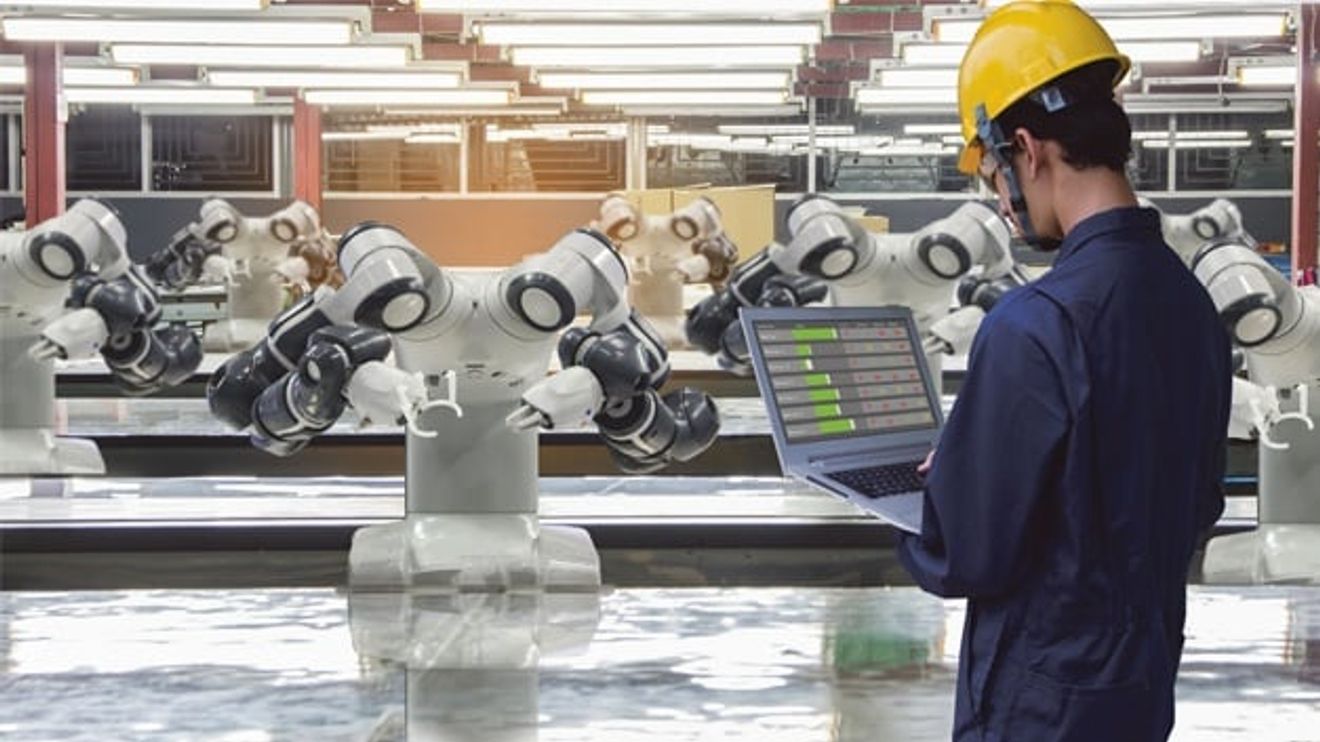
The topic of artificial intelligence is currently on everyone's lips. For many decades, the machine learning on which it is based was only accessible to academics. The technology made possible by ever-increasing amounts of data in combination with ever-increasing computing power is driving revolutionary changes in our society.
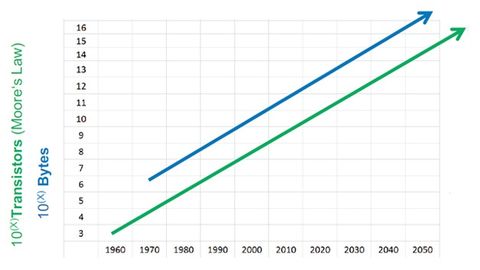
ML algorithms now decide whether a customer is paid out money at a vending machine, they recognize the faces of our friends in social networks and support or in some cases replace radiologists in image recognition. Coming from the consumer world, machine learning is now making its way into production. And although the term 'machine' in ML refers to a computer and not a production machine, sooner or later these will also acquire the ability to learn independently.
In the initial phase of the ML revolution, cloud providers made ML frameworks and libraries available. However, many decision-makers have a queasy feeling about the idea of putting their production data into the cloud. With an 'edge' solution on a standard IPC directly in the plant or on the machine, data can remain within the firewall. The more repetitive the work processes, the more profound the changes to future work processes. While AI is increasingly taking over the actual work of radiologists in the field of medicine, because it can now make more accurate diagnoses than humans in more and more areas, AI enables workers in production to carry out higher-quality work. Companies that cannot afford a data analyst (data scientist) should consider introducing their own employees from their IT/development/research department to the topic.
Difference between ML and AI

As early as 1959, the US computer scientist and computer pioneer Arthur Samuel defined machine learning as a field of study that "gives computers the ability to learn without having been explicitly programmed to do so". Like data mining, it comes from statistics. The differences: statistics defines what happened; data mining explains why something happened; ML determines what will happen and specifies how certain situations can be optimized or avoided.
ML is an independent discipline that is often confused with AI. The term AI dates back to 1956 and is therefore only slightly older. It refers to the attempt to emulate human-like intelligence. ML can be a first, successful step on this path, which is why it is often understood as a sub-area of AI.
However, the terms differ not only in terms of definition - there is a far more important difference: ML is already here, is already with us; when we can say the same about AI, on the other hand, is written in the stars.
In order for the German mechanical and plant engineering industry to maintain and expand its leading international role, it is imperative that it engages with digitalization and specifically with ML - not AI. Nevertheless, we will probably be hearing more and more about AI in the near future, even if ML - with its sub-areas of neural networks/deep learning - is meant, simply because it sounds more sophisticated.
Benefits, opportunities and risks
Why is the topic of ML gaining in importance right now and to this extent? The answer is as simple as it is complex: what was not possible yesterday is commonplace today. High computing power - which was beyond our imagination ten years ago - has become an affordable commodity. If this computing power is combined with large amounts of data, algorithms can be continuously developed further. Some key issues are causing a certain amount of uncertainty: these include the necessary knowledge of how to select, develop and configure the relevant algorithms, how to procure and provide the data and, last but not least, the experience that is absolutely essential. Unclear legal aspects and implications also prevent companies from making business-relevant investments in this area. Many manufacturing companies already find it difficult to explore and define a specialist field of application or a project. As a result, the topic is passed on to IT or product development - as is so often the case with innovative technologies. As a result, the focus is often reduced to the technology and the added business value loses importance.
In many mechanical engineering companies, there is still uncertainty as to whether ML is a business-relevant topic. Yet ML offers unimagined opportunities for German mechanical and plant engineering: Existing business and production processes can be optimized, and machines are maturing into intelligent and almost autonomous process service providers. In many areas, the increasing interchangeability of individual machines in particular will mean that in future it will no longer be just the machine itself that is sold, but above all supplementary services. This means that the business basis for mechanical engineering will change dramatically. This explains why the topic of ML is highly present in the management and in many specialist areas of mechanical engineering companies.
On site instead of in the cloud
A side effect of this development is that the amount, speed and variety of data generated today exceeds the capabilities of the operating personnel and calls for new, data-based approaches. Predictive maintenance aims to reduce the majority of non-age-related failures and thus increase system performance. ML algorithms predict the failure of specific system components. This enables needs-based maintenance of specific parts at non-production times before a failure occurs. In the classic sequence of 'algorithms -> data -> decisions', the overall equipment effectiveness (OEE) cannot be better than the human who programmed it. ML algorithms applied to large amounts of production data, on the other hand, can find causalities that improve the OEE and were previously hidden from the plant operator.
Many decision-makers have a queasy feeling about the idea of putting their production data into the cloud. Alternatively, security can be improved with an 'edge' solution on a standard IPC directly in the plant or on the machine where the data is generated. The goal of improving availability, performance and quality across the board is not new. What is new is the data-based approach using ML algorithms, if desired in the plant.
The requirements
ML is a powerful tool, but not a panacea. At the start of an implementation project, it is necessary to reflect on opportunities and risks, assess costs and benefits and quantify these - always based on a clearly defined objective. If ML is introduced or used for the first time, it is very likely that there will be a learning curve and a dry spell.
Everyone is now talking about ML, but experience and expertise are largely lacking. New approaches need to be developed, verified and validated. Almost every existing algorithm is a well-guarded black box, which means that the results can only be partially explained and communicated. This in turn can lead to long implementation times. When introducing or using ML for the first time, reliable support from management is therefore extremely important, as are demonstrable successes. On the one hand, they keep the motivation of those involved and those responsible high, and on the other, they invalidate the arguments of doubters.
In order to develop and/or successfully introduce ML, skills in developing algorithms and solutions as well as market skills among customers and the entire supply chain among the employees involved are essential.
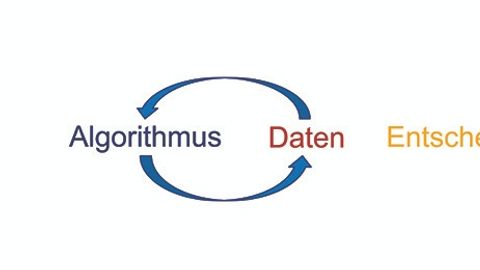
From rule-based to data-driven decision-making, the sequence changes from algorithms -> data -> decisions to data -> algorithms -> decisions.
© asimovero.AIAnother prerequisite for the successful introduction of ML: data in sufficient quantity and quality and access to it via a suitable data network. Data is becoming the most important currency of the 21st century and is the basis for ML. In addition to land, capital and labor, data is increasingly becoming a production factor. It enables cost savings and new business models. The increasing dominance of data is resulting in the reversal of the sequence from 'algorithms -> data -> decisions' to 'data -> algorithms -> decisions'. This represents the revolution that is currently taking place.
The data must be processed so that, for example, incorrect data can be corrected or deleted and missing data can be added. In addition, a uniform and precise timer is required in order to be able to draw conclusions at a later date. Before starting a project, all sources and the levels at which ML operates should be known. A data map can be used to identify the necessary data, as well as its type and the locations where it is generated. If such a map does not yet exist, it must be created at the start.
ML - now with a significant breakthrough
Today, it is only becoming clear what some industrial manufacturers and machine builders understand by digital value creation and how they have embarked on the path to a data-driven future. This also explains why they are able to further extend their lead over the competition. Valuable expert knowledge is developing at an enormous speed, so that momentum is building up after a very short start-up period. This momentum means that the gap to companies that are still struggling is increasing exponentially - only surpassed by the increase in the amount of data available for analysis. But it is not too late for the fast followers either. These companies are now also on the way to no longer perceiving data as crude oil, but as a refined component of their own value chain. In the current technology phase, ML is achieving the first significant breakthrough with solutions that can be used on a large scale. The basis for this was the ability to process data in parallel at low cost. In the next phase, ML will be introduced across the board in all areas of industrial production, driven by embedded AI solutions, for example in self-optimizing process control.
Necessary training
In order for the transformation of use cases through AI to take place in a reasonably coordinated manner, it is necessary for employees to be introduced to this topic. Departments that primarily deal with data as part of their main tasks should be offered courses or seminars in the near future. There are now numerous Massive Open Online Courses (MOOCs), mainly in English but also in German, with or without certificates. Most are offered free of charge or for a small fee.
Special role in mechanical engineering
The disproportionately large investments being made in the AI sector, particularly in China and the United States, are a cause for concern given the slower development in Europe. However, the industry is in a good position. While US data companies have shown us what is possible in the consumer sector, the German mechanical and plant engineering industry will be able to successfully defend its global pioneering role using embedded AI.
Author:
Peter Seeberg is a freelance AI consultant.


You might also be interested in
Quo vadis image processing?
Innovations in the fields of artificial intelligence and embedded vision as well as special processors and development environments for image processing open up a broader spectrum for the technology. An overview.
 read more...
Autonomous thanks to artificial intelligence
Machine vision for reliable quality assurance via plug & play and without a great deal of specialist knowledge - conventional image processing systems are generally a long way from this ideal. A German-Israeli start-up wants to change this.
read more...A direct comparison of solutions
The topic of machine learning raises a number of questions: Which data should be analyzed using which methods? What role does the user play in the data analysis process? And what about the real-time capability, explainability and reliability of the...
read more...The benefits of artificial intelligence for sensor technology
With the technologies and processes of deep learning, industrial sensor technology is on the verge of a far-reaching leap in functionality. Image-based sensors in particular are a field with great potential.
read more...Which gripper for which application?
Advances in the field of end-of-arm tooling (EoAT) make it possible: grippers and sensors are becoming increasingly intelligent and easier to operate. This expands the range of applications for collaborative robots and quickly pays for itself.
read more...Artificial intelligence requires computing power
The integration of AI in industrial applications is increasing the need for computing solutions that can cope with the complexity of the tasks involved. In addition to the CPU, processors specialized in AI algorithms and large amounts of data are...
read more...More usability through AI?
Flexible and cost-transparent booking of temporarily required resources - a promise that cloud providers often fail to keep: Although the offerings are comprehensive and powerful, they are just as confusing and lack transparency in terms of price. A...
read more...The arrival of AI in mechanical engineering
The number of real AI projects in mechanical and plant engineering is still very limited. This will soon change with a new generation of engineers and, above all, with the market launch of corresponding development tools.
read more...Computer-based vision for robotic systems
Computer-based vision is becoming increasingly important for robotic systems. But how can hard real-time applications and time-sensitive networking be combined with vision systems and artificial intelligence (AI)?
read more...